Und dann auf "Zum Home-Bildschirm [+]".

Stöbern
genialokal zum Startbildschirm hinzufügen
Installieren Sie die genialokal App auf Ihrem Startbildschirm für einen schnellen Zugriff und eine komfortable Nutzung.
Installieren Sie die genialokal App auf Ihrem Startbildschirm für einen schnellen Zugriff und eine komfortable Nutzung.
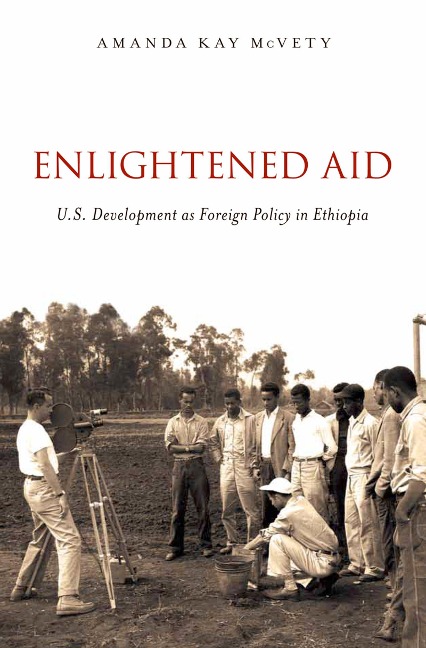
Enlightened Aid is a unique history of foreign aid. The book begins with the modern concept of progress in the Scottish Enlightenment, follows the development of this concept in nineteenth- and early twentieth-century economics and anthropology, describes its transformation from a concept into a tool of foreign policy, and ends with the current debate about foreign aid's utility. In his 1949 inaugural address, Harry Truman vowed to make the development of the underdeveloped world a central part of the U.S. government's national security agenda. This commitment became policy the following year with the creation of Point Four--America's first aid program to the developing world. Point Four technicians shared technology, know-how, and capital with people in nations around the world. They taught classes on public health and irrigation, distributed chickens and vaccines, and helped build schools and water treatment facilities. They did all of this in the name of development, believing that economic progress would lead to social and political progress, which, in turn, would ensure that Point Four recipient nations would become prosperous democratic participants in the global community of nations. Point Four was a weapon in the fight against poverty, but it was also a weapon in the fight against the Soviet Union. Eisenhower reluctantly embraced it and Kennedy made it a central part of his international policy agenda, turning Truman's program into the United States Agency for International Development. Point Four had proven itself to be a useful tool of diplomacy, and subsequent administrations claimed it for themselves. None seemed overly worried that it had not also proven itself to be a particularly useful tool of development. Using Ethiopia as a case study, Enlightened Aid examines the struggle between foreign aid-for-diplomacy and foreign aid-for-development. Point Four's creators believed that aid could be both at the same time. The history of U.S. aid to Ethiopia suggests otherwise.
Amanda Kay McVety is Assistant Professor of History at Miami University, Oxford, Ohio.
INTRODUCTION: The American Answer CHAPTER ONE: Improving Nations CHAPTER TWO: A Global Economy CHAPTER THREE: Strategic Ethiopia CHAPTER FOUR: Truman's Fourth Point CHAPTER FIVE: The Ethiopian Experiment CHAPTER SIX: The Development Decade CHAPTER SEVEN: Rethinking the American Answer
Notes Bibliography Index
Dieses eBook wird im PDF-Format geliefert und ist mit einem Adobe Kopierschutz (DRM) versehen. Sie können dieses eBook mit allen Geräten lesen, die das PDF-Format und den Adobe Kopierschutz (DRM) unterstützen.
Zum Beispiel mit den folgenden Geräten:
• tolino Reader
Laden Sie das eBook direkt über den Reader-Shop auf dem tolino herunter oder übertragen Sie das eBook auf Ihren tolino mit einer kostenlosen Software wie beispielsweise Adobe Digital Editions.
• Sony Reader & andere eBook Reader
Laden Sie das eBook direkt über den Reader-Shop herunter oder übertragen Sie das eBook mit der kostenlosen Software Sony READER FOR PC/Mac oder Adobe Digital Editions auf ein Standard-Lesegeräte mit epub- und Adobe DRM-Unterstützung.
• Tablets & Smartphones
Möchten Sie dieses eBook auf Ihrem Smartphone oder Tablet lesen, finden Sie hier unsere kostenlose Lese-App für iPhone/iPad und Android Smartphone/Tablets.
• PC & Mac
Lesen Sie das eBook direkt nach dem Herunterladen mit einer kostenlosen Lesesoftware, beispielsweise Adobe Digital Editions, Sony READER FOR PC/Mac oder direkt über Ihre eBook-Bibliothek in Ihrem Konto unter „Meine eBooks“ - „online lesen“.
Schalten Sie das eBook mit Ihrer persönlichen Adobe ID auf bis zu sechs Geräten gleichzeitig frei.
Bitte beachten Sie, dass die Kindle-Geräte das Format nicht unterstützen und dieses eBook somit nicht auf Kindle-Geräten lesbar ist.