Und dann auf "Zum Home-Bildschirm [+]".

Stöbern
genialokal zum Startbildschirm hinzufügen
Installieren Sie die genialokal App auf Ihrem Startbildschirm für einen schnellen Zugriff und eine komfortable Nutzung.
Installieren Sie die genialokal App auf Ihrem Startbildschirm für einen schnellen Zugriff und eine komfortable Nutzung.
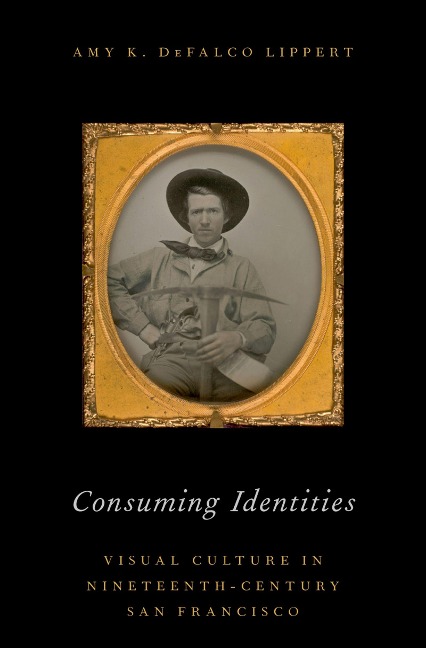
Along with the rapid expansion of the market economy and industrial production methods, such innovations as photography, lithography, and steam printing created a pictorial revolution in nineteenth-century society. The proliferation of visual prints, ephemera, spectacles, and technologies transformed public values and perceptions, and its legacy was as significant as the print revolution that preceded it. Consuming Identities explores the significance of the pictorial revolution in one of its vanguard cities: San Francisco, the revolving door of the gold rush. In their correspondence, diaries, portraits, and reminiscences, thousands of migrants to the city by the Bay demonstrated that visual media constituted a central means by which people navigated the bewildering host of changes taking hold around them in the second half of the nineteenth century, from the spread of capitalism and class formation to immigration and urbanization. Images themselves were inextricably associated with these world-changing forces; they were commodities, but as representations of people, they also possessed special cultural qualities that gave them new meaning and significance. Visual media transcended traditional boundaries of language and culture that divided diverse groups within the same urban space. From the 1848 conquest of California and the gold discovery to the disastrous earthquake and fire of 1906, San Francisco anticipated broader cultural transformations in the commodification, implementation, and popularity of images. For the city's inhabitants and sojourners, an array of imagery came to mediate, intersect with, and even constitute social interaction in a world where virtual reality was becoming normative.
Amy DeFalco Lippert is an Assistant Professor of American History and the College at the University of Chicago. Her research and teaching focus on the cultural and social history of the United States in the 19th century, particularly Americans' mass production, consumption, and interaction with visual imagery and problems of perception.
Acknowledgements
A Note on Sources
Introduction
Chapter 1: "These Lofty Aspirants of Fame": The Making of the Gold Rush Legend
Chapter 2: "Ten Times Better Than a Letter": Gold Rush Photography
Chapter 3: "Base Falsehoods" and the Genuine Article: The Visual Economy of San Francisco
Chapter 4: From the Cradle to the Grave: Visualizing the Life Cycle
Chapter 5: Visual Desire: Love, Lust, and Virtual Reality
Chapter 6: Awful Magnificence: Infamy, Mortality, and Armchair Spectacles
Chapter 7: Celebrity Culture and the Gold Rush Metropolis
Conclusion
Selected Bibliography
Index
Dieses eBook wird im PDF-Format geliefert und ist mit einem Adobe Kopierschutz (DRM) versehen. Sie können dieses eBook mit allen Geräten lesen, die das PDF-Format und den Adobe Kopierschutz (DRM) unterstützen.
Zum Beispiel mit den folgenden Geräten:
• tolino Reader
Laden Sie das eBook direkt über den Reader-Shop auf dem tolino herunter oder übertragen Sie das eBook auf Ihren tolino mit einer kostenlosen Software wie beispielsweise Adobe Digital Editions.
• Sony Reader & andere eBook Reader
Laden Sie das eBook direkt über den Reader-Shop herunter oder übertragen Sie das eBook mit der kostenlosen Software Sony READER FOR PC/Mac oder Adobe Digital Editions auf ein Standard-Lesegeräte mit epub- und Adobe DRM-Unterstützung.
• Tablets & Smartphones
Möchten Sie dieses eBook auf Ihrem Smartphone oder Tablet lesen, finden Sie hier unsere kostenlose Lese-App für iPhone/iPad und Android Smartphone/Tablets.
• PC & Mac
Lesen Sie das eBook direkt nach dem Herunterladen mit einer kostenlosen Lesesoftware, beispielsweise Adobe Digital Editions, Sony READER FOR PC/Mac oder direkt über Ihre eBook-Bibliothek in Ihrem Konto unter „Meine eBooks“ - „online lesen“.
Schalten Sie das eBook mit Ihrer persönlichen Adobe ID auf bis zu sechs Geräten gleichzeitig frei.
Bitte beachten Sie, dass die Kindle-Geräte das Format nicht unterstützen und dieses eBook somit nicht auf Kindle-Geräten lesbar ist.