Und dann auf "Zum Home-Bildschirm [+]".

Stöbern
genialokal zum Startbildschirm hinzufügen
Installieren Sie die genialokal App auf Ihrem Startbildschirm für einen schnellen Zugriff und eine komfortable Nutzung.
Installieren Sie die genialokal App auf Ihrem Startbildschirm für einen schnellen Zugriff und eine komfortable Nutzung.
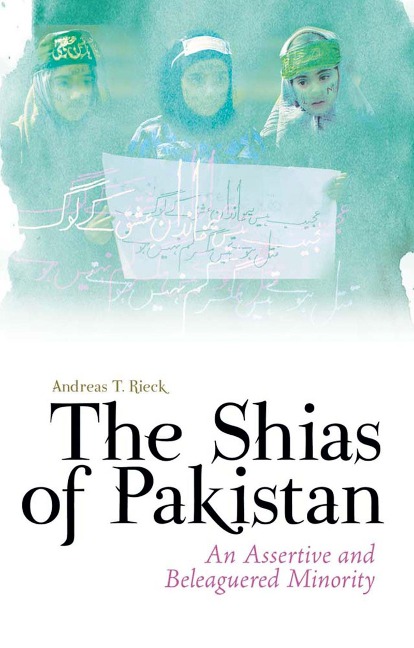
The Shias of Pakistan are the world's second largest Shia community after that of Iran, but comprise only 10-15 per cent of Pakistan's population. In recent decades Sunni extremists have increasingly targeted them with hate propaganda and terrorism, yet paradoxically Shias have always been fully integrated into all sections of political, professional and social life without suffering any discrimination. In mainstream politics, the Shia- Sunni divide has never been an issue in Pakistan.
Shia politicians in Pakistan have usually downplayed their religious beliefs, but there have always been individuals and groups who emphasised their Shia identity, and who zealously campaigned for equal rights for the Shias wherever and whenever they perceived these to be threatened. Shia 'ulama' have been at the forefront of communal activism in Pakistan since 1949, but Shia laymen also participated in such organisations, as they had in pre-partition India.
Based mainly on Urdu sources, Rieck's book examines, first, the history of Pakistan's Shias, including their communal organisations, the growth of the Shia 'ulama' class, of religious schools and rivalry between "orthodox" "ulama" and popular preachers; second, the outcome of lobbying of successive Pakistan governments by Shia organisations; and third, the Shia-Sunni conflict, which is increasingly virulent due to the state's failure to combat Sunni extremism.
Andreas T. Rieck has a PhD in Islamic Studies from the University of Hamburg and served with the UN Mission to Afghanistan before spending four years in Pakistan with the Hanns Seidel Foundation. Since 2007 he has been an advisor to the German Federal Criminal Police Office, Berlin.
1. General Historical Background The spreading of Shi'ism in North-West India until 1947 Shia-Sunni issues from Mughal times to 1939 The emergence of Shia communalism in British India 2. Shias and the Pakistan Movement Shia contributions to Muslim political awakening until 1939 From the Lahore Resolution to the establishment of Pakistan 3. Shias in Pakistan until 1958 Communal reorganization and new internal divisions The struggle for constitutional safeguards and other Shia demands Shia 'ulamâ' and dînî madâris in the 1950s Growing resistance against Shia religious ceremonies The demand for 'reserved seats' 4. The Ayub Khan Era, 1958-1968 The impact of martial law and secularism The 1963 riots and their aftermath Sayyid Muhammad Dihlavi and his new Shia movement Conflicts between orthodox 'ulamâ' and popular preachers Towards official acceptance of Shia demands 5. The Yahya Khan and Bhutto Era, 1969-1977 New issues and partial successes in the interim era The Bhutto government and Shia demands Divisions among the Shia 'ulamâ' at their climax Re-emergence of the sectarian problem Decline of the Shia Mutâlabât Movement 6. The Zia-ul-Haqq Era, 1977-1988 The impact of Zia's Islamization policy and the Iranian revolution The TNFJ under Mufti Ja'far Husain, 1979-1983 Sayyid 'Arif Husain al-Husaini and the radicalization of the TNFJ The challenge of Sunni extremism in the 1980s 7. The Interim Democratic Decade, 1988-1999 From TNFJ to TJP: Return to pragmatism The sectarian vendetta in the 1990s Decline of the TJP 8. The Musharraf and Zardari Eras, 2000-2013 Escalating terrorist violence against the Shia minority The Shias of Kurram Agency under siege Responses from Shia communal organizations 9. Summary and Conclusion Glossary Bibliography Index
Dieses eBook wird im PDF-Format geliefert und ist mit einem Adobe Kopierschutz (DRM) versehen. Sie können dieses eBook mit allen Geräten lesen, die das PDF-Format und den Adobe Kopierschutz (DRM) unterstützen.
Zum Beispiel mit den folgenden Geräten:
• tolino Reader
Laden Sie das eBook direkt über den Reader-Shop auf dem tolino herunter oder übertragen Sie das eBook auf Ihren tolino mit einer kostenlosen Software wie beispielsweise Adobe Digital Editions.
• Sony Reader & andere eBook Reader
Laden Sie das eBook direkt über den Reader-Shop herunter oder übertragen Sie das eBook mit der kostenlosen Software Sony READER FOR PC/Mac oder Adobe Digital Editions auf ein Standard-Lesegeräte mit epub- und Adobe DRM-Unterstützung.
• Tablets & Smartphones
Möchten Sie dieses eBook auf Ihrem Smartphone oder Tablet lesen, finden Sie hier unsere kostenlose Lese-App für iPhone/iPad und Android Smartphone/Tablets.
• PC & Mac
Lesen Sie das eBook direkt nach dem Herunterladen mit einer kostenlosen Lesesoftware, beispielsweise Adobe Digital Editions, Sony READER FOR PC/Mac oder direkt über Ihre eBook-Bibliothek in Ihrem Konto unter „Meine eBooks“ - „online lesen“.
Schalten Sie das eBook mit Ihrer persönlichen Adobe ID auf bis zu sechs Geräten gleichzeitig frei.
Bitte beachten Sie, dass die Kindle-Geräte das Format nicht unterstützen und dieses eBook somit nicht auf Kindle-Geräten lesbar ist.