Und dann auf "Zum Home-Bildschirm [+]".

Stöbern
genialokal zum Startbildschirm hinzufügen
Installieren Sie die genialokal App auf Ihrem Startbildschirm für einen schnellen Zugriff und eine komfortable Nutzung.
Installieren Sie die genialokal App auf Ihrem Startbildschirm für einen schnellen Zugriff und eine komfortable Nutzung.
Ihr gewünschter Artikel ist in 0 Buchhandlungen vorrätig - wählen Sie hier eine Buchhandlung in Ihrer Nähe aus:

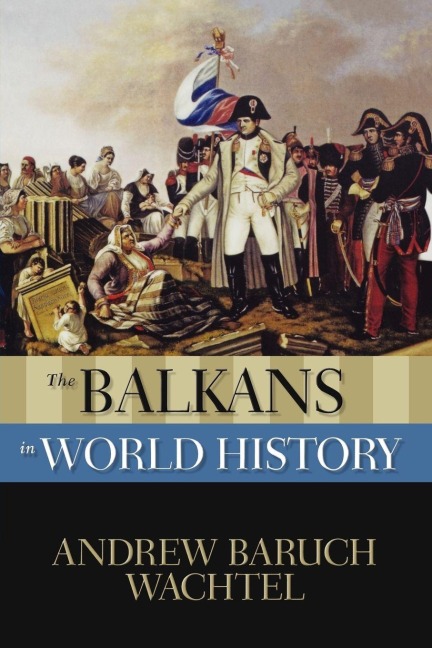
In the historical and literary imagination, the Balkans loom large as a somewhat frightening and ill-defined space, often seen negatively as a region of small and spiteful peoples, racked by racial and ethnic hatred, always ready to burst into violent conflict. The Balkans in World History re-defines this space in positive terms, taking as a starting point the cultural, historical, and social threads that allow us to see this region as a coherent if complex whole. Eminent historian Andrew Wachtel here depicts the Balkans as that borderland geographical space in which four of the world's greatest civilizations have overlapped in a sustained and meaningful way to produce a complex, dynamic, sometimes combustible, multi-layered local civilization. It is the space in which the cultures of ancient Greece and Rome, of Byzantium, of Ottoman Turkey, and of Roman Catholic Europe met, clashed and sometimes combined. The history of the Balkans is thus a history of creative borrowing by local people of the various civilizations that have nominally conquered the region. Encompassing Bulgaria, Croatia, Bosnia and Herzegovina, Serbia, Montenegro, Albania, Macedonia, Greece, and European Turkey, the Balkans have absorbed many voices and traditions, resulting in one of the most complex and interesting regions on earth.
Andrew Wachtel is Bertha and Max Dressler Professor of the Humanities; Dean of The Graduate School, and Director, Roberta Buffett Center for International and Comparative Studies all at Northwestern University.
Introduction: The Balkans as a Historical and Cultural Melting Pot
Chapter 1: The Balkans from Prehistory to the Byzantine Empire
Chapter 2: The Medieval Balkans
Chapter 3: The Balkans under Ottoman Rule
Chapter 4: The Long 19th Century (1775 -1922)
Chapter 5: The 20th Century-From the Balkans to Southeast Europe
Notes
Chronology
Further Reading
Websites
Index