Und dann auf "Zum Home-Bildschirm [+]".

Stöbern
genialokal zum Startbildschirm hinzufügen
Installieren Sie die genialokal App auf Ihrem Startbildschirm für einen schnellen Zugriff und eine komfortable Nutzung.
Installieren Sie die genialokal App auf Ihrem Startbildschirm für einen schnellen Zugriff und eine komfortable Nutzung.
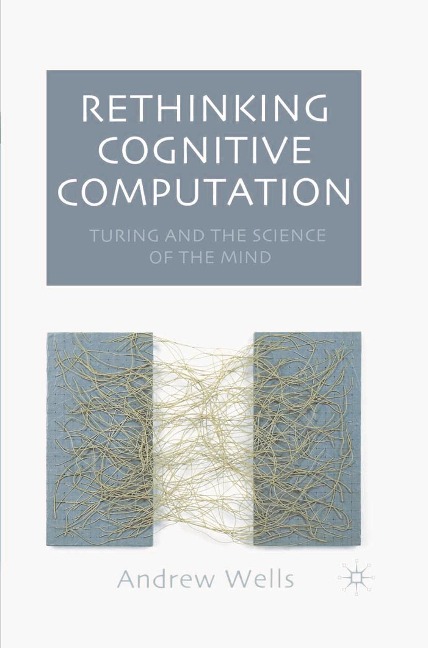
Rethinking Cognitive Computation explores the hypothesis that the mind is a computer. The exploration is based on the pioneering work of Alan Turing and presents the first detailed exposition of his theory of computation intended specifically for psychologists. Turing's bold and beautiful theory provides an ideal perspective from which to evaluate current computational thinking about the mind. The book examines the strengths and weaknesses of symbol systems and connectionist theorising and proposes a new approach called ecological functionalism. Ecological functionalism is based on Turing's fundamental insights and extends them by drawing on contemporary theories of concurrent and distributed computation to cover a wide range of psychological domains. Ecological functionalism provides the basis for a powerful, unified theory of great scope which includes social as well as individual processes. The book is intended for teaching but will also be of interest to researchers in cognitive science, psychology and philosophy of mind.
Andrew Wells is a lecturer in psychology at the London School of Economics and Political Science. He has qualifications in philosophy, psychology and computer science and has published papers on a range of psychological topics.
ANDREW WELLS is Lecturer in Psychology at the London School of Economics and Political Science, UK. He has qualifications in philosophy, psychology and computer science and has published papers on a range of psychological topics.
Introduction
Making the Modern Mind
Functional States and Mini-minds
Exploring Sets of Mini-minds
Environments and Actions
Turing's Analysis of Computation
Turing's Example Machines
Turing's Functional Notation
Standard Descriptions and Description Numbers
Basic Components of the Universal Machine
Simulation
The Universal Machine in Detail
Turing's Unsolvability Proofs
Von Neumann Computer Architecture
Virtual Architecture
The Commitments of the Computational Theory of Mind
Evaluating the Computational Theory of Mind
Connectionism
Ecological Functionalism: Computation
Ecological Functionalism: Psychology
References.
Dieses eBook wird im PDF-Format geliefert und ist mit einem Adobe Kopierschutz (DRM) versehen. Sie können dieses eBook mit allen Geräten lesen, die das PDF-Format und den Adobe Kopierschutz (DRM) unterstützen.
Zum Beispiel mit den folgenden Geräten:
• tolino Reader
Laden Sie das eBook direkt über den Reader-Shop auf dem tolino herunter oder übertragen Sie das eBook auf Ihren tolino mit einer kostenlosen Software wie beispielsweise Adobe Digital Editions.
• Sony Reader & andere eBook Reader
Laden Sie das eBook direkt über den Reader-Shop herunter oder übertragen Sie das eBook mit der kostenlosen Software Sony READER FOR PC/Mac oder Adobe Digital Editions auf ein Standard-Lesegeräte mit epub- und Adobe DRM-Unterstützung.
• Tablets & Smartphones
Möchten Sie dieses eBook auf Ihrem Smartphone oder Tablet lesen, finden Sie hier unsere kostenlose Lese-App für iPhone/iPad und Android Smartphone/Tablets.
• PC & Mac
Lesen Sie das eBook direkt nach dem Herunterladen mit einer kostenlosen Lesesoftware, beispielsweise Adobe Digital Editions, Sony READER FOR PC/Mac oder direkt über Ihre eBook-Bibliothek in Ihrem Konto unter „Meine eBooks“ - „online lesen“.
Schalten Sie das eBook mit Ihrer persönlichen Adobe ID auf bis zu sechs Geräten gleichzeitig frei.
Bitte beachten Sie, dass die Kindle-Geräte das Format nicht unterstützen und dieses eBook somit nicht auf Kindle-Geräten lesbar ist.