Und dann auf "Zum Home-Bildschirm [+]".

Stöbern
genialokal zum Startbildschirm hinzufügen
Installieren Sie die genialokal App auf Ihrem Startbildschirm für einen schnellen Zugriff und eine komfortable Nutzung.
Installieren Sie die genialokal App auf Ihrem Startbildschirm für einen schnellen Zugriff und eine komfortable Nutzung.
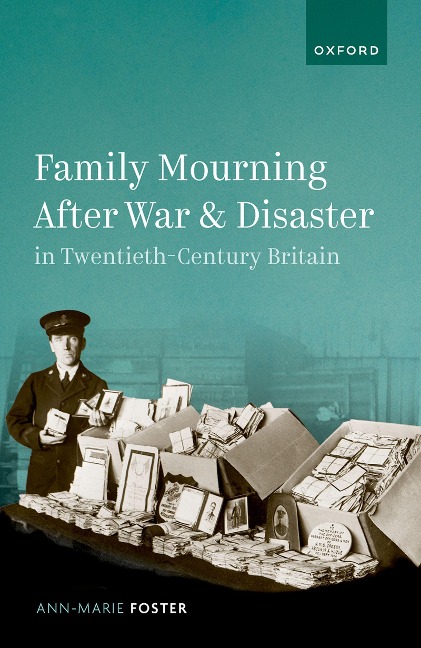
Across the twentieth century, the families of people who died in war and disaster were left to make sense of their sudden loss and navigate newfound grief. This book focuses the families of people who died in the First World War and in mining disasters in the early twentieth-century. These bereaved families were often denied access to bodies and choice over burial rights, all while dealing with the increased bureaucracy of death.Families created domestic memorials, which took on additional meaning because of this lack of memorial agency elsewhere. Although the ways that these families were bereaved each took place in different circumstances, the ways that families grieved were recognizable to one another: they drew on common memorial practices, augmented to take on special meaning after sudden death.This memorial material provided a vehicle for families to navigate their loss, but also to communicate the memory of the dead both externally, through donation to museums, and linearly, through ancestral lines. Drawing on a nuanced reading of a wide range of sources - from ephemera to administrative museum paperwork - this book explores family reactions to mass death events in early twentieth-century Britain. The result is a comparative and domestic perspective on mourning at the turn of the century that makes important contributions to the growing field of death studies, and will be of interest to those working on the First World War, interwar Britain, the history of work, the social history of the family, and the history of memorialization. 6 b&w illustrations
Ann-Marie Foster is a historian of twentieth century Britain, with research interests in memory studies, ephemera, the history of death, and public history. They previously worked as a lecturer at Queen's University Belfast, and as a Research Fellow at Northumbria University on the AHRC-funded project 'Ephemera and Writing about War, 1914 to the Present'. Ann-Marie is currently a Chancellor's Fellow at Robert Gordon University and an AHRC Early Career Fellow in Cultural and Heritage Institutions based at Imperial War Museums.
- Introduction - 1: Receiving Death - 2: Governing Death - 3: Printing Death - 4: Domesticating Death - 5: Building Legacy - 6: Extending Legacy - Conclusion
Dieses eBook wird im PDF-Format geliefert und ist mit einem Adobe Kopierschutz (DRM) versehen. Sie können dieses eBook mit allen Geräten lesen, die das PDF-Format und den Adobe Kopierschutz (DRM) unterstützen.
Zum Beispiel mit den folgenden Geräten:
• tolino Reader
Laden Sie das eBook direkt über den Reader-Shop auf dem tolino herunter oder übertragen Sie das eBook auf Ihren tolino mit einer kostenlosen Software wie beispielsweise Adobe Digital Editions.
• Sony Reader & andere eBook Reader
Laden Sie das eBook direkt über den Reader-Shop herunter oder übertragen Sie das eBook mit der kostenlosen Software Sony READER FOR PC/Mac oder Adobe Digital Editions auf ein Standard-Lesegeräte mit epub- und Adobe DRM-Unterstützung.
• Tablets & Smartphones
Möchten Sie dieses eBook auf Ihrem Smartphone oder Tablet lesen, finden Sie hier unsere kostenlose Lese-App für iPhone/iPad und Android Smartphone/Tablets.
• PC & Mac
Lesen Sie das eBook direkt nach dem Herunterladen mit einer kostenlosen Lesesoftware, beispielsweise Adobe Digital Editions, Sony READER FOR PC/Mac oder direkt über Ihre eBook-Bibliothek in Ihrem Konto unter „Meine eBooks“ - „online lesen“.
Schalten Sie das eBook mit Ihrer persönlichen Adobe ID auf bis zu sechs Geräten gleichzeitig frei.
Bitte beachten Sie, dass die Kindle-Geräte das Format nicht unterstützen und dieses eBook somit nicht auf Kindle-Geräten lesbar ist.