Und dann auf "Zum Home-Bildschirm [+]".

Stöbern
genialokal zum Startbildschirm hinzufügen
Installieren Sie die genialokal App auf Ihrem Startbildschirm für einen schnellen Zugriff und eine komfortable Nutzung.
Installieren Sie die genialokal App auf Ihrem Startbildschirm für einen schnellen Zugriff und eine komfortable Nutzung.
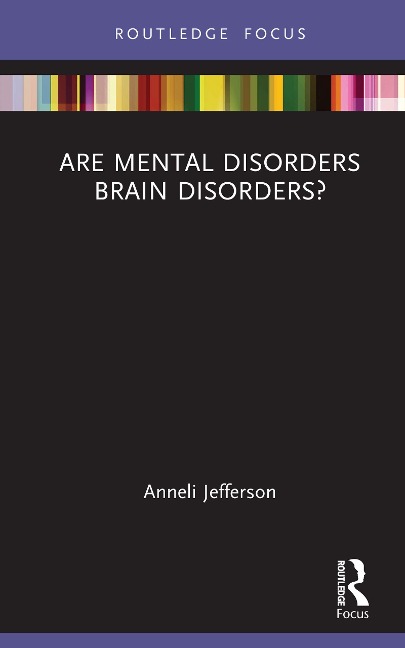
The question of whether mental disorders are disorders of the brain has led to a long-running and controversial dispute within psychiatry, psychology and philosophy of mind and psychology. While recent work in neuroscience frequently tries to identify underlying brain dysfunction in mental disorders, detractors argue that labelling mental disorders as brain disorders is reductive and can result in harmful social effects. This book brings a much-needed philosophical perspective to bear on this important question. Anneli Jefferson argues that while there is widespread agreement on paradigmatic cases of brain disorder such as brain cancer, Parkinson's or Alzheimer's dementia, there is far less clarity on what the general, defining characteristics of brain disorders are. She identifies influential notions of brain disorder and shows why these are problematic. On her own, alternative, account, what counts as dysfunctional at the level of the brain frequently depends on what counts as dysfunctional at the psychological level. On this notion of brain disorder, she argues, many of the consequences people often associate with the brain disorder label do not follow. She also explores the important practical question of how to deal with the fact that many people do draw unlicensed inferences about treatment, personal responsibility or etiology from the information that a condition is a brain disorder or involves brain dysfunction.
Anneli Jefferson is Lecturer in Philosophy, Cardiff University, UK. Her main research areas are moral philosophy and philosophy of psychology and psychiatry. She is especially interested in the intersection of these areas, for example in questions relating to moral psychology or the relationship between mental illness and moral responsibility.
1. Introduction, 2. Brain disorders - The narrow view, 3. A workable notion of brain dysfunction, 4. Objections and clarifications, 5. Implications for agency and responsibility, 6. Conclusion, Bibliography, Index
Dieses eBook wird im PDF-Format geliefert und ist mit einem Adobe Kopierschutz (DRM) versehen. Sie können dieses eBook mit allen Geräten lesen, die das PDF-Format und den Adobe Kopierschutz (DRM) unterstützen.
Zum Beispiel mit den folgenden Geräten:
• tolino Reader
Laden Sie das eBook direkt über den Reader-Shop auf dem tolino herunter oder übertragen Sie das eBook auf Ihren tolino mit einer kostenlosen Software wie beispielsweise Adobe Digital Editions.
• Sony Reader & andere eBook Reader
Laden Sie das eBook direkt über den Reader-Shop herunter oder übertragen Sie das eBook mit der kostenlosen Software Sony READER FOR PC/Mac oder Adobe Digital Editions auf ein Standard-Lesegeräte mit epub- und Adobe DRM-Unterstützung.
• Tablets & Smartphones
Möchten Sie dieses eBook auf Ihrem Smartphone oder Tablet lesen, finden Sie hier unsere kostenlose Lese-App für iPhone/iPad und Android Smartphone/Tablets.
• PC & Mac
Lesen Sie das eBook direkt nach dem Herunterladen mit einer kostenlosen Lesesoftware, beispielsweise Adobe Digital Editions, Sony READER FOR PC/Mac oder direkt über Ihre eBook-Bibliothek in Ihrem Konto unter „Meine eBooks“ - „online lesen“.
Schalten Sie das eBook mit Ihrer persönlichen Adobe ID auf bis zu sechs Geräten gleichzeitig frei.
Bitte beachten Sie, dass die Kindle-Geräte das Format nicht unterstützen und dieses eBook somit nicht auf Kindle-Geräten lesbar ist.