Und dann auf "Zum Home-Bildschirm [+]".

Stöbern
genialokal zum Startbildschirm hinzufügen
Installieren Sie die genialokal App auf Ihrem Startbildschirm für einen schnellen Zugriff und eine komfortable Nutzung.
Installieren Sie die genialokal App auf Ihrem Startbildschirm für einen schnellen Zugriff und eine komfortable Nutzung.
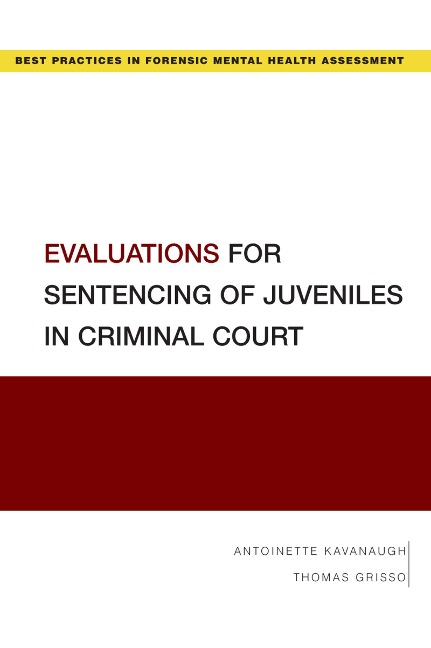
Forensic mental health assessment (FMHA) has grown into a specialization informed by research and professional guidelines. This series presents up-to-date information on the most important and frequently conducted forms of FMHA. The 21 topical volumes address best approaches to practice for particular types of evaluation in the criminal, civil and juvenile/family areas. Each volume contains a thorough discussion of the relevant legal and psychological concepts, followed by a step-by-step description of the assessment process from preparing for the evaluation to writing the report and testifying in court.
Volumes include the following helpful features:
- Boxes that zero in on important information for use in evaluations
- Tips for best practice and cautions against common pitfalls
- Highlighting of relevant case law and statutes
- Separate list of assessment tools for easy reference
- Helpful glossary of key terms for the particular topic
In making recommendations for best practice, authors consider empirical support, legal relevance, and consistency with ethical and professional standards. These volumes offer invaluable guidance for anyone involved in conducting or using forensic evaluations.
Antoinette Kavanaugh, PhD, ABPP is Board Certified in Forensic Psychology, and is the former Clinical Director of the Juvenile Justice Division - Cook County Juvenile Court Clinic. She served as a clinical professor at Northwestern University's School of Law for ten years, and is currently a Lecturer at the Feinberg School of Medicine at Northwestern University. She is an alumnus of the American Psychological Association's Leadership Institute for Women in Psychology and a Fellow for APA's Division 42, Psychologists in Independent Practice. She has authored several peer-reviewed articles and routinely educates lawyers and psychologists on issues related to adolescent development and obtaining and conducting forensic evaluations. In private practice since 1999, she evaluates juveniles and adults for civil cases, criminal state and federal court cases, has been retained in multiple Miller v. Alabama cases, and testifies regularly in state and federal courts. Thomas Grisso, PhD, is Emeritus Professor of Psychiatry (Clinical Psychology) at the University of Massachusetts Medical School. His research and practice have focused on improving forensic assessments in juvenile, criminal, and civil justice systems. He has provided lectures, workshops, consultation and mentoring to faculty and students throughout the United States and in more than a dozen other countries. He has served as President of the American Psychology-Law Society and Executive Director of the American Board of Forensic Psychology. Dr. Grisso has received numerous distinguished career contribution awards, including from those two organizations as well as the American Psychological Association, the American Psychiatric Association, and the Royal College of Psychiatrists (UK). In retirement, he is Vice-President of National Youth Screening and Assessment Partners, which provides training and consultation on juvenile justice system assessments nationwide.
1. The Legal Context
2. Forensic Developmental Concepts
3. Empirical Foundations and Limits
4. Preparation for the Evaluation
5. Data Collection
6. Interpretation
7. Report Writing and Testimony
Appendix A. Sample Outline for Miller Reports
Legal References References Index
Dieses eBook wird im PDF-Format geliefert und ist mit einem Adobe Kopierschutz (DRM) versehen. Sie können dieses eBook mit allen Geräten lesen, die das PDF-Format und den Adobe Kopierschutz (DRM) unterstützen.
Zum Beispiel mit den folgenden Geräten:
• tolino Reader
Laden Sie das eBook direkt über den Reader-Shop auf dem tolino herunter oder übertragen Sie das eBook auf Ihren tolino mit einer kostenlosen Software wie beispielsweise Adobe Digital Editions.
• Sony Reader & andere eBook Reader
Laden Sie das eBook direkt über den Reader-Shop herunter oder übertragen Sie das eBook mit der kostenlosen Software Sony READER FOR PC/Mac oder Adobe Digital Editions auf ein Standard-Lesegeräte mit epub- und Adobe DRM-Unterstützung.
• Tablets & Smartphones
Möchten Sie dieses eBook auf Ihrem Smartphone oder Tablet lesen, finden Sie hier unsere kostenlose Lese-App für iPhone/iPad und Android Smartphone/Tablets.
• PC & Mac
Lesen Sie das eBook direkt nach dem Herunterladen mit einer kostenlosen Lesesoftware, beispielsweise Adobe Digital Editions, Sony READER FOR PC/Mac oder direkt über Ihre eBook-Bibliothek in Ihrem Konto unter „Meine eBooks“ - „online lesen“.
Schalten Sie das eBook mit Ihrer persönlichen Adobe ID auf bis zu sechs Geräten gleichzeitig frei.
Bitte beachten Sie, dass die Kindle-Geräte das Format nicht unterstützen und dieses eBook somit nicht auf Kindle-Geräten lesbar ist.