Und dann auf "Zum Home-Bildschirm [+]".

Stöbern
genialokal zum Startbildschirm hinzufügen
Installieren Sie die genialokal App auf Ihrem Startbildschirm für einen schnellen Zugriff und eine komfortable Nutzung.
Installieren Sie die genialokal App auf Ihrem Startbildschirm für einen schnellen Zugriff und eine komfortable Nutzung.
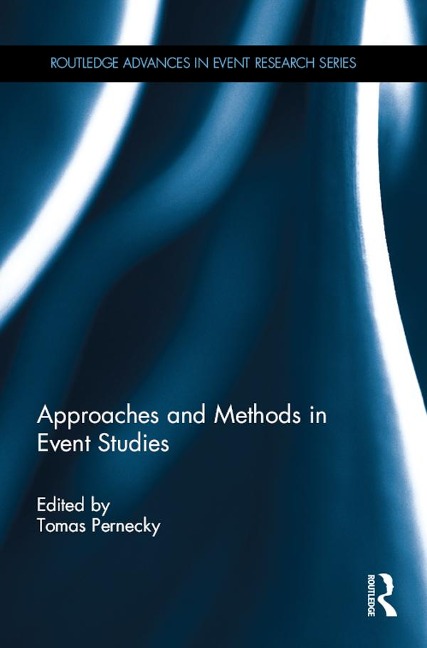
The recent proliferation of events as a subject of study in its own right has signalled the emergence of a new field - event studies. However, whilst the management-inspired notion of planned events, which strives for conceptual slenderness, may indeed be useful for event managers, the moment we attempt to advance knowledge about events as social, cultural and political phenomena, we realise the extent to which the field is theoretically impoverished. Event studies, it is argued, must transcend overt business-like perspectives in order to grasp events in their complexities. This book challenges the reader to reach beyond the established modes of thinking about events by placing them against a backdrop of much wider, critical discourse. Approaches and Methods in Event Studies emerges as a conceptual and methodological tour de force-comprising the works of scholars of diverse backgrounds coming together to address a range of philosophical, theoretical, and methods-related problems. The areas covered include the concepts of eventification and eventual approaches to events, a mobilities paradigm, rhizomatic events, critical discourse analysis, visual methods, reflexive and ethnographic research into events, and indigenous acumen. Researchers and students engaged in the study of events will draw much inspiration from the contributions and from the volume as a whole.
Tomas Pernecky is with the Faculty of Culture and Society at the Auckland University of Technology, New Zealand. An advocate of post-disciplinary approaches to knowledge, his wide-ranging interests extend to examining a variety of philosophical, conceptual, theoretical and methodological issues. Examples include ontological inquiry into the constitution of social worlds through the phenomenon of events (e.g. Ideological, Social and Cultural Aspects of Events by CABI), sustainability-related concerns (e.g. Events, Society and Sustainability: Critical and Contemporary Approaches by Routledge) and the application of constructionist philosophy and hermeneutic phenomenology in tourism research. Tomas recently co-chaired the second Tourism Postdisciplinary Conference (Copenhagen, 22-24 June 2015) and co-edited a special issue on tourism post-disciplinarity for the journal Tourism Analysis.
What and when is an 'event': a short prelude to event studies (Tomas Pernecky) Part I Introduction 1. The epistemic foundations of event studies (Tomas Pernecky) Part II Articulating a broader philosophical, conceptual, and theoretical vision for event studies 2. Evental approaches to the study of events (Iain Mackenzie & Robert Porter) 3. Eventification: framing the Ordinary as the Extraordinary (Temple Hauptfleisch) 4. The creative guerrilla: makers, organisation and belonging (Welby Ings) 5. A mobilities approach to events (Kevin Hannam) PART III Towards critical capacity and methodological vigilance for the study of events 6. Critical discourse analysis: towards critiquing the language of events (William Feighery) 7. Visual methods in event studies (Dennis Zuev) 8. Tourism and new collective effervescence: the encoding of 'Aboriginality' - a worldmaking critique of special events and special places (Keith Hollinshead & Rukeya Suleman) 9. Ethnography in the diaspora: Indian cultural production and transnational networks (Alison Booth) 10. Collapsing social distance with cake and tea: the influence of Indigenous methodologies (Jared Mackley-Crump) PART IV Conclusion 11. Events and the framing of peoples and places: acts of declarations/acts of devilry (Keith Hollinshead & Rukeya Suleman)
Dieses eBook wird im PDF-Format geliefert und ist mit einem Adobe Kopierschutz (DRM) versehen. Sie können dieses eBook mit allen Geräten lesen, die das PDF-Format und den Adobe Kopierschutz (DRM) unterstützen.
Zum Beispiel mit den folgenden Geräten:
• tolino Reader
Laden Sie das eBook direkt über den Reader-Shop auf dem tolino herunter oder übertragen Sie das eBook auf Ihren tolino mit einer kostenlosen Software wie beispielsweise Adobe Digital Editions.
• Sony Reader & andere eBook Reader
Laden Sie das eBook direkt über den Reader-Shop herunter oder übertragen Sie das eBook mit der kostenlosen Software Sony READER FOR PC/Mac oder Adobe Digital Editions auf ein Standard-Lesegeräte mit epub- und Adobe DRM-Unterstützung.
• Tablets & Smartphones
Möchten Sie dieses eBook auf Ihrem Smartphone oder Tablet lesen, finden Sie hier unsere kostenlose Lese-App für iPhone/iPad und Android Smartphone/Tablets.
• PC & Mac
Lesen Sie das eBook direkt nach dem Herunterladen mit einer kostenlosen Lesesoftware, beispielsweise Adobe Digital Editions, Sony READER FOR PC/Mac oder direkt über Ihre eBook-Bibliothek in Ihrem Konto unter „Meine eBooks“ - „online lesen“.
Schalten Sie das eBook mit Ihrer persönlichen Adobe ID auf bis zu sechs Geräten gleichzeitig frei.
Bitte beachten Sie, dass die Kindle-Geräte das Format nicht unterstützen und dieses eBook somit nicht auf Kindle-Geräten lesbar ist.