Und dann auf "Zum Home-Bildschirm [+]".

Stöbern
genialokal zum Startbildschirm hinzufügen
Installieren Sie die genialokal App auf Ihrem Startbildschirm für einen schnellen Zugriff und eine komfortable Nutzung.
Installieren Sie die genialokal App auf Ihrem Startbildschirm für einen schnellen Zugriff und eine komfortable Nutzung.
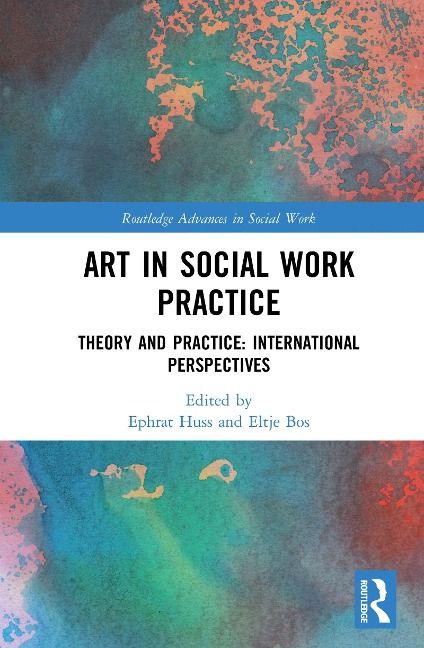
This is the first book ever to be published on arts use in social work. Bringing together theoretical connections between arts and social work, and with practice examples of arts in micro and macro social work practice from around the world, the book aims to inspire the reader with new ideas. It provides specific skills, defines what is social rather than fine or projective art use, and explains the theoretical connection between art and social work. It has chapters from all over the world, showing how arts are adjusted to different cultural contexts. Section I explores the theoretical connections between art and social work, including theories of resilience, empowerment, inclusion and creativity as they relate to art use in social work. Section II describes specific interventions with different populations. Each chapter also summarizes the skills and hands-on knowledge needed for social workers to use the practical elements of using arts for social workers not trained in these fields. The third section does the same for arts use in community work and as social change and policy. Using Art in Social Work Practice provides theoretical but also hands-on knowledge about using arts in social work. It extends the fields of both social work and arts therapy and serves as a key resource for students, academics and practitioners interested in gaining the theoretical understanding and specific skills for using social arts in social work, and for arts therapists interested in using social theories.
Ephrat Huss is a professor of social work and art therapist at Ben-Gurion University of the Negev. She heads an innovative MA social work specialization on arts for social work practice and she has published extensively on arts for social workers and on using arts-based research to access the experience of marginalized groups. Eltje Bos is a professor of cultural and social dynamics at the Amsterdam University of Applied Sciences and a drama teacher; the role and impact of arts in social work is one of her fields of research. With her research group and the BA and MA in social work, she explores, with the use of arts-based research, how social and cultural activities can enhance liveability in a diverse and dynamic city.
Introduction; Arts in Social Work Practice: From Theory to Practice, an Introductory Chapter Ephrat Huss; Section 1; Introduction: Theoretical Connections between Art and Social Work Ephrat Huss; Chapter 1: Why are Arts-based Interventions Useful in Social Work Practice? Eltje Bos; Chapter 2: Ethics, Theatre, and Judgement Emma Brodzinski, England, and Tony Evans; Chapter 3: Enhancing Capabilities for Social Change with the Arts; Paola de Bruijn & Erik Jansen; Chapter 4: Recreating the Social Work Imagination: Embedding the Arts within Scottish Social Work Susan Levy; Chapter 5: Photovoice Project: Participatory Research and Action with Women in Post-Disaster Japan Mieko Yoshihama; Chapter 6: Connecting Social Work and Art: Reflections on Theory and Practice Mel Gray and Leanne Schubert; Chapter 7: Theatre of the Oppressed and Social Work: An Opportunity for Social Awareness through Theatre Linda Ducca Cisneros ; Chapter 8: Applied Arts and Social Justice: An Essential Partnership for Social Work Education Shelley Cohen Konrad and Lori Power; Chapter 9: Using Arts as a Feminist Empowerment Tool: The Example of Social Workers in Israel; Noa Barkai-Kral; Section 2 Introduction: Examples of Micro Arts Practice in Social Work Ephrat Huss; Chapter 10: Arts and the Elderly: The 'Hidden Legacy' Project Ida van der Lee and W. (Bill) Wei; Chapter 11: Arts with Teenagers: A French Experience Angélique Gozlan and Céline Masson; Chapter 12: From Bystander to Engaged Witness: Seeing through the Social Action and Social Justice Lens and the Scope for Art Therapy within the Framework of Social Work in India Oihika Chakrabarti; Chapter 13: The Implementation of Photovoice in Group Intervention for Children of Alcohol Addicted Parents Menny Malka; Chapter 14: Therapeutic Applications of Hip Hop with U.S. Homeless Adults with Severe Mental Illness Raphael Travis Jr. and Aaron H. Rodwin; Chapter 15: Using Arts to Coproduce Knowledge with Service Users and to Enhance Salutogenic Coping of Marginalized Bedouin Youth in Israel Hassen Ganayiem, Orna Braun-Lewensohn, and Ephrat Huss; Chapter 16: Using Arts to Engage Community: Nepal and Canadian Experiences Marleny M. Bonnycastle and Tuula Heinonen; Section 3; Introduction: Macro Level Arts-based Interventions in Community Development and Societal Change; Eltje Bos, The Netherlands; Chapter 17: Community Theatre and Community Work: A Sri Lankan Experience Shamila Sivakumaran, Sri Lanka; Chapter 18: Film as Social Change: From Giving Voice to Giving a Stage Griet Verschelden, Jolijn De Haene, Tijs Van Steenberghe, and Luc De Droogh; Chapter 19: Moving into Dance in South Africa Nadia Virasamy; Chapter 20: Re-Creating Creative Social Work: Insights from Nepal 2015 Disasters Bala Raju Nikku, Pradipta Kadambari, Nepal, and Anne Riggs; Chapter 21: Safe at Home: An Australian Example of Arts-based Community-focused PracticeLeanne Schubert and Mel Gray; Chapter 22: Advancing the Creativity of Girls Living in Underserved Neighborhoods through an Arts-Based Social Enterprise: A Theory of Action Revealed by an Instrumental Case David Moxley; Index
Dieses eBook wird im PDF-Format geliefert und ist mit einem Adobe Kopierschutz (DRM) versehen. Sie können dieses eBook mit allen Geräten lesen, die das PDF-Format und den Adobe Kopierschutz (DRM) unterstützen.
Zum Beispiel mit den folgenden Geräten:
• tolino Reader
Laden Sie das eBook direkt über den Reader-Shop auf dem tolino herunter oder übertragen Sie das eBook auf Ihren tolino mit einer kostenlosen Software wie beispielsweise Adobe Digital Editions.
• Sony Reader & andere eBook Reader
Laden Sie das eBook direkt über den Reader-Shop herunter oder übertragen Sie das eBook mit der kostenlosen Software Sony READER FOR PC/Mac oder Adobe Digital Editions auf ein Standard-Lesegeräte mit epub- und Adobe DRM-Unterstützung.
• Tablets & Smartphones
Möchten Sie dieses eBook auf Ihrem Smartphone oder Tablet lesen, finden Sie hier unsere kostenlose Lese-App für iPhone/iPad und Android Smartphone/Tablets.
• PC & Mac
Lesen Sie das eBook direkt nach dem Herunterladen mit einer kostenlosen Lesesoftware, beispielsweise Adobe Digital Editions, Sony READER FOR PC/Mac oder direkt über Ihre eBook-Bibliothek in Ihrem Konto unter „Meine eBooks“ - „online lesen“.
Schalten Sie das eBook mit Ihrer persönlichen Adobe ID auf bis zu sechs Geräten gleichzeitig frei.
Bitte beachten Sie, dass die Kindle-Geräte das Format nicht unterstützen und dieses eBook somit nicht auf Kindle-Geräten lesbar ist.