Und dann auf "Zum Home-Bildschirm [+]".

Stöbern
genialokal zum Startbildschirm hinzufügen
Installieren Sie die genialokal App auf Ihrem Startbildschirm für einen schnellen Zugriff und eine komfortable Nutzung.
Installieren Sie die genialokal App auf Ihrem Startbildschirm für einen schnellen Zugriff und eine komfortable Nutzung.
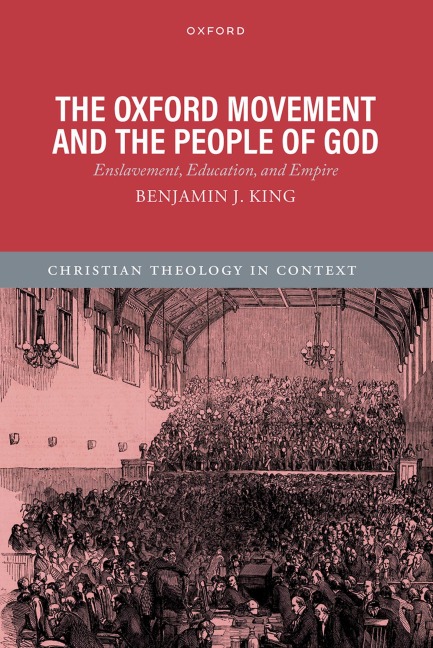
Seeing the Church in danger from the government in 1833, the clergyman John Henry Newman wanted to 'look to the people' for help. The people of God were vital to the Tractarian (or Oxford) Movement which Newman, John Keble, and Edward Pusey led, and which hundreds of thousands of Anglican laypeople followed during the nineteenth century. The faithful were central to the movement's theological vision. Spiritually disciplined, the faithful would ensure that the Church's work in the world was ongoing. Properly educated, in schools for the middle classes and for the poor, at home and across the British Empire, the faithful would preserve the Church's teaching. Yet to opponents in the nineteenth century, and most scholars since, the movement seemed to magnify the role of the clergy of the Church of England at the expense of the people. This is to neglect not only Tractarian theology, but also lay Tractarians themselves, whether the few who were important figures in the British nation and Empire, or the many who took part in shaping society. The Oxford Movement and the People of God covers topics which are not usually encountered in studies of the Tractarians-enslavement, Empire, and English engagement in the American Civil War-as well as showing how their theology of the laity sheds new light on old topics-the Church of England's privileged place in the State, the Ritualist movement, and opposition to democracy. In none of these topics was the movement on what is called, with hindsight, 'the right side of history'. But the theological reasons, such as they were, why Tractarians took the positions they did are explored in chapters concerning providence, ecclesiology, consensus fidelium, episcopacy, and lay spirituality.
Benjamin J. King became Duncalf-Villavoso Professor of Church History, Seminary of the Southwest, Austin, Texas in 2023. He previously taught Christian history for fourteen years at the School of Theology, University of the South, Sewanee, Tennessee. He is author of Newman and the Alexandrian Fathers (2009), and co-editor with Frederick D. Aquino of Receptions of Newman (2015) and The Oxford Handbook of John Henry Newman (2018). He has also written numerous articles and lectured internationally. He has contributed to the Oxford Dictionary of the Christian Church and serves on the editorial board of the journal Anglican and Episcopal History.
- Acknowledgements - Introduction - 1: Tracking down the Tractarian Laity - 2: Providence and Colonial Slavery - 3: Ecclesiology and Church Establishment - 4: Consensus Fidelium and Synods - 5: Episcopacy and Empire - 6: Spirituality and the American Civil War - Conclusion - Bibliography
Dieses eBook wird im PDF-Format geliefert und ist mit einem Adobe Kopierschutz (DRM) versehen. Sie können dieses eBook mit allen Geräten lesen, die das PDF-Format und den Adobe Kopierschutz (DRM) unterstützen.
Zum Beispiel mit den folgenden Geräten:
• tolino Reader
Laden Sie das eBook direkt über den Reader-Shop auf dem tolino herunter oder übertragen Sie das eBook auf Ihren tolino mit einer kostenlosen Software wie beispielsweise Adobe Digital Editions.
• Sony Reader & andere eBook Reader
Laden Sie das eBook direkt über den Reader-Shop herunter oder übertragen Sie das eBook mit der kostenlosen Software Sony READER FOR PC/Mac oder Adobe Digital Editions auf ein Standard-Lesegeräte mit epub- und Adobe DRM-Unterstützung.
• Tablets & Smartphones
Möchten Sie dieses eBook auf Ihrem Smartphone oder Tablet lesen, finden Sie hier unsere kostenlose Lese-App für iPhone/iPad und Android Smartphone/Tablets.
• PC & Mac
Lesen Sie das eBook direkt nach dem Herunterladen mit einer kostenlosen Lesesoftware, beispielsweise Adobe Digital Editions, Sony READER FOR PC/Mac oder direkt über Ihre eBook-Bibliothek in Ihrem Konto unter „Meine eBooks“ - „online lesen“.
Schalten Sie das eBook mit Ihrer persönlichen Adobe ID auf bis zu sechs Geräten gleichzeitig frei.
Bitte beachten Sie, dass die Kindle-Geräte das Format nicht unterstützen und dieses eBook somit nicht auf Kindle-Geräten lesbar ist.