Und dann auf "Zum Home-Bildschirm [+]".

Stöbern
genialokal zum Startbildschirm hinzufügen
Installieren Sie die genialokal App auf Ihrem Startbildschirm für einen schnellen Zugriff und eine komfortable Nutzung.
Installieren Sie die genialokal App auf Ihrem Startbildschirm für einen schnellen Zugriff und eine komfortable Nutzung.
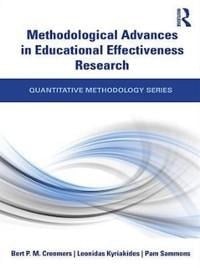
Methodological Advances in Educational Effectiveness Research is an important new work by some of the leading researchers in the field of Educational Effectiveness Research (EER). The book provides a state of the art snapshot of the methodology of EER now and clearly demonstrates the way it is applied in both research and evaluation. It shows how developments in the research methodology area such as the use of multilevel modelling approaches to analyse nested data have promoted the knowledge-base of educational effectiveness. But at the same time, as the authors show, the knowledge-base of educational effectiveness and the attempt to establish theoretical models do paradoxically challenge the development of methodologically appropriate studies including ways of analysing data. Guiding readers though the effective and appropriate use in educational effectiveness of: - Longitudinal Studies - Experimental Studies - Mixed Research Methods - Meta-analyses of effectiveness studies - Using IRT to measure outcomes and factors - Using Generalisability Theory to test the quality of data - Multilevel modelling , and - Structural Equation Modelling Techniques The authors draw in the expertise of scholars from around the world to show the mathematical background of each technique, the current and future applications, and Specific examples of applying this orientation to help the readers design their own effectiveness studies using specific methodological tools.
Bert P. M. Creemers is Professor and Director of the Centre for Learning and Teaching, University of Groningen. Leonidas Kyriakides is Associate Professor of Educational Research and Evaluation, Department of Education, University of Cyprus. Pam Sammons is Professor of Education, Department of Education, University of Oxford.
Part 1: The State of the Art of Educational Effectiveness: Challenges For Research Methodology 1: Background of Eer 2: Methodological Issues in Educational Effectiveness Research 3: Theory And Research: The Problem of Causality 4: Theory-Driven Evaluation Studies: Establishing Links Between Research, Policy and Practice Part 2: The Contribution of Different Methodological Orientations to the Development of Research and Evaluation on Educational Effectiveness 5: Longitudinal Designs 6: Experimental Studies in Education 7: Applications of Mixed Methods to the Field of Educational Effectiveness Research 8: Using Irt to Measure Outcomes and Factors: An Overview of Irt Models 9: Irt Models: Parameter Estimation, Statistical Testing and Application in Eer 10: Using Generalizability Theory 11: Multilevel Modelling 12: Structural Equation Modelling Techniques 13: Meta-Analyses of Effectiveness Studies Part 3: Methodological Advances And Eer: Retrospect & Prospect 14: Conclusions for the Development of Educational Effectiveness Research
Dieses eBook wird im PDF-Format geliefert und ist mit einem Adobe Kopierschutz (DRM) versehen. Sie können dieses eBook mit allen Geräten lesen, die das PDF-Format und den Adobe Kopierschutz (DRM) unterstützen.
Zum Beispiel mit den folgenden Geräten:
• tolino Reader
Laden Sie das eBook direkt über den Reader-Shop auf dem tolino herunter oder übertragen Sie das eBook auf Ihren tolino mit einer kostenlosen Software wie beispielsweise Adobe Digital Editions.
• Sony Reader & andere eBook Reader
Laden Sie das eBook direkt über den Reader-Shop herunter oder übertragen Sie das eBook mit der kostenlosen Software Sony READER FOR PC/Mac oder Adobe Digital Editions auf ein Standard-Lesegeräte mit epub- und Adobe DRM-Unterstützung.
• Tablets & Smartphones
Möchten Sie dieses eBook auf Ihrem Smartphone oder Tablet lesen, finden Sie hier unsere kostenlose Lese-App für iPhone/iPad und Android Smartphone/Tablets.
• PC & Mac
Lesen Sie das eBook direkt nach dem Herunterladen mit einer kostenlosen Lesesoftware, beispielsweise Adobe Digital Editions, Sony READER FOR PC/Mac oder direkt über Ihre eBook-Bibliothek in Ihrem Konto unter „Meine eBooks“ - „online lesen“.
Schalten Sie das eBook mit Ihrer persönlichen Adobe ID auf bis zu sechs Geräten gleichzeitig frei.
Bitte beachten Sie, dass die Kindle-Geräte das Format nicht unterstützen und dieses eBook somit nicht auf Kindle-Geräten lesbar ist.