Und dann auf "Zum Home-Bildschirm [+]".

Stöbern
genialokal zum Startbildschirm hinzufügen
Installieren Sie die genialokal App auf Ihrem Startbildschirm für einen schnellen Zugriff und eine komfortable Nutzung.
Installieren Sie die genialokal App auf Ihrem Startbildschirm für einen schnellen Zugriff und eine komfortable Nutzung.

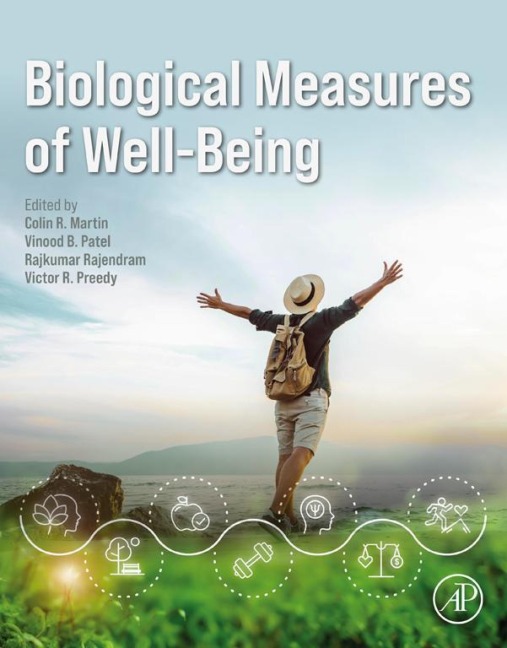
Biological Measures of Well-Being is organized into four distinct sections that together examine the interlink between physical and emotional well-being. The first section introduces the reader to the correlation among well-being with the environment, economic status, and biological measures. The second section outlines the blood and body fluids as biological correlates of well-being. The third section reviews physiology and imaging as biological correlates of well-being. The fourth discusses the genetic correlations of well-being. Written by international experts in the field, this book will be the single source researchers and clinicians will need to understand well-being and its interlink with biological measures. - Reviews well-being and quality-of-life among youth and in the school environment - Outlines a range of bodily fluid biomarkers and links with quality-of-life measures and well-being - Discusses different ways of interventions and modifiers of well-being, and their impact on other physiological measures - Reviews genetic links to quality-of-life and well-being
Section 1: Introductory chapters, correlates and setting the scene1. Biopsychosocial aspects of mental health: A focus on the school environment2. Mental well-being and the use of social media3. Well-being and quality of life among youth with a mental health4. The medical professions and their mental and physical well-being5. The bidirectional relationship of poor physical well-being and stressSection 2: Body fluids as biological correlates of well-being6. Low-density lipoprotein (LDL) in serum and measures of well-being7. Cortisol, well-being and the older person8. Endocannabinoid system, inflammation, and mental well-being9. Beta-endorphin and negative traits of well-being10. Positive psychological well-being and inflammatory biomarkers IL-6 and CRP: A narrative review11. Well-being and circulating serotoninSection 3: Physiology and imaging as biological correlates of well-being12. Use of electroencephalography (EEG) to investigate quality of life domains: Applications to epilepsy13. Non-invasive measures of acute mental stress14. Neuroscience of meditation for holistic well-being15. Physiological responses to acute and cumulative dance exposures16. Functional magnetic resonance imaging (fMRI) and well-being17. Neural processing of odors and measures of well-beingSection 4: Genetic correlates of well-being18. Meditation and the regulation of immune response genes19. Genes, polymorphisms and linkage with muscle strength and quality of life20. GWAS in occupational health: Unraveling gene-environment interactions, from discovery to the ethical frontiers of precision health21. Single nucleotide variants and their association with subjective well-beingSection 5: Resources22. Recommended resources for the biological measures of well-being