Und dann auf "Zum Home-Bildschirm [+]".

Stöbern
genialokal zum Startbildschirm hinzufügen
Installieren Sie die genialokal App auf Ihrem Startbildschirm für einen schnellen Zugriff und eine komfortable Nutzung.
Installieren Sie die genialokal App auf Ihrem Startbildschirm für einen schnellen Zugriff und eine komfortable Nutzung.
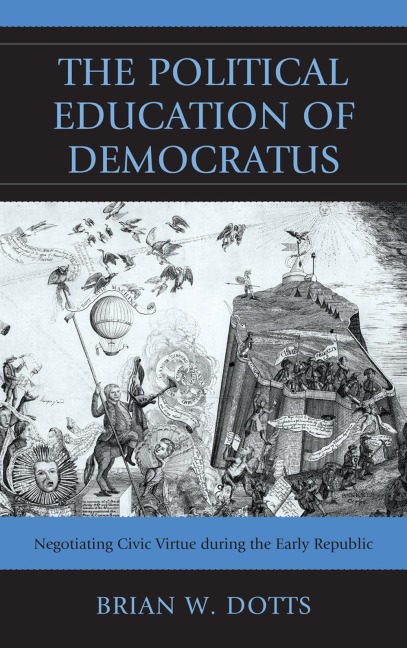
Thomas Paine described the American Revolution as educative. However, as examined in Brian W. Dotts' The Political Education of Democratus: Negotiating Civic Virtue during the Early Republic, what was learned was neither standardized nor uniform. The Federalists, for example, viewed the revolution as a triumph for representative government, but one intended to maintain many remnants of the colonial experience. Anti-Federalists saw a confirmation of representative government at the state and local levels and considered the revolution as authenticating Montesquieu's theories of republicanism. A third, more extreme interpretation of the revolution emerged from radical democrats who viewed the revolution as a fundamental break with mainstream thinking about republicanism. These radicals helped turn conventional understanding of representative government upside down, taking part in unconventional or extra-constitutional action during their negotiation of citizen virtue during the 1790s. Members of each of the societies took an active part in trying to fulfill their expectations for the new American experiment by contributing to the democratization of republicanism.
The Political Education of Democratus illuminates the emergence of democratic thought from Aristotle and Machiavelli to more contemporary influences from the British Commonwealth tradition. Dotts examines how the radical ideas of Algernon Sidney, James Harrington, John Milton, Joseph Priestley, and Thomas Paine develop a rich tapestry among the democratic society's correspondence, constitutions, resolutions, and early media. Individual members of the Democratic-Republican Societies, including Philip Freneau, Robert Coram, Benjamin Bache, George Logan, and others energized these radical interpretations of civic republican thought and plunged headlong into party politics, educating early Americans about the practical potentialities of democratic action.
Brian W. Dotts is a faculty member in the College of Education at the University of Georgia.
Chapter 1. Introduction: Ploughshares, Politics, and Pedagogy: The Negotiation of Democratic-Republicanism and the Loss of Civic Sentiment
Chapter 2. Recovering Civic Republicanism: Ancient and Modern
Chapter 3. The New Arcadia: "Set Our Cold Northern Island Burning"
Chapter 4. Trans-Atlantic Ties: Radical Whig Political Ideals and American Practice
Chapter 5. "Who are These, Poor, Groveling, Insignificant Democrats Who Dare
Libel Us?"
Dieses eBook wird im PDF-Format geliefert und ist mit einem Adobe Kopierschutz (DRM) versehen. Sie können dieses eBook mit allen Geräten lesen, die das PDF-Format und den Adobe Kopierschutz (DRM) unterstützen.
Zum Beispiel mit den folgenden Geräten:
• tolino Reader
Laden Sie das eBook direkt über den Reader-Shop auf dem tolino herunter oder übertragen Sie das eBook auf Ihren tolino mit einer kostenlosen Software wie beispielsweise Adobe Digital Editions.
• Sony Reader & andere eBook Reader
Laden Sie das eBook direkt über den Reader-Shop herunter oder übertragen Sie das eBook mit der kostenlosen Software Sony READER FOR PC/Mac oder Adobe Digital Editions auf ein Standard-Lesegeräte mit epub- und Adobe DRM-Unterstützung.
• Tablets & Smartphones
Möchten Sie dieses eBook auf Ihrem Smartphone oder Tablet lesen, finden Sie hier unsere kostenlose Lese-App für iPhone/iPad und Android Smartphone/Tablets.
• PC & Mac
Lesen Sie das eBook direkt nach dem Herunterladen mit einer kostenlosen Lesesoftware, beispielsweise Adobe Digital Editions, Sony READER FOR PC/Mac oder direkt über Ihre eBook-Bibliothek in Ihrem Konto unter „Meine eBooks“ - „online lesen“.
Schalten Sie das eBook mit Ihrer persönlichen Adobe ID auf bis zu sechs Geräten gleichzeitig frei.
Bitte beachten Sie, dass die Kindle-Geräte das Format nicht unterstützen und dieses eBook somit nicht auf Kindle-Geräten lesbar ist.