Und dann auf "Zum Home-Bildschirm [+]".

Stöbern
genialokal zum Startbildschirm hinzufügen
Installieren Sie die genialokal App auf Ihrem Startbildschirm für einen schnellen Zugriff und eine komfortable Nutzung.
Installieren Sie die genialokal App auf Ihrem Startbildschirm für einen schnellen Zugriff und eine komfortable Nutzung.
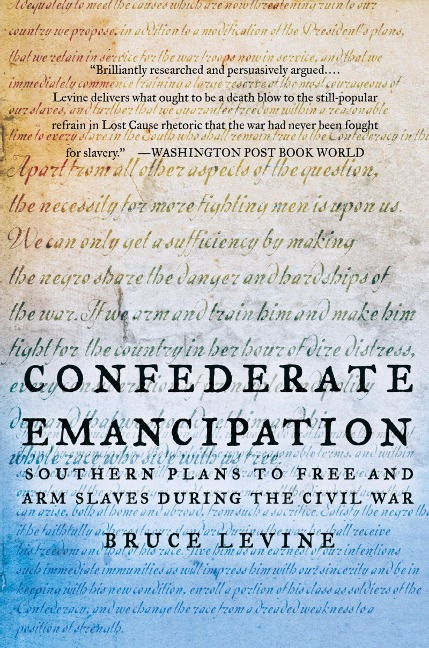
In early 1864, as the Confederate Army of Tennessee licked its wounds after being routed at the Battle of Chattanooga, Major-General Patrick Cleburne (the "Stonewall of the West") proposed that "the most courageous of our slaves" be trained as soldiers and that "every slave in the South who shall remain true to the Confederacy in this war" be freed. In Confederate Emancipation, Bruce Levine looks closely at such Confederate plans to arm and free slaves. He shows that within a year of Cleburne's proposal, which was initially rejected out of hand, Jefferson Davis, Judah P. Benjamin, and Robert E. Lee had all reached the same conclusions. At that point, the idea was debated widely in newspapers and drawing rooms across the South, as more and more slaves fled to Union lines and fought in the ranks of the Union army. Eventually, the soldiers of Lee's army voted on the proposal, and the Confederate government actually enacted a version of it in March. The Army issued the necessary orders just two weeks before Appomattox, too late to affect the course of the war. Throughout the book, Levine captures the voices of blacks and whites, wealthy planters and poor farmers, soldiers and officers, and newspaper editors and politicians from all across the South. In the process, he sheds light on such hot-button topics as what the Confederacy was fighting for, whether black southerners were willing to fight in large numbers in defense of the South, and what this episode foretold about life and politics in the post-war South. Confederate Emancipation offers an engaging and illuminating account of a fascinating and politically charged idea, setting it firmly and vividly in the context of the Civil War and the part played in it by the issue of slavery and the actions of the slaves themselves.
Bruce Levine is James G. Randall Professor of History, University of Illinois at Urbana-Champaign. He is the author of Half Slave and Half Free: The Roots of Civil War and The Spirit of 1848: German Immigrants, Labor Conflict, and the Coming of Civil War, and is co-author of Who Built America? Working People and the Nation's Economy, Politics, Culture, and Society.
Dieses eBook wird im PDF-Format geliefert und ist mit einem Adobe Kopierschutz (DRM) versehen. Sie können dieses eBook mit allen Geräten lesen, die das PDF-Format und den Adobe Kopierschutz (DRM) unterstützen.
Zum Beispiel mit den folgenden Geräten:
• tolino Reader
Laden Sie das eBook direkt über den Reader-Shop auf dem tolino herunter oder übertragen Sie das eBook auf Ihren tolino mit einer kostenlosen Software wie beispielsweise Adobe Digital Editions.
• Sony Reader & andere eBook Reader
Laden Sie das eBook direkt über den Reader-Shop herunter oder übertragen Sie das eBook mit der kostenlosen Software Sony READER FOR PC/Mac oder Adobe Digital Editions auf ein Standard-Lesegeräte mit epub- und Adobe DRM-Unterstützung.
• Tablets & Smartphones
Möchten Sie dieses eBook auf Ihrem Smartphone oder Tablet lesen, finden Sie hier unsere kostenlose Lese-App für iPhone/iPad und Android Smartphone/Tablets.
• PC & Mac
Lesen Sie das eBook direkt nach dem Herunterladen mit einer kostenlosen Lesesoftware, beispielsweise Adobe Digital Editions, Sony READER FOR PC/Mac oder direkt über Ihre eBook-Bibliothek in Ihrem Konto unter „Meine eBooks“ - „online lesen“.
Schalten Sie das eBook mit Ihrer persönlichen Adobe ID auf bis zu sechs Geräten gleichzeitig frei.
Bitte beachten Sie, dass die Kindle-Geräte das Format nicht unterstützen und dieses eBook somit nicht auf Kindle-Geräten lesbar ist.