Und dann auf "Zum Home-Bildschirm [+]".

Stöbern
genialokal zum Startbildschirm hinzufügen
Installieren Sie die genialokal App auf Ihrem Startbildschirm für einen schnellen Zugriff und eine komfortable Nutzung.
Installieren Sie die genialokal App auf Ihrem Startbildschirm für einen schnellen Zugriff und eine komfortable Nutzung.
Ihr gewünschter Artikel ist in 0 Buchhandlungen vorrätig - wählen Sie hier eine Buchhandlung in Ihrer Nähe aus:

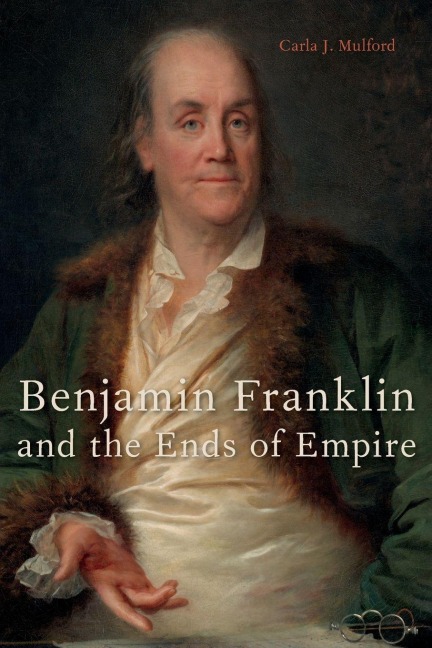
Drawing from Benjamin Franklin's published and unpublished papers, including letters, notes, and marginalia, Benjamin Franklin and the Ends of Empire examines how the early modern liberalism of Franklin's youthful intellectual life helped foster his vision of independence from Britain that became his hallmark achievement. In the early chapters, Carla Mulford explores the impact of Franklin's family history--especially their difficult times during the English Civil War--on Franklin's intellectual life and his personal and political goals. The book's middle chapters show how Franklin's fascination with British imperial strategy grew from his own analyses of the financial, environmental, and commercial potential of North America. Franklin's involvement in Pennsylvania's politics led him to devise strategies for monetary stability, intercolonial trade, Indian affairs, and imperial defense that would have assisted the British Empire in its effort to take over the world. When Franklin realized that the goals of British ministers were to subordinate colonists in a system that assisted the lives of Britons in England but undermined the wellbeing of North Americans, he began to criticize the goals of British imperialism. Mulford argues that Franklin's turn away from the British Empire began in the 1750s--not the 1770s, as most historians have suggested--and occurred as a result of Franklin's perceptive analyses of what the British Empire was doing not just in the American colonies but in Ireland and India. In the last chapters, Mulford reveals how Franklin ultimately grew restive, formed alliances with French intellectuals and the court of France, and condemned the actions of the British Empire and imperial politicians. As a whole, Mulford's book provides a fresh reading of a much-admired founding father, suggesting how Franklin's conception of the freedoms espoused in England's ages old Magna Carta could be realized in the political life of the new American nation.
Carla J. Mulford has published widely in the field of early American studies, but Benjamin Franklin has been her preoccupation for over twenty-five years. She has published over twenty articles and book chapters on Franklin, in addition to The Cambridge Companion to Benjamin Franklin (Cambridge UP, 2009) and Benjamin Franklin and the Ends of Empire (Oxford UP, 2015). She is currently working on a new book, tentatively titled Benjamin Franklin's Electrical Diplomacy. Professor of English at Penn State University, she is the Founding President of the Society of Early Americanists.
- Preface
- Acknowledgments
- Introduction
- Chapter 1: "This obscure Family of ours was early in the Reformation": On Family Memory
- Chapter 2: "I had such a Thirst for Knowledge": Franklin's Boston Youth
- Chapter 3: Franklin's Imperial Imaginings: "Coined Land" and Global Goals
- Chapter 4: Pennsylvania Politics and the Problems of Empire
- Chapter 5: "People in the Colonies . . . better Judges": Observing Empire at Midcentury
- Chapter 6: Franklin in London's Theatre of Empire
- Chapter 7: Love of Country
- Chapter 8: Rebellion to Tyrants, Obedience to God
- Chapter 9: "I intended well, and I hope all will end well": Franklin's Last Years
- Conclusion
- Notes
- Bibliography of Printed Sources
- Index