Und dann auf "Zum Home-Bildschirm [+]".

Stöbern
genialokal zum Startbildschirm hinzufügen
Installieren Sie die genialokal App auf Ihrem Startbildschirm für einen schnellen Zugriff und eine komfortable Nutzung.
Installieren Sie die genialokal App auf Ihrem Startbildschirm für einen schnellen Zugriff und eine komfortable Nutzung.
Ihr gewünschter Artikel ist in 0 Buchhandlungen vorrätig - wählen Sie hier eine Buchhandlung in Ihrer Nähe aus:

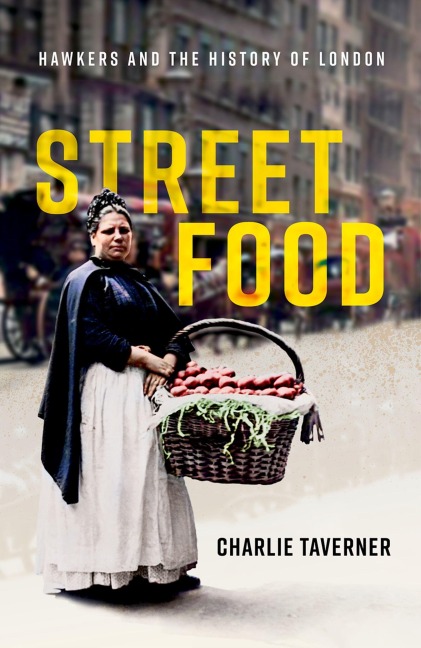
The story of street food in London, from medieval city to global metropolis - and of the women, men, boys, and girls who provided the capital with this vital service.
Charlie Taverner is a social historian of food and cities. After receiving a PhD from Birkbeck, University of London, he held an Economic History Society postdoctoral fellowship at the Institute of Historical Research. He is currently a research fellow on the ERC-funded FoodCult project, based at Trinity College Dublin. His research has appeared in journals such as History Workshop and Urban History. Previously, Charlie worked as a business and agricultural journalist, starting out on the staff of the magazine Farmers Weekly.
Acknowledgements
List of illustrations
Note to the reader
Introduction: Hawkers and the history of London
Part 1: People
Fishwives and costermongers
All sorts of Londoners
The status of street sellers
Hawkers at home
Part 2: Workers
Gutter merchants
Aristocracy of the kerb
The costermonger class
Part 3: Street food
Garden city
Perishing commodities
As regular as the weather permits
Moveable feasts
The metropolitan diet
Part 4: Markets
Liberty of the markets
In defence of hawkers
Friends of the poor
Part 5: Retailers
About the streets
Keeping score
Carnivals of shopping
Part 6: Tools
Shops on their heads
Barrow wheelers
The coster's companion
Part 7: Traffic
Broken pavements
Around the clock
Crossing the road
Part 8: Nuisances
The costermongers' charter
Infamous wretches
Preventing free passage
Part 9: Voices
Tortures of the ear
The crying art
Declaring the seasons
The end of the cries?
Epilogue: The return of street food
Curating street food
Hawkers past and present
Notes
Appendix: Identifying street sellers, 1600-1825
Index