Und dann auf "Zum Home-Bildschirm [+]".

Stöbern
genialokal zum Startbildschirm hinzufügen
Installieren Sie die genialokal App auf Ihrem Startbildschirm für einen schnellen Zugriff und eine komfortable Nutzung.
Installieren Sie die genialokal App auf Ihrem Startbildschirm für einen schnellen Zugriff und eine komfortable Nutzung.



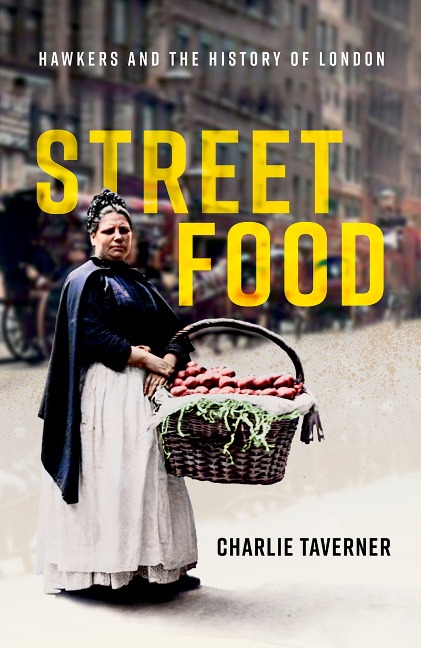
This is the story of the women, men, boys, and girls who hawked oysters, cherries, cabbages, and pies on London's streets, feeding the capital throughout its transformation from medieval city to global metropolis. Street Food reconstructs the working lives of these poor traders, following them from the back alleys and cramped rooms they called home, to the taverns, bridges, and corners where they set up shop. It describes fast-moving food chains, heaving markets, rumbling wheelbarrows, scruffy donkeys, rushing traffic, and advertising cries that echoed through the city. The first long-term, comprehensive history of street selling in London, the book explores the intricacies of hawkers' work and their profound social, economic, and cultural importance to metropolitan life between the late sixteenth and early twentieth centuries. Based on the largest collection of archival and published evidence to date, it not only highlights the crucial roles street sellers played in fuelling the capital's expansion, but argues that their endurance over three centuries raises challenging questions about major narratives and processes of urban history, like modernization, the rise of retail, and the improvement of the streets. And it examines why the street food of the past-like the continuing vitality of street vendors around the world - is so different to the fashionable street food ubiquitous across London today.
Charlie Taverner is a social historian of food and cities. After receiving a PhD from Birkbeck, University of London, he held an Economic History Society postdoctoral fellowship at the Institute of Historical Research. He is currently a research fellow on the ERC-funded FoodCult project, based at Trinity College Dublin. His research has appeared in journals such as History Workshop and Urban History. Previously, Charlie worked as a business and agricultural journalist, starting out on the staff of the magazine Farmers Weekly.
- Acknowledgements - List of illustrations - Note to the reader - Introduction: Hawkers and the history of London - Part 1: People - Fishwives and costermongers - All sorts of Londoners - The status of street sellers - Hawkers at home - Part 2: Workers - Gutter merchants - Aristocracy of the kerb - The costermonger class - Part 3: Street food - Garden city - Perishing commodities - As regular as the weather permits - Moveable feasts - The metropolitan diet - Part 4: Markets - Liberty of the markets - In defence of hawkers - Friends of the poor - Part 5: Retailers - About the streets - Keeping score - Carnivals of shopping - Part 6: Tools - Shops on their heads - Barrow wheelers - The coster's companion - Part 7: Traffic - Broken pavements - Around the clock - Crossing the road - Part 8: Nuisances - The costermongers' charter - Infamous wretches - Preventing free passage - Part 9: Voices - Tortures of the ear - The crying art - Declaring the seasons - The end of the cries? - Epilogue: The return of street food - Curating street food - Hawkers past and present - Notes - Appendix: Identifying street sellers, 1600-1825 - Index