Und dann auf "Zum Home-Bildschirm [+]".

Stöbern
genialokal zum Startbildschirm hinzufügen
Installieren Sie die genialokal App auf Ihrem Startbildschirm für einen schnellen Zugriff und eine komfortable Nutzung.
Installieren Sie die genialokal App auf Ihrem Startbildschirm für einen schnellen Zugriff und eine komfortable Nutzung.
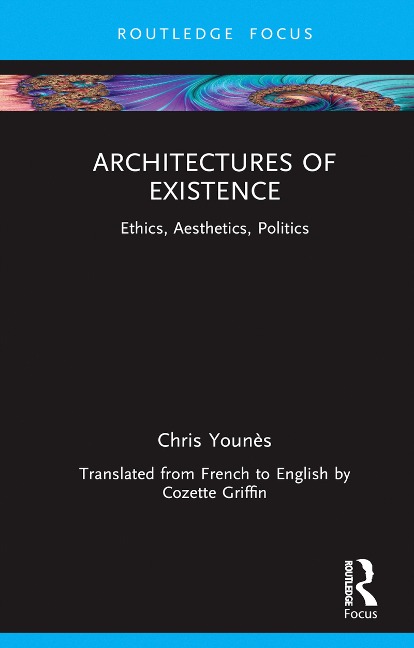
Architectures of Existence proposes that philosophical thinking (ecosophical thinking) can inform the way we engage with our world and its inhabitants, as architects, designers and planners, but also as individuals, as people, and as a society. In Art et existence, Maldiney states: "For us, to inhabit is to exist". This book aims to unfold, extend, articulate and thicken this postulate by interweaving architecture, city, landscape, literature and philosophy. It takes up the synergistic lines of long-term research carried out from an ecosophical perspective. Such an attitude explores an art of existing in multiplicity, singularity and openness, manifesting the critical dimension through a reinterpretation of the knotting of the trajectories of time, humanity and its becoming. Insisting on what is between things and beings as well as on what is happening, regenerating, recycling, reviving, saving, diversifying, sparing, recreating, meditating: and so caring. These are all eco-rhythms of a different type between human and non-human, to consider ourselves in the world. In an era of uncertainty and climate threats, this book develops the margins of possibility offered by the subject of architecture. This book will be of interest to researchers and students of architecture, urban planning and philosophy.
Chris Younès is a professor at the ESA (École Spéciale d'Architecture) in Paris, France. Founder of the GERPHAU laboratory, she is currently president of the International Thematic Network PhilAU (Philosophy, Architecture, Urban). She is also a member of the Board of the European Association for Architectural Education and a founding member of ARENA, the Architectural Research Network.
Foreword by Benoît Goetz Acknowledgements Introduction: architecture as spatio-temporal articulation I. Making the world as an act of the resisting against the unbearable II. Trial by ordeal - the plague III. Inheritance and disinheritance IV. Inhabit and co-inhabit V. Milieus-World VI. Metamorphoses and utopias VII. Sharing the places and spaces of the social contract VIII. The event of the city and the aesthetic event IX. Subversive resistance of Situationists X. Women at the heart of human life XI. Impossible house and existential poetics XII. Eden and the planetary garden XIII. The landscape as a common good XIV. Biosophy and ecosophy XV. The stakes involved in nature-culture co-rhythms Conclusion Index
Dieses eBook wird im PDF-Format geliefert und ist mit einem Adobe Kopierschutz (DRM) versehen. Sie können dieses eBook mit allen Geräten lesen, die das PDF-Format und den Adobe Kopierschutz (DRM) unterstützen.
Zum Beispiel mit den folgenden Geräten:
• tolino Reader
Laden Sie das eBook direkt über den Reader-Shop auf dem tolino herunter oder übertragen Sie das eBook auf Ihren tolino mit einer kostenlosen Software wie beispielsweise Adobe Digital Editions.
• Sony Reader & andere eBook Reader
Laden Sie das eBook direkt über den Reader-Shop herunter oder übertragen Sie das eBook mit der kostenlosen Software Sony READER FOR PC/Mac oder Adobe Digital Editions auf ein Standard-Lesegeräte mit epub- und Adobe DRM-Unterstützung.
• Tablets & Smartphones
Möchten Sie dieses eBook auf Ihrem Smartphone oder Tablet lesen, finden Sie hier unsere kostenlose Lese-App für iPhone/iPad und Android Smartphone/Tablets.
• PC & Mac
Lesen Sie das eBook direkt nach dem Herunterladen mit einer kostenlosen Lesesoftware, beispielsweise Adobe Digital Editions, Sony READER FOR PC/Mac oder direkt über Ihre eBook-Bibliothek in Ihrem Konto unter „Meine eBooks“ - „online lesen“.
Schalten Sie das eBook mit Ihrer persönlichen Adobe ID auf bis zu sechs Geräten gleichzeitig frei.
Bitte beachten Sie, dass die Kindle-Geräte das Format nicht unterstützen und dieses eBook somit nicht auf Kindle-Geräten lesbar ist.