Und dann auf "Zum Home-Bildschirm [+]".

Stöbern
genialokal zum Startbildschirm hinzufügen
Installieren Sie die genialokal App auf Ihrem Startbildschirm für einen schnellen Zugriff und eine komfortable Nutzung.
Installieren Sie die genialokal App auf Ihrem Startbildschirm für einen schnellen Zugriff und eine komfortable Nutzung.
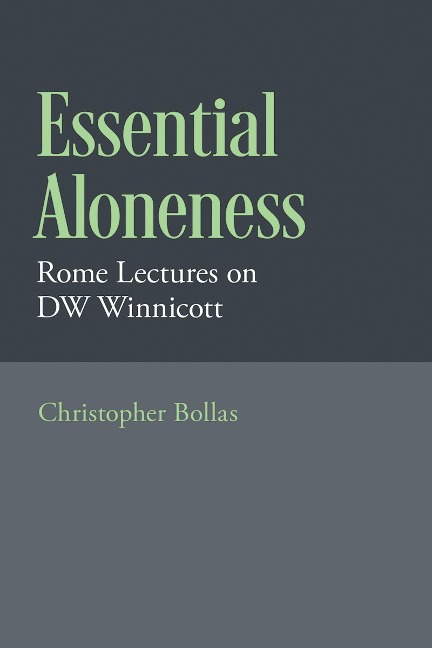
Essential Aloneness presents a series of lectures on DW Winnicott delivered by Christopher Bollas in the 1980s to students and staff of the Institute of Child Neuropsychiatry at the University of Rome. Those attending were familiar with Winnicott's works; indeed, many were expert. But a question remained. How do you use Winnicott's concepts in the clinical space? Bollas not only addresses that question but also writes about his own clinical formulations at the time, such as 'the transformational object' or 'the unthought known.' Each chapter contains a unique and distinct talk, as delivered and suffused with the aliveness that is a hallmark of in-person lectures, with Bollas exhibiting a remarkable flexibility of scope and focus in order to meet the attendant group's clinical interests. The book teems with questions of Winnicottian psychoanalytic theory and practice no less relevant today than when the lectures were first delivered. These questions identify the subtle and complex positions taken by Winnicott, as understood by Bollas and other analysts in the United Kingdom and in Italy, who worked with him and knew how to make use of the Winnicott object. One of Winnicott's literary editors, Bollas brings a unique perspective in real time to the challenges Winnicott's thinking posed to the psychoanalytical, literary, and intellectual culture in the United Kingdom and abroad in the decade after Winnicott's death.
Christopher Bollas, PhD, is one of the leading theorists in psychoanalysis. Bollas was Professor of English at the University of Massachusetts from 1983 to 1987, Visiting Professor of Psychoanalysis at the University of Rome from 1978 to 1998, Director of Education at the Austen Riggs Center in Stockbridge, Massachusetts, from 1984 to 1987, and has been a visiting lecturer at universities in the United Kingdom and the United States. He is often noted for his inventive use of ordinary terms or his neologisms, and for his creatively accessible works.
Introduction Winnicott Books Cited Chapter 1: Aloneness Chapter 2: Living with...(M)other Chapter 3: True Self Chapter 4: Becoming a Living Reality Chapter 5: False Self Chapter 6: On Celebration and Ruthlessness Chapter 7: Transitional Objects Chapter 8: The Uses of Illusion Chapter 9: Communicating/Not Communicating Chapter 10: Being and Potential Space Chapter 11: Object Relating Chapter 12: The Use of an Object Chapter 13: The Vitality of Aggression Chapter 14: Morals Chapter 15: Playing and Creativity Chapter 16: Questions Chapter 17: Case Presentations Bibliography
Dieses eBook wird im PDF-Format geliefert und ist mit einem Adobe Kopierschutz (DRM) versehen. Sie können dieses eBook mit allen Geräten lesen, die das PDF-Format und den Adobe Kopierschutz (DRM) unterstützen.
Zum Beispiel mit den folgenden Geräten:
• tolino Reader
Laden Sie das eBook direkt über den Reader-Shop auf dem tolino herunter oder übertragen Sie das eBook auf Ihren tolino mit einer kostenlosen Software wie beispielsweise Adobe Digital Editions.
• Sony Reader & andere eBook Reader
Laden Sie das eBook direkt über den Reader-Shop herunter oder übertragen Sie das eBook mit der kostenlosen Software Sony READER FOR PC/Mac oder Adobe Digital Editions auf ein Standard-Lesegeräte mit epub- und Adobe DRM-Unterstützung.
• Tablets & Smartphones
Möchten Sie dieses eBook auf Ihrem Smartphone oder Tablet lesen, finden Sie hier unsere kostenlose Lese-App für iPhone/iPad und Android Smartphone/Tablets.
• PC & Mac
Lesen Sie das eBook direkt nach dem Herunterladen mit einer kostenlosen Lesesoftware, beispielsweise Adobe Digital Editions, Sony READER FOR PC/Mac oder direkt über Ihre eBook-Bibliothek in Ihrem Konto unter „Meine eBooks“ - „online lesen“.
Schalten Sie das eBook mit Ihrer persönlichen Adobe ID auf bis zu sechs Geräten gleichzeitig frei.
Bitte beachten Sie, dass die Kindle-Geräte das Format nicht unterstützen und dieses eBook somit nicht auf Kindle-Geräten lesbar ist.