Und dann auf "Zum Home-Bildschirm [+]".

Stöbern
genialokal zum Startbildschirm hinzufügen
Installieren Sie die genialokal App auf Ihrem Startbildschirm für einen schnellen Zugriff und eine komfortable Nutzung.
Installieren Sie die genialokal App auf Ihrem Startbildschirm für einen schnellen Zugriff und eine komfortable Nutzung.
Ihr gewünschter Artikel ist in 0 Buchhandlungen vorrätig - wählen Sie hier eine Buchhandlung in Ihrer Nähe aus:

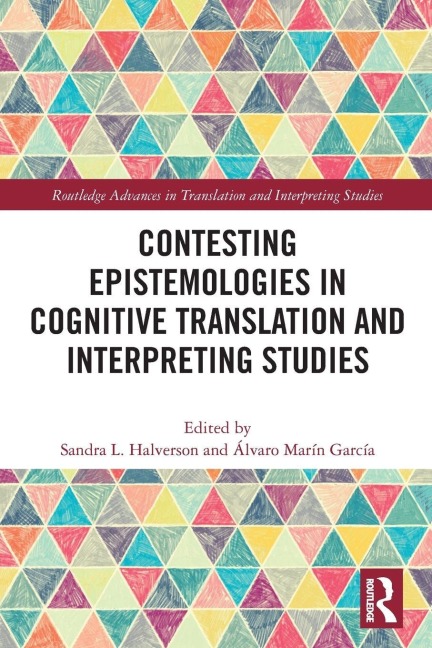

This dynamic collection synthesizes and critically reflects on epistemological challenges and developments within Cognitive Translation and Interpreting Studies, problematizing a range of issues. These critical essays provide a means of encouraging further development by grounding new theories, stances, and best practices.
Sandra L. Halverson is a professor of translation and professional communication at the University of Agder. Her research has centered on questions related to various areas of translation and interpreting studies and cognitive linguistics, and she has published both empirical and theoretical/conceptual work. Other long-term research interests are the epistemology of translation studies and research methodology. Professor Halverson is a member of the Translation Research, Empiricism and Cognition network (TREC) and INTERACT. She served as co-editor of Target for a period of eight years and currently serves on the editorial boards of several TIS journals. She was appointed CETRA Chair Professor for 2018. Álvaro Marín García is an assistant professor at the School of Translation and Interpreting at the University of Valladolid (Spain). Previously, he has worked as a translaiton lecturer at the University of Essex (UK).He has also taught translation theory and practice at Kent State University (USA), where he completed his PhD in translation studies. His research interests are in cultural and intellectual history and its relation to translation practices, cognitve translation studies, and the epistemology of translation studies. He is currently investigating translation expertise from an emic perspective as well as new forms of theory development from a pluralistic methodology as applied to cognitive translation studies and translation history.
Introduction: Scientific maturity and epistemological reflection in cognitive Translation and Interpreting Studies Álvaro Marín García & Sandra L. Halverson Part I Challenging epistemologies Epistemologies of translation expertise: Notions in research and praxis Hanna Risku & Daniela Schlager Processualizing process in Cognitive Translation and Interpreting Studies Piotr Blumczynski Sociocognitive constructs in Translation and Interpreting Studies (TIS): Do we really need concepts like norms and risk when we have a comprehensive usage-based theory of language? Sandra L. Halverson & Haidee Kotze "Tackling stillness through movement"; or constraining the extended mind. Cognitive-semiotic insights into Translation Kobus Marais & Jani Marais Latent variables in Translation and Interpreting Studies: Ontology, epistemology, and methodology Christopher D. Mellinger & Thomas A. Hanson Part II Converging epistemologies Translation product and process data: A happy marriage or worlds apart? Tatiana Serbina & Stella Neumann Looking back to move forward: Towards a situated, distributed, and extended account of expertise Fabio Alves, Igor A. Lourenço da Silva An enactivist-posthumanist perspective on the translation process Michael Carl Part III Pluralist epistemologies Where does it hurt? Learning from the parallels between medicine and Cognitive Translation and Interpreting Studies Ricardo Muñoz & Christian Olalla Soler Towards a pluralist approach to translation theory development Álvaro Marín García