Und dann auf "Zum Home-Bildschirm [+]".

Stöbern
genialokal zum Startbildschirm hinzufügen
Installieren Sie die genialokal App auf Ihrem Startbildschirm für einen schnellen Zugriff und eine komfortable Nutzung.
Installieren Sie die genialokal App auf Ihrem Startbildschirm für einen schnellen Zugriff und eine komfortable Nutzung.
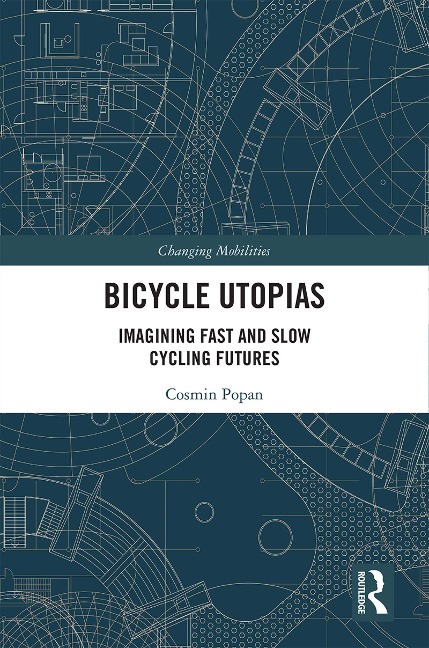
Bicycle Utopias investigates the future of urban mobilities and post-car societies, arguing that the bicycle can become the nexus around which most human movement will revolve. Drawing on literature on post-car futures (Urry 2007; Dennis and Urry 2009), transition theory (Geels et al. 2012) and utopian studies (Levitas 2010, 2013), this book imagines a slow bicycle system as a necessary means to achieving more sustainable mobility futures. The imagination of a slow bicycle system is done in three ways: - Scenario building to anticipate how cycling mobilities will look in the year 2050. - A critique of the system of automobility and of fast cycling futures. - An investigation of the cycling senses and sociabilities to describe the type of societies that such a slow bicycle system will enable. Bicycle Utopias will appeal to students and scholars in fields such as sociology, mobilities studies, human geography and urban and transport studies. This work may also be of interest to advocates, activists and professionals in the domains of cycling and sustainable mobilities.
Cosmin Popan is Research Assistant in the Department of Sociology at Manchester Metropolitan University
Chapter 1, Prologue: Imagining a slow bicycle system The new 'structure of feeling' The end of neoliberalism: embracing the slow The urban form Bike + train + cargo = love Cycling as mobility policy From subculture to culture The bicycle economy and big data Know-how and technology transfer Innovations in bicycles and accessories Broader societal and economic changes Steps from 2016 to 2050 Chapter 2, Introduction: Tips of the cycling iceberg Chapter 3: How to imagine biketopias Utopia as method Conclusions: Enacting the social Chapter 4: Beyond autopia The elephant in the city From autopia to Carmageddon Electric, autonomous, networked, shared The mobility growth paradigm Going car-free Careless car-free? Conclusions: Beyond cars, beyond growth Chapter 5: Utopias, dystopias, biketopias In praise of slowness Early biketopias of modernity and progress Fast cycling for urban regeneration and growth Slow bicycle utopias Mad Max on a bike Convivial biketopias Bike spaces of hope Conclusions: A break from growth Chapter 6: Senses On growing pedals Velomobility at a glance Grow ears, awaken the whole body Working the inner body: balance and movement Pain festivities: 'sufferfest' How to achieve eurhythmia? Conclusions: Flowing towards eudaimonia Chapter 7: Sociabilities Cycling as interaction order and sociable practice The Ride-Formation Swarm sociabilities Conversation sociabilities Carnivalesque sociabilities Club sociabilities The chain-gang The accordion Conclusions: Fluid Ride-Formations Chapter 8: Slowness Need for speed Tactics of slowness Affecting the slow Slowness, sufficiency, de-growth Conclusions: A norm of sufficiency Chapter 9: Conclusions
Dieses eBook wird im PDF-Format geliefert und ist mit einem Adobe Kopierschutz (DRM) versehen. Sie können dieses eBook mit allen Geräten lesen, die das PDF-Format und den Adobe Kopierschutz (DRM) unterstützen.
Zum Beispiel mit den folgenden Geräten:
• tolino Reader
Laden Sie das eBook direkt über den Reader-Shop auf dem tolino herunter oder übertragen Sie das eBook auf Ihren tolino mit einer kostenlosen Software wie beispielsweise Adobe Digital Editions.
• Sony Reader & andere eBook Reader
Laden Sie das eBook direkt über den Reader-Shop herunter oder übertragen Sie das eBook mit der kostenlosen Software Sony READER FOR PC/Mac oder Adobe Digital Editions auf ein Standard-Lesegeräte mit epub- und Adobe DRM-Unterstützung.
• Tablets & Smartphones
Möchten Sie dieses eBook auf Ihrem Smartphone oder Tablet lesen, finden Sie hier unsere kostenlose Lese-App für iPhone/iPad und Android Smartphone/Tablets.
• PC & Mac
Lesen Sie das eBook direkt nach dem Herunterladen mit einer kostenlosen Lesesoftware, beispielsweise Adobe Digital Editions, Sony READER FOR PC/Mac oder direkt über Ihre eBook-Bibliothek in Ihrem Konto unter „Meine eBooks“ - „online lesen“.
Schalten Sie das eBook mit Ihrer persönlichen Adobe ID auf bis zu sechs Geräten gleichzeitig frei.
Bitte beachten Sie, dass die Kindle-Geräte das Format nicht unterstützen und dieses eBook somit nicht auf Kindle-Geräten lesbar ist.