Und dann auf "Zum Home-Bildschirm [+]".

Stöbern
genialokal zum Startbildschirm hinzufügen
Installieren Sie die genialokal App auf Ihrem Startbildschirm für einen schnellen Zugriff und eine komfortable Nutzung.
Installieren Sie die genialokal App auf Ihrem Startbildschirm für einen schnellen Zugriff und eine komfortable Nutzung.
Ihr gewünschter Artikel ist in 0 Buchhandlungen vorrätig - wählen Sie hier eine Buchhandlung in Ihrer Nähe aus:

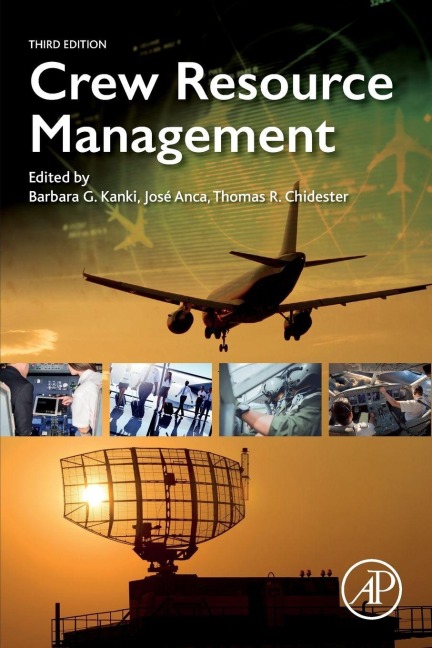
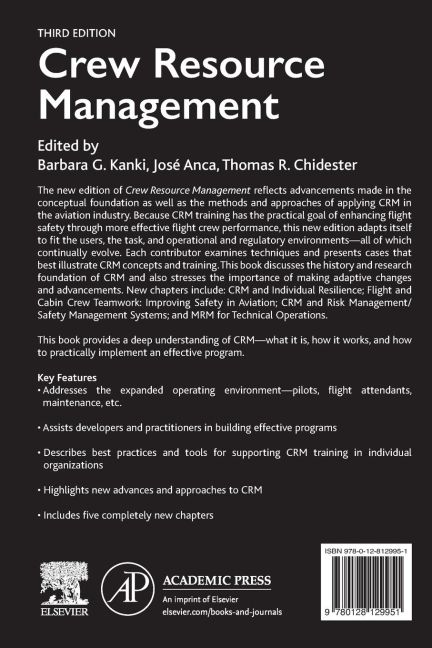
The new edition of Crew Resource Management reflects advancements made in the conceptual foundation as well as the methods and approaches of applying CRM in the aviation industry. Because CRM training has the practical goal of enhancing flight safety through more effective flight crew performance, this new edition adapts itself to fit the users, the task, and operational and regulatory environments--all of which continually evolve. Each contributor examines techniques and presents cases that best illustrate CRM concepts and training. This book discusses the history and research foundation of CRM and also stresses the importance of making adaptive changes and advancements. New chapters include: CRM and Individual Resilience; Flight and Cabin Crew Teamwork: Improving Safety in Aviation: CRM and Risk Management/Safety Management Systems; and MRM for Technical Operations. This book provides a deep understanding of CRM--what it is, how it works, and how to practically implement an effective program.
Dr. Barbara Kanki served as a Research Scientist at the National Aeronautics and Space Administration (NASA), Ames Research Center (Moffett Field, California) in the Human Systems Integration Division. Over her tenure of more than 25 years, she conducted human performance research in support of NASA Aviation Safety Programs, Human Factors and Performance for Space Safety, and a variety of Human Factors programs for the Federal Aviation Administration (FAA). In a consulting role she worked with other high risk industries such as the medical and nuclear power fields.
Dr. Kanki's research activities have ranged across human factors topics such as crew communication and coordination, organizational factors, information and workload management for aviation operations including flight crews, ground control, and technical operations. Her research interests include human-centered procedure and document design, integration and training for new technologies as well as safety topics such as voluntary reporting and event investigation. She has supported the space side of NASA in human and socio-technical risk factors, team training, and procedure design primarily for the space shuttle program at Kennedy Space Center and has participated on NASA mishap boards, safety assessments and National Transportation Safety Board human performance investigations. After retiring from NASA in 2014, Dr. Kanki continues to contribute to NASA projects and FAA/industry groups, and is the current chair of the Human Performance working group of the International Association for the Advancement of Space Safety.
Dr. Kanki received her doctorate in Behavioral Sciences from the University of Chicago, where she specialized in the areas of communication and group dynamics. She continues to author, edit, and review books, journals, and papers on human factors topics.
Part I: The Nature of CRM 1 1. Why CRM? Empirical and Theoretical Bases of Human Factors Training 2. Teamwork and Organizational Factors 3. Crews as Groups: Their Formation and Their Leadership 4. Communication and Crew Resource Management 5. Flight Crew Decision-Making 6. CRM (Nontechnical) Skills: A European Perspective 7. Crew Resource Management and Individual Resilience 8. Crew Resource Management, Risk, and Safety Management Systems Part II: CRM Training Applications 9. The Design, Delivery, and Evaluation of Crew Resource Management Training 10. Line Oriented Flight Training: A Practical Guide for Developers 11. Line Operations Simulation Development Tools 12. Crew Resource Management and Line Operations Safety Audit 13. Maintenance Resource Management for Technical Operations 14. Flight and Cabin Crew Teamwork: Improving Safety in Aviation 15. The Migration of Crew Resource Management Training Part III: CRM Perspectives 16. A Regulatory Perspective 17. A Regulatory Perspective II 18. The Accident Investigator's Perspective 19. The Military Perspective 20. Cultural Issues and Crew Resource Management Training 21. Airline Pilots, Training, and CRM in Today's Environment 22. The Future of CRM