Und dann auf "Zum Home-Bildschirm [+]".

Stöbern
genialokal zum Startbildschirm hinzufügen
Installieren Sie die genialokal App auf Ihrem Startbildschirm für einen schnellen Zugriff und eine komfortable Nutzung.
Installieren Sie die genialokal App auf Ihrem Startbildschirm für einen schnellen Zugriff und eine komfortable Nutzung.
Ihr gewünschter Artikel ist in 0 Buchhandlungen vorrätig - wählen Sie hier eine Buchhandlung in Ihrer Nähe aus:

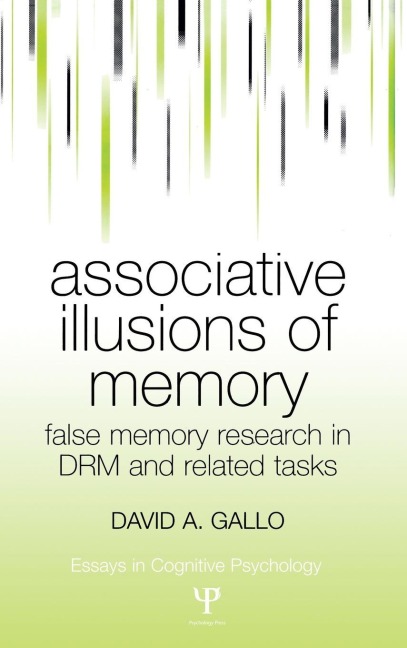
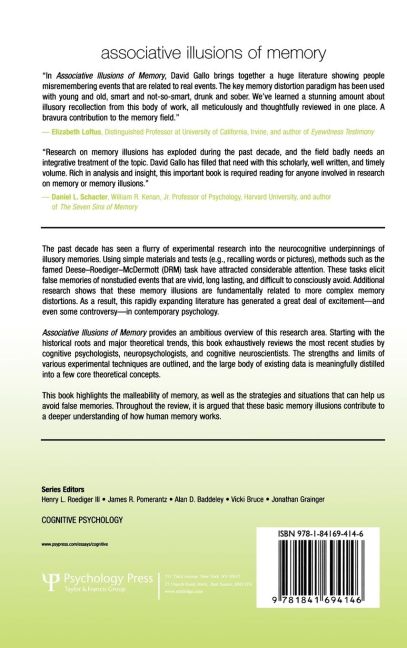
The ability to remember the seemingly infinite episodes of our lives is a miracle of the human mind. But memory is not always accurate, and we sometimes think that an event that never happened actually did. Such false memories can be benign, as when we entertain each other (and our own egos) with embellished stories that have been exaggerated across retellings. Other times they can have grave implications, as when an eyewitness falsely recognizes an innocent person as a murderer. Over the past decade, there has been a boom in the systematic investigation of certain types of false memories. These are false memories of events that did not occur but are in somehow related, via associations or similarity, to events that did occur. Hundreds of researchers have contributed to these investigations, using a variety of tools from cognitive psychology, neuropsychology, neuroscience, and social psychology. This volume reviews and assesses the fruits of this vast research enterprise. In addition to elucidating the occurrence of false memories, the paradigms that cognitive psychologists have developed are becoming increasingly popular as tools and methods for a variety of applications (e.g. individual differences, neuropsychological profiles, and neuroimaging investigations). This volume will therefore be of interest to a large number of cognitive psychologists not only researching in human memory, but also psychologists with a variety of different research interests.
David Gallo is an Assistant Professort of Psychology at Chicago University. He previously was an NIH postdoctoral research fellow at Harvard University and he received his PhD in Experimental Psychology at Washington University in St. Louis, where he was awarded a graduate research scholarship from the American Psychological Foundation
Part I. Background. Associations and errors through history. Converging association tasks. Part II. Basic theories and data. Processes that cause false memory.Illusory recollection. Processes that reduce false memory. Additional study and test manipulations. Part III. Applications and data. Individual differences and generalizability. Development and aging. Neuropsychology and drugs. Neuroimaging and localization. Summary and conclusions.