Und dann auf "Zum Home-Bildschirm [+]".

Stöbern
genialokal zum Startbildschirm hinzufügen
Installieren Sie die genialokal App auf Ihrem Startbildschirm für einen schnellen Zugriff und eine komfortable Nutzung.
Installieren Sie die genialokal App auf Ihrem Startbildschirm für einen schnellen Zugriff und eine komfortable Nutzung.


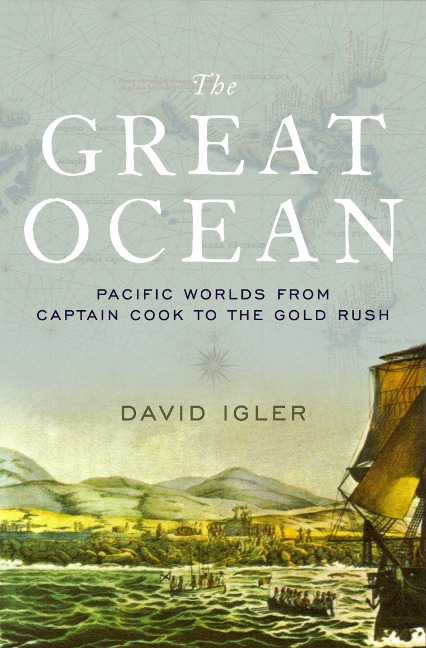
The Pacific of the early eighteenth century was not a single ocean but a vast and varied waterscape, a place of baffling complexity, with 25,000 islands and seemingly endless continental shorelines. But with the voyages of Captain James Cook, global attention turned to the Pacific, and European and American dreams of scientific exploration, trade, and empire grew dramatically. By the time of the California gold rush, the Pacific's many shores were fully integrated into world markets-and world consciousness. The Great Ocean draws on hundreds of documented voyages--some painstakingly recorded by participants, some only known by archeological remains or indigenous memory--as a window into the commercial, cultural, and ecological upheavals following Cook's exploits, focusing in particular on the eastern Pacific in the decades between the 1770s and the 1840s. Beginning with the expansion of trade as seen via the travels of William Shaler, captain of the American Brig Lelia Byrd, historian David Igler uncovers a world where voyagers, traders, hunters, and native peoples met one another in episodes often marked by violence and tragedy. Igler describes how indigenous communities struggled against introduced diseases that cut through the heart of their communities; how the ordeal of Russian Timofei Tarakanov typified the common practice of taking hostages and prisoners; how Mary Brewster witnessed first-hand the bloody "great hunt" that decimated otters, seals, and whales; how Adelbert von Chamisso scoured the region, carefully compiling his notes on natural history; and how James Dwight Dana rivaled Charles Darwin in his pursuit of knowledge on a global scale. These stories--and the historical themes that tie them together--offer a fresh perspective on the oceanic worlds of the eastern Pacific. Ambitious and broadly conceived, The Great Ocean is the first book to weave together American, oceanic, and world history in a path-breaking portrait of the Pacific world.
David Igler is Associate Professor of History at the University of California, Irvine. His books include Industrial Cowboys: Miller & Lux and the Transformation of the Far West, 1850-1920 and The Human Tradition in California.
Acknowledgments Introduction: Ocean Worlds 1. Seas of Commerce 2. Disease, Sex, and Indigenous Depopulation 3. Hostages and Captives 4. The Great Hunt 5. Naturalists and Natives in the Great Ocean 6. Assembling the Pacific Conclusion: When East Became West Notes Bibliography Index
Dieses eBook wird im PDF-Format geliefert und ist mit einem Adobe Kopierschutz (DRM) versehen. Sie können dieses eBook mit allen Geräten lesen, die das PDF-Format und den Adobe Kopierschutz (DRM) unterstützen.
Zum Beispiel mit den folgenden Geräten:
• tolino Reader
Laden Sie das eBook direkt über den Reader-Shop auf dem tolino herunter oder übertragen Sie das eBook auf Ihren tolino mit einer kostenlosen Software wie beispielsweise Adobe Digital Editions.
• Sony Reader & andere eBook Reader
Laden Sie das eBook direkt über den Reader-Shop herunter oder übertragen Sie das eBook mit der kostenlosen Software Sony READER FOR PC/Mac oder Adobe Digital Editions auf ein Standard-Lesegeräte mit epub- und Adobe DRM-Unterstützung.
• Tablets & Smartphones
Möchten Sie dieses eBook auf Ihrem Smartphone oder Tablet lesen, finden Sie hier unsere kostenlose Lese-App für iPhone/iPad und Android Smartphone/Tablets.
• PC & Mac
Lesen Sie das eBook direkt nach dem Herunterladen mit einer kostenlosen Lesesoftware, beispielsweise Adobe Digital Editions, Sony READER FOR PC/Mac oder direkt über Ihre eBook-Bibliothek in Ihrem Konto unter „Meine eBooks“ - „online lesen“.
Schalten Sie das eBook mit Ihrer persönlichen Adobe ID auf bis zu sechs Geräten gleichzeitig frei.
Bitte beachten Sie, dass die Kindle-Geräte das Format nicht unterstützen und dieses eBook somit nicht auf Kindle-Geräten lesbar ist.