Und dann auf "Zum Home-Bildschirm [+]".

Stöbern
genialokal zum Startbildschirm hinzufügen
Installieren Sie die genialokal App auf Ihrem Startbildschirm für einen schnellen Zugriff und eine komfortable Nutzung.
Installieren Sie die genialokal App auf Ihrem Startbildschirm für einen schnellen Zugriff und eine komfortable Nutzung.
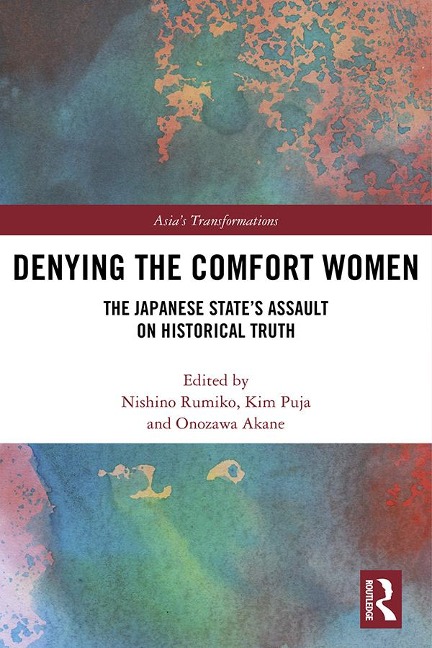
Planned, instituted and run by the Japanese Imperial Military during the Asia-Pacific War, the 'comfort women' system remains hugely controversial. Although political leaders often contest the role of coercion, many argue that the 'comfort women' were mobilized forcibly, through processes of abduction and deception. Utilising archival research, court testimonies and eyewitness accounts of both survivors and military and civilian personnel, this book argues its case in three ways. Part I analyses the modalities of coercion employed by the authorities and investigates the historical differences and continuities between licensed peacetime prostitution and wartime sexual slavery. Part II then examines the failures f the Asian Women's Fund to resolve the 'comfort women' issue, whilst Part III explores the removal of 'comfort women' content from school history texts after the late 1990s and details Japan's diplomatic efforts to prevent war victims froms uing the post-war state. Presenting a strong argument in opposition to the revisionist school of thought, this book ultimately concludes that a realistic settlement would see a victim-oriented solution that the survivors can accept. Written by leading Japanese and zainichi Korean scholars, Denying the Comfort Women will be of huge interest to students and scholars of modern Japanese studies, gender studies, women's studies and Asian history.
NISHINO Rumiko is co-representative of Violence against Women in War Research Action Center and a core member of the Center for Research and Documentation on Japan's War Responsibility and the Women's Active Museum on War and Peace. KIM Puja is Professor of gender studies and gender history at the Institute of Global Studies, Tokyo University of Foreign Studies, Japan. ONOZAWA Akane is Professor of modern Japanese history and gender studies at Rikkyo University in Tokyo, Japan.
INTRODUCTION, Nishino Rumiko, Kim Puja, Onozawa Akane PART I: COMFORT WOMEN, THE KONO STATEMENT, AND THE QUEST FOR TRUTH 1. The Kono Statement: Its Historical Significance and Limitations, Yoshimi Yoshiaki 2. Forcible Procurement: What Survivor Testimonies Tell Us, Nishino Rumiko Insight on the Issues: Coercion, Sexual Violence, and Rape Centers in Yu County, Shanxi Province, Ikeda Eriko 3. Comfort Women and State Prostitution, Onozawa Akane Insight on the Issues: Guilty Verdicts for the Traffickers of Comfort Women: The Shizuoka and Nagasaki Incidents, Maeda Akira PART II: WHY THE ASIAN WOMEN'S FUND WAS NOT A SOLUTION 4. The Failure of the Asian Women's Fund: The Japanese Government's Legal Responsibility and the Colonial Legacy, Kim Puja Insight on the Issues: The Tokyo War Crimes Tribunal, Class B and C War Criminals, and Japan's Peace Treaty Obligations, Hayashi Hirofumi 5. A Reconciliation Discourse that Shuns Survivors, Nishino Rumiko Insight on the Issues: The Mobilization of Korean Adolescents as Comfort Women: Colonialism and the Victimization of Teenage Girls, Kim Puja PART III: A REALISTIC SETTLEMENT IS A SETTLEMENT THAT VICTIMIZED WOMEN CAN ACCEPT 6. Comfort Women, Textbooks, and the Rise of "New Right" Revisionism, Tarwara Yoshifumi 7. The Japan-ROK Claims Settlement and the Comfort Women, Yoshizawa Fumitoshi 8. Listen to Survivors' Voices! Yang Chingja EPILOGUE: The Struggle for Justice Continues, Nishino Rumiko, Kim Puja, Onozawa Akane APPENDICES: KEY POLICY DOCUMENTS ON THE COMFORT WOMEN Appendix 1: The Kono Statement (August 4, 1993) Appendix 2: The Murayama Statement (August 15, 1995) Appendix 3: The Abe Statement (August 14, 2015) Appendix 4: The Japan-ROK Agreement (December 28, 2015) THE REDRESS MOVEMENT: A CHRONOLOGY OF EVENTS (1988-2017)
Dieses eBook wird im PDF-Format geliefert und ist mit einem Adobe Kopierschutz (DRM) versehen. Sie können dieses eBook mit allen Geräten lesen, die das PDF-Format und den Adobe Kopierschutz (DRM) unterstützen.
Zum Beispiel mit den folgenden Geräten:
• tolino Reader
Laden Sie das eBook direkt über den Reader-Shop auf dem tolino herunter oder übertragen Sie das eBook auf Ihren tolino mit einer kostenlosen Software wie beispielsweise Adobe Digital Editions.
• Sony Reader & andere eBook Reader
Laden Sie das eBook direkt über den Reader-Shop herunter oder übertragen Sie das eBook mit der kostenlosen Software Sony READER FOR PC/Mac oder Adobe Digital Editions auf ein Standard-Lesegeräte mit epub- und Adobe DRM-Unterstützung.
• Tablets & Smartphones
Möchten Sie dieses eBook auf Ihrem Smartphone oder Tablet lesen, finden Sie hier unsere kostenlose Lese-App für iPhone/iPad und Android Smartphone/Tablets.
• PC & Mac
Lesen Sie das eBook direkt nach dem Herunterladen mit einer kostenlosen Lesesoftware, beispielsweise Adobe Digital Editions, Sony READER FOR PC/Mac oder direkt über Ihre eBook-Bibliothek in Ihrem Konto unter „Meine eBooks“ - „online lesen“.
Schalten Sie das eBook mit Ihrer persönlichen Adobe ID auf bis zu sechs Geräten gleichzeitig frei.
Bitte beachten Sie, dass die Kindle-Geräte das Format nicht unterstützen und dieses eBook somit nicht auf Kindle-Geräten lesbar ist.