Und dann auf "Zum Home-Bildschirm [+]".

Stöbern
genialokal zum Startbildschirm hinzufügen
Installieren Sie die genialokal App auf Ihrem Startbildschirm für einen schnellen Zugriff und eine komfortable Nutzung.
Installieren Sie die genialokal App auf Ihrem Startbildschirm für einen schnellen Zugriff und eine komfortable Nutzung.

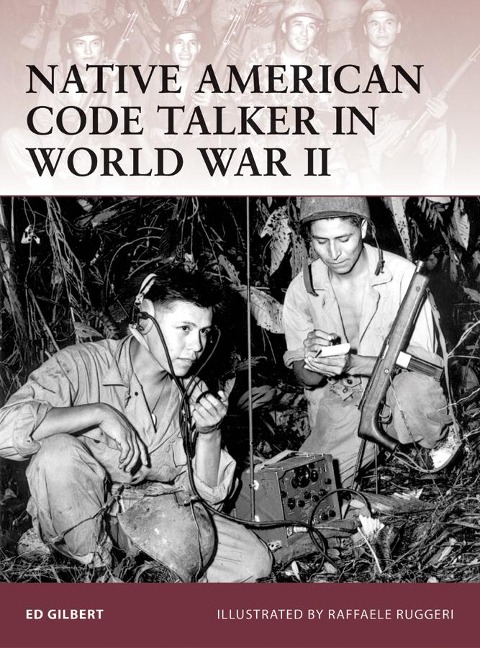
'Were it not for the Navajo Code Talkers the Marines would never have taken Iwo Jima and other places' (Anonymous, Marine Corps signal officer).
Ed Gilbert uses personal interviews with veterans to tell their fascinating story.
Beginning with the first operational use of Native American languages in World War I, he explores how in World War II the US again came to employ this subtle, but powerful 'weapon.' Despite all efforts, the Japanese were never able to decode their messages and the Navajo code talkers contributed significantly to US victories in the Pacific. Approximately 400 Navajos served in this crucial role.
Their legend of the 'code talker' has been celebrated by Hollywood in films, such as Windtalkers, and this book reveals the real-life story of their extraordinary involvement in World War II.
Ed Gilbert was a Marine artilleryman and a Battalion Training NCO in the Marine Corps Reserve. He has written numerous titles in Osprey's Warrior, Battle Orders and Campaign series. omc;idomg oral and operational histories of the Marine Corps' armored units in World War II and the Korean War.
Raffaele Ruggeri lives in Bologna. After studying at the Fine Arts Academy, he worked in several areas of graphics and design before deciding to devote himself to illustration. He has long been interested in military history and has illustrated a number of books for Osprey.
Introduction
Recruitment
Training
Uniform and Equipment
Belief and Belonging
On Campaign
Battle
After the War
Glossary
Bibliography
Color Plate Commentary
Index