Und dann auf "Zum Home-Bildschirm [+]".

Stöbern
genialokal zum Startbildschirm hinzufügen
Installieren Sie die genialokal App auf Ihrem Startbildschirm für einen schnellen Zugriff und eine komfortable Nutzung.
Installieren Sie die genialokal App auf Ihrem Startbildschirm für einen schnellen Zugriff und eine komfortable Nutzung.
Ihr gewünschter Artikel ist in 0 Buchhandlungen vorrätig - wählen Sie hier eine Buchhandlung in Ihrer Nähe aus:

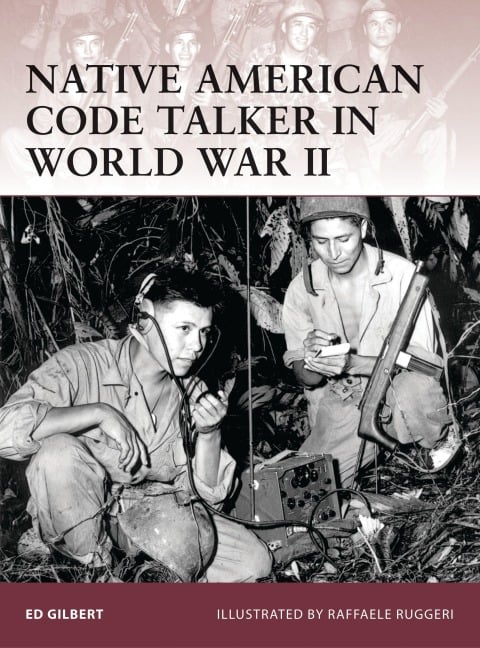
Osprey's examination of the Native Americans' participation in World War II (1939-1945). Ed Gilbert uses personal interviews with veterans to tell their fascinating story. Beginning with the first operational use of Native American languages in World War I, he explores how in World War II the US again came to employ this subtle, but powerful "weapon." Despite all efforts, the Japanese were never able to decode their messages and the Navajo code talkers contributed significantly to US victories in the Pacific. Approximately 400 Navajos served in this crucial role. Their legend of the "code talker" has been celebrated by Hollywood in films, such as Windtalkers, and this book reveals the real-life story of their extraordinary involvement in World War II.
Ed Gilbert was a Marine artilleryman and a Battalion Training NCO in the Marine Corps Reserve. He holds a Ph.D. in geology, and is now a geologist and geophysicist involved in petroleum exploration in South Asia, the Middle East, Africa and South America. Ed has written for hobby, historical, and veteran's magazines, and is the author of oral and operational histories of the Marine Corps' armored units in World War II and the Korean War. He is currently at work on a history of the Marine Corps tank battalions in the Vietnam conflict. The author lives in Katy, TX.
Introduction Recruitment Training Uniform and Equipment Belief and Belonging On Campaign Battle After the War Glossary Bibliography Color Plate Commentary Index