Und dann auf "Zum Home-Bildschirm [+]".

Stöbern
genialokal zum Startbildschirm hinzufügen
Installieren Sie die genialokal App auf Ihrem Startbildschirm für einen schnellen Zugriff und eine komfortable Nutzung.
Installieren Sie die genialokal App auf Ihrem Startbildschirm für einen schnellen Zugriff und eine komfortable Nutzung.


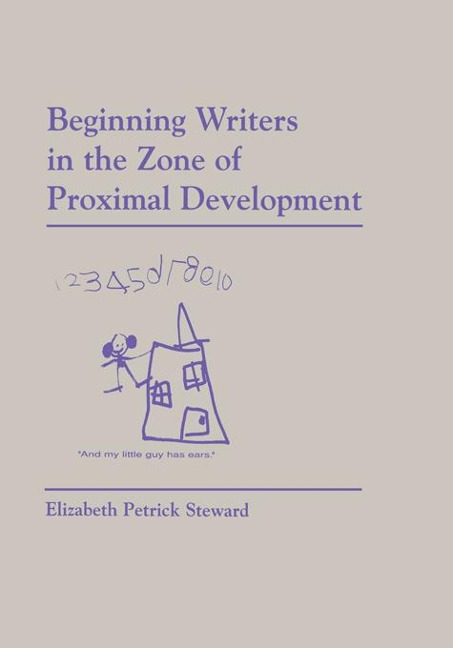
How do young children bridge the gap between "writing" a story with pictures and writing with words? How children learn to use written words to tell a story is a topic important to both cognitive development and early literacy instruction. Using the theoretical framework developed by Vygotsky, the behavior of a group of prekindergarten children as they author two consecutive pieces of writing is analyzed. The children tell their stories at first with spoken words and pictures. As they discuss their work-in-progress in public conferences, they discover how to build on and combine existing skills to produce a new skill -- telling stories with written words. Current descriptive and theoretical perspectives on beginning writing are presented in this volume, with a particular focus on Vygotsky's concept of the zone of proximal development, a period of sensitivity in which learning advances. The proposed mechanism of change is verbal mediation -- talk among peers and teachers as they discuss work-in-progress -- which moves the children through the zone of proximal development. An open, whole-language approach to literacy instruction makes the classroom in this book an ideal arena in which to observe verbal mediation in operation. Children are free to question, criticize and argue; and in the process they collectively advance their developing ability to use written language. The work is unique in that the rich and comprehensive data record is reproduced in its entirety. More than 400 illustrations of the children's products -- two "books" apiece, pictured before and after the children's revisions -- are included, along with transcripts of the conferences about each of the pages, permitting direct observation of the effects of verbal mediation. This dynamic study documents change during a period of time when specific learning is occurring, and provides strong support for the value and power of Vygotsky's theoretical framework.
Petrick-Steward, Elizabeth
Contents: Background. The Vygotskyan Perspective. Methodology. Jeremy's Books. Group Results. Conclusions and Implications. Appendices: Book Pages and Writing Conferences. Book Covers.
Dieses eBook wird im PDF-Format geliefert und ist mit einem Adobe Kopierschutz (DRM) versehen. Sie können dieses eBook mit allen Geräten lesen, die das PDF-Format und den Adobe Kopierschutz (DRM) unterstützen.
Zum Beispiel mit den folgenden Geräten:
• tolino Reader
Laden Sie das eBook direkt über den Reader-Shop auf dem tolino herunter oder übertragen Sie das eBook auf Ihren tolino mit einer kostenlosen Software wie beispielsweise Adobe Digital Editions.
• Sony Reader & andere eBook Reader
Laden Sie das eBook direkt über den Reader-Shop herunter oder übertragen Sie das eBook mit der kostenlosen Software Sony READER FOR PC/Mac oder Adobe Digital Editions auf ein Standard-Lesegeräte mit epub- und Adobe DRM-Unterstützung.
• Tablets & Smartphones
Möchten Sie dieses eBook auf Ihrem Smartphone oder Tablet lesen, finden Sie hier unsere kostenlose Lese-App für iPhone/iPad und Android Smartphone/Tablets.
• PC & Mac
Lesen Sie das eBook direkt nach dem Herunterladen mit einer kostenlosen Lesesoftware, beispielsweise Adobe Digital Editions, Sony READER FOR PC/Mac oder direkt über Ihre eBook-Bibliothek in Ihrem Konto unter „Meine eBooks“ - „online lesen“.
Schalten Sie das eBook mit Ihrer persönlichen Adobe ID auf bis zu sechs Geräten gleichzeitig frei.
Bitte beachten Sie, dass die Kindle-Geräte das Format nicht unterstützen und dieses eBook somit nicht auf Kindle-Geräten lesbar ist.