Und dann auf "Zum Home-Bildschirm [+]".

Stöbern
genialokal zum Startbildschirm hinzufügen
Installieren Sie die genialokal App auf Ihrem Startbildschirm für einen schnellen Zugriff und eine komfortable Nutzung.
Installieren Sie die genialokal App auf Ihrem Startbildschirm für einen schnellen Zugriff und eine komfortable Nutzung.
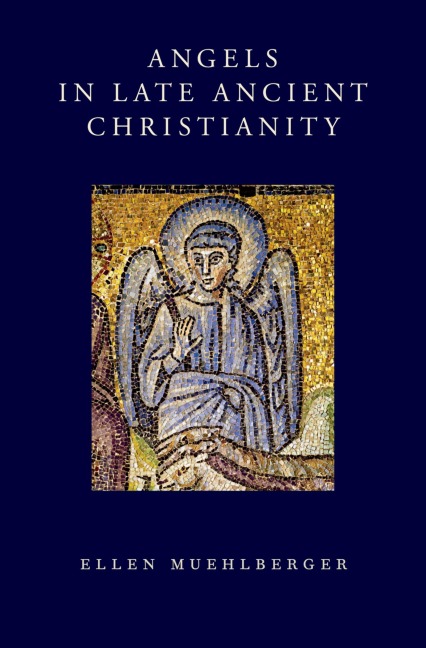
Ellen Muehlberger explores the diverse and inventive ideas Christians held about angels in late antiquity. During the fourth and fifth centuries, Christians began experimenting with new modes of piety, adapting longstanding forms of public authority to Christian leadership and advancing novel ways of cultivating body and mind to further the progress of individual Christians. Muehlberger argues that in practicing these new modes of piety, Christians developed new ways of thinking about angels. The book begins with a detailed examination of the two most popular discourses about angels that developed in late antiquity. In the first, delineated by Christians cultivating certain kinds of ascetic practices, angels were one type of being among many in a shifting universe, and their primary purpose was to guard and to guide Christians. In the other, articulated by urban Christian leaders in contest with one another, angels were morally stable characters described in the emerging canon of Scripture, available to enable readers to render Scripture coherent with emerging theological positions. Muehlberger goes on to show how these two discourses did not remain isolated in separate spheres of cultivation and contestation, but influenced one another and the wider Christian culture. She offers in-depth analysis of popular biographies written in late antiquity, of the community standards of emerging monastic communities, and of the training programs developed to prepare Christians to participate in ritual, demonstrating that new ideas about angels shaped and directed the formation of the definitive institutions of late antiquity. Angels in Late Ancient Christianity is a meticulous and thorough study of early Christian ideas about angels, but it also offers a different perspective on late ancient Christian history, arguing that angels were central rather than peripheral to the emergence of Christian institutions and Christian culture in late antiquity.
Ellen Muehlberger is Associate Professor of Christianity in late antiquity in the Near Eastern Studies and History Departments at the University of Michigan.
Acknowledgments Abbreviations Introduction 1. Late Ancient Theories of Angels: Evagrius of Pontus and Augustine of Hippo Compared 2. Locating Christ in Scripture: Angels in the Development of Theological Reading 3. Angels as Equipment for Living: The Companion Angel Tradition in Evagrian Christianity 4. Crossing Over: The Companion Angel Tradition in Exemplary Lives 5. Defining Others: Asceticism and the Discourse of the Angelic Life 6. Bringing Angels into the World: Training the Christian Imagination with Catechesis Conclusion: The Limits of Angelology Bibliography Index
Dieses eBook wird im PDF-Format geliefert und ist mit einem Adobe Kopierschutz (DRM) versehen. Sie können dieses eBook mit allen Geräten lesen, die das PDF-Format und den Adobe Kopierschutz (DRM) unterstützen.
Zum Beispiel mit den folgenden Geräten:
• tolino Reader
Laden Sie das eBook direkt über den Reader-Shop auf dem tolino herunter oder übertragen Sie das eBook auf Ihren tolino mit einer kostenlosen Software wie beispielsweise Adobe Digital Editions.
• Sony Reader & andere eBook Reader
Laden Sie das eBook direkt über den Reader-Shop herunter oder übertragen Sie das eBook mit der kostenlosen Software Sony READER FOR PC/Mac oder Adobe Digital Editions auf ein Standard-Lesegeräte mit epub- und Adobe DRM-Unterstützung.
• Tablets & Smartphones
Möchten Sie dieses eBook auf Ihrem Smartphone oder Tablet lesen, finden Sie hier unsere kostenlose Lese-App für iPhone/iPad und Android Smartphone/Tablets.
• PC & Mac
Lesen Sie das eBook direkt nach dem Herunterladen mit einer kostenlosen Lesesoftware, beispielsweise Adobe Digital Editions, Sony READER FOR PC/Mac oder direkt über Ihre eBook-Bibliothek in Ihrem Konto unter „Meine eBooks“ - „online lesen“.
Schalten Sie das eBook mit Ihrer persönlichen Adobe ID auf bis zu sechs Geräten gleichzeitig frei.
Bitte beachten Sie, dass die Kindle-Geräte das Format nicht unterstützen und dieses eBook somit nicht auf Kindle-Geräten lesbar ist.