Und dann auf "Zum Home-Bildschirm [+]".

Stöbern
genialokal zum Startbildschirm hinzufügen
Installieren Sie die genialokal App auf Ihrem Startbildschirm für einen schnellen Zugriff und eine komfortable Nutzung.
Installieren Sie die genialokal App auf Ihrem Startbildschirm für einen schnellen Zugriff und eine komfortable Nutzung.


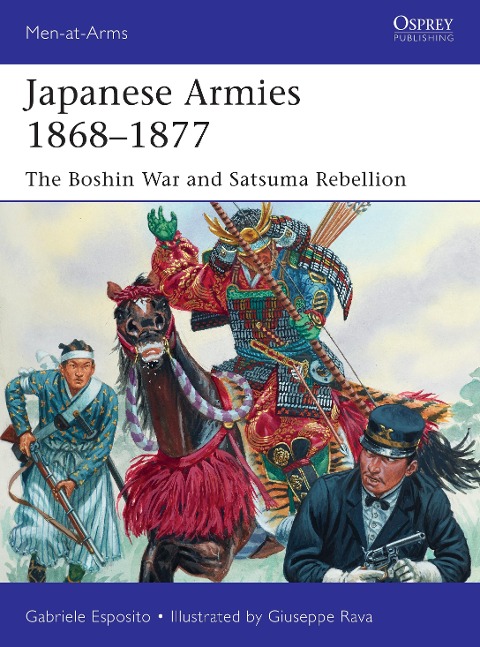
The restoration of the Meiji Imperial dynasty in 1868, after 250 years of the Tokugawa Shogunate, decisively opened Japan to the outside world and the monarchy embraced modernization, including the creation of a new Westernized army.
However, this modernization process was resisted by the traditional Samurai feudal nobility, leading to a series of battles. The first clash between the two cultures came swiftly during the Boshin War of 1868-69: the insurgents won several engagements before final crushing of the rebel Ezo Republic. As the Imperial Army continued to modernize along French lines, and social changes began to impoverish Samurai noblemen.
In 1876, Saigo Takamori, leader of the powerful Satsuma Domain, effectively ignored the central government, and in January 1877, increasing unrest broke out into open rebellion. The Imperial forces were now much stronger, and the Navy could land troops and bombard Kagoshima. The bitter Satsuma siege and attempted capture of Kumamoto Castle finally failed in April, and the Samurai made a last stand at Shiroyama on 24 September, choosing to go down fighting. This marked the final defeat and displacement of the Samurai class.
This fully illustrated title explores the fall of the Samurai in detail, examining the arms, tactics, key figures of both sides, and charting the increasing Westernization of the Imperial forces.
Gabriele Esposito is an Italian researcher and a long-time student of military history. His interests range from the Ancient world to modern post-colonial conflicts. He has published several works including MAA 499 Armies of the War of the Triple Alliance 1864-70 and MAA 504 Armies of the War of the Pacific 1879-83 for Osprey Publishing, and is a regular contributor to many specialized magazines. He lives in Italy.
Giuseppe Rava was born in Faenza in 1963. Entirely self-taught, Giuseppe has established himself as a leading military history artist, and is inspired by the works of the great military artists, such as Detaille, Meissonier, Röchling, Lady Butler, Ottenfeld and Angus McBride. He lives and works in Italy.
Historical Background
The Boshin War, 1868-1869
Intermission, 1869-1877
The Satsuma Rebellion, 1877
Japanese Forces, 1840-1868
Armies of the Boshin War
Armies of the Satsuma Rebellion
Weapons
Select Bibliography
Plate Commentaries
Index
Dieses eBook wird im PDF-Format geliefert und ist mit einem Adobe Kopierschutz (DRM) versehen. Sie können dieses eBook mit allen Geräten lesen, die das PDF-Format und den Adobe Kopierschutz (DRM) unterstützen.
Zum Beispiel mit den folgenden Geräten:
• tolino Reader
Laden Sie das eBook direkt über den Reader-Shop auf dem tolino herunter oder übertragen Sie das eBook auf Ihren tolino mit einer kostenlosen Software wie beispielsweise Adobe Digital Editions.
• Sony Reader & andere eBook Reader
Laden Sie das eBook direkt über den Reader-Shop herunter oder übertragen Sie das eBook mit der kostenlosen Software Sony READER FOR PC/Mac oder Adobe Digital Editions auf ein Standard-Lesegeräte mit epub- und Adobe DRM-Unterstützung.
• Tablets & Smartphones
Möchten Sie dieses eBook auf Ihrem Smartphone oder Tablet lesen, finden Sie hier unsere kostenlose Lese-App für iPhone/iPad und Android Smartphone/Tablets.
• PC & Mac
Lesen Sie das eBook direkt nach dem Herunterladen mit einer kostenlosen Lesesoftware, beispielsweise Adobe Digital Editions, Sony READER FOR PC/Mac oder direkt über Ihre eBook-Bibliothek in Ihrem Konto unter „Meine eBooks“ - „online lesen“.
Schalten Sie das eBook mit Ihrer persönlichen Adobe ID auf bis zu sechs Geräten gleichzeitig frei.
Bitte beachten Sie, dass die Kindle-Geräte das Format nicht unterstützen und dieses eBook somit nicht auf Kindle-Geräten lesbar ist.