Und dann auf "Zum Home-Bildschirm [+]".

Stöbern
genialokal zum Startbildschirm hinzufügen
Installieren Sie die genialokal App auf Ihrem Startbildschirm für einen schnellen Zugriff und eine komfortable Nutzung.
Installieren Sie die genialokal App auf Ihrem Startbildschirm für einen schnellen Zugriff und eine komfortable Nutzung.
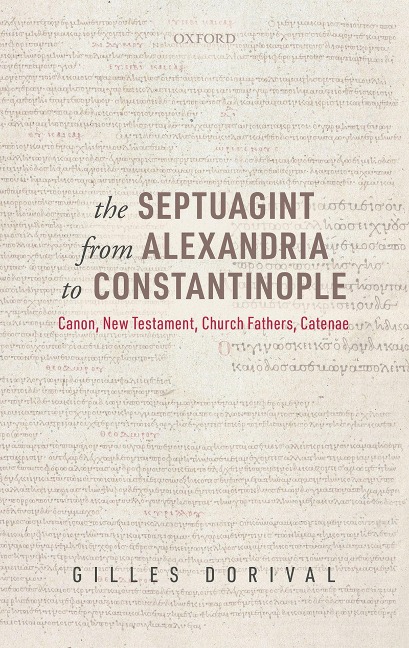
The Hebrew Torah was translated into Greek in Alexandria by Jewish scholars in the third century BCE, and other 'biblical' books followed to form the so-called Septuagint. Since the Septuagint contains a number of books and passages that are not part of the Hebrew Bible, the study of the Septuagint is essential to any account of the canon of the Hebrew Bible/Old Testament. However, the situation is complex because the Greek text of the Old Testament quoted in the New Testament and in the Church Fathers does not always match the Septuagint text as given by the earliest codices. Furthermore, it must be asked to what extent these texts of the Septuagint may have been Christianized.
Up until the fifth century, the Old Testament of the Church Fathers was exclusively the Septuagint--except in the Syriac area--either in its Greek form or in a language translated from this Greek form. The Septuagint thus formed a much more important role in the building of Christian identity than it is usually recognised. After Jerome's Vulgate prevailed in the West, the Septuagint remained the reference text of the catenae. These Byzantine compilations of extracts of Patristic biblical commentary were produced first in Palestine, then in Constantinople and its dependancies between the sixth and fifteenth centuries and became the most important media for the transmission of patristic commentary in these centuries. The patristic extracts in the catenae provide a remarkable witness to the text of the Greek Old Testament as it was known and used by the Church Fathers.
Gilles Dorival is Emeritus Professor at Aix-Marseille University.
- Abbreviations specific to the Greek Old Testament (according to Rahlfs' order) - List of Figures - Part I: Before Christianity: The Septuagint and the Biblical Canon - 1: The formation of the Jewish Canon - 2: The Septuagint and the Issue of the Canon - Part II: The New Testament and the Scribes (Copyists) of the Septuagint - 3: Is the Septuagint the Old Testament of the New Testament? - 4: Was the text of the Septuagint Christianized? - Part III: The Church Fathers - 5: Is the Septuagint the Old Testament of the Church Fathers? - 6: The Vocabulary of the Septuagint and the Church Fathers - Part IV: The Biblical Catenae - 7: An Overview of the Catenae - 8: The Catenae and the Septuagint - Conclusion - Bibliography - Index of Biblical quotations - Index of Ancient Authors - Index of Modern Authors
Dieses eBook wird im PDF-Format geliefert und ist mit einem Adobe Kopierschutz (DRM) versehen. Sie können dieses eBook mit allen Geräten lesen, die das PDF-Format und den Adobe Kopierschutz (DRM) unterstützen.
Zum Beispiel mit den folgenden Geräten:
• tolino Reader
Laden Sie das eBook direkt über den Reader-Shop auf dem tolino herunter oder übertragen Sie das eBook auf Ihren tolino mit einer kostenlosen Software wie beispielsweise Adobe Digital Editions.
• Sony Reader & andere eBook Reader
Laden Sie das eBook direkt über den Reader-Shop herunter oder übertragen Sie das eBook mit der kostenlosen Software Sony READER FOR PC/Mac oder Adobe Digital Editions auf ein Standard-Lesegeräte mit epub- und Adobe DRM-Unterstützung.
• Tablets & Smartphones
Möchten Sie dieses eBook auf Ihrem Smartphone oder Tablet lesen, finden Sie hier unsere kostenlose Lese-App für iPhone/iPad und Android Smartphone/Tablets.
• PC & Mac
Lesen Sie das eBook direkt nach dem Herunterladen mit einer kostenlosen Lesesoftware, beispielsweise Adobe Digital Editions, Sony READER FOR PC/Mac oder direkt über Ihre eBook-Bibliothek in Ihrem Konto unter „Meine eBooks“ - „online lesen“.
Schalten Sie das eBook mit Ihrer persönlichen Adobe ID auf bis zu sechs Geräten gleichzeitig frei.
Bitte beachten Sie, dass die Kindle-Geräte das Format nicht unterstützen und dieses eBook somit nicht auf Kindle-Geräten lesbar ist.