Und dann auf "Zum Home-Bildschirm [+]".

Stöbern
genialokal zum Startbildschirm hinzufügen
Installieren Sie die genialokal App auf Ihrem Startbildschirm für einen schnellen Zugriff und eine komfortable Nutzung.
Installieren Sie die genialokal App auf Ihrem Startbildschirm für einen schnellen Zugriff und eine komfortable Nutzung.
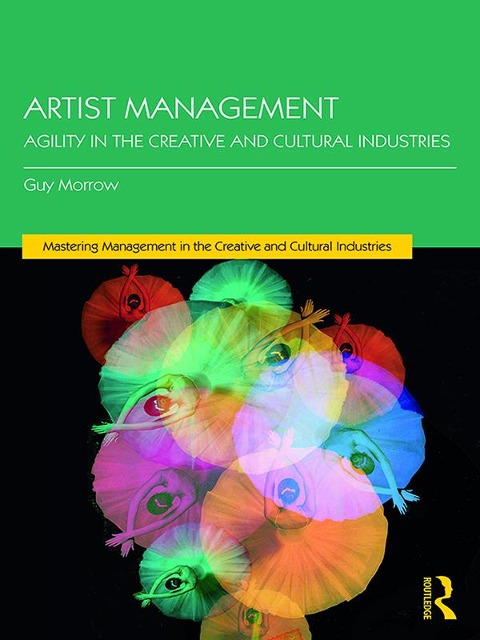
Artists are creative workers who drive growth in the creative and cultural industries. Managing artistic talent is a unique challenge, and this concise book introduces and analyses its key characteristics. Artist Management: Agility in the Creative and Cultural Industries makes a major contribution to our understanding of the creative and cultural industries, of artistic and managerial creativities, and of social and cultural change in this sector. The book undertakes an extensive exploration of the increasingly pivotal role of artist managers in the creative and cultural industries and argues that agile management strategies are useful in this context. This book provides a comprehensive and accessible account of the artist-artist manager relationship in the twenty-first century. Drawing from research interviews conducted with artist managers and self-managed artists in five cities (New York, London, Toronto, Sydney and Melbourne), this book makes an original contribution to knowledge. Nation-specific case studies are highlighted as a means of illuminating various thematic concerns. This unique book is a major piece of research and a valuable study aid for both undergraduate and postgraduate students of subjects including arts management, creative and cultural industries studies, arts entrepreneurship, business and management studies and media and communications.
Guy Morrow is a Lecturer in Arts and Cultural Management at the University of Melbourne, Australia. He is co-author of The New Music Industries. His research interests include the use of agile management strategies within the creative and cultural industries.
Chapter 1: Introduction: Artist management in the creative and cultural industries 1.1 The agile movement 1.2 Collaboration has a lifespan 1.3 Managing artistic contributions 1.4 What is artist management? Is it creative? 1.5 The artist-artist manager relationship 1.6 References Chapter 2: Research design 2.1 Selection of industries, cases and participants 2.2 Methods 2.3 Outline of the book Chapter 3: The artist's career as startup: Lean startup and effectuation methods for the arts 3.1 Extreme uncertainty: What is art? 3.2 Extreme uncertainty: Shaping a future for yourself 3.3 Conclusion: What good are the arts? How can we sell art? Chapter 4: Agile management strategies 4.1 Artist management and the agile movement 4.2 Agility on individual and group levels 4.3 Case study: Agility in the dance sector 4.4 Case study: Agility in the film sector 4.5 Conclusion Chapter 5: Storytelling in the creative and cultural industries: Where is creativity? Creative cities and artist management 5.1 Storytelling in the creative and cultural industries 5.2 Sporting analogies 5.3 An artist manager's checklist 5.4 Moving people to action 5.5 B2C and B2B storytelling 5.6 Storytelling etiquette 5.7 Case study: SXSW favours the storytellers 5.8 Destroying through narrative 5.9 Conclusion Chapter 6: The artist-artist manager relationship: Agile by default 6.1 The specificity of artist management labour 6.2 An informal approach to management 6.3 They found me with a gun in my hand 6.4 Double dipping 6.5 The bank account 6.6 Conclusion Chapter 7: Conclusions: The future of artist management: Artist's voice, manager's voice 7.1 The rapid escalation of complexity 7.2 Creativity: The key leadership competency for the future 7.3 Music case study 1: The Featured Artists' Coalition 7.4 Music case study 2: The International Music Managers' Forum 7.5 Judas Goat 7.6 Dance case study: 'GoSeeDo' and 'Book a Flash Mob' 7.7 Creative and cultural industries case study: Culture Counts 7.8 Big data, automation and the future of work 7.9 References Appendix A: The interviews Appendix B: Association of Artist Managers Code of Conduct Appendix C: Code of Conduct of MMF Australia Index
Dieses eBook wird im PDF-Format geliefert und ist mit einem Adobe Kopierschutz (DRM) versehen. Sie können dieses eBook mit allen Geräten lesen, die das PDF-Format und den Adobe Kopierschutz (DRM) unterstützen.
Zum Beispiel mit den folgenden Geräten:
• tolino Reader
Laden Sie das eBook direkt über den Reader-Shop auf dem tolino herunter oder übertragen Sie das eBook auf Ihren tolino mit einer kostenlosen Software wie beispielsweise Adobe Digital Editions.
• Sony Reader & andere eBook Reader
Laden Sie das eBook direkt über den Reader-Shop herunter oder übertragen Sie das eBook mit der kostenlosen Software Sony READER FOR PC/Mac oder Adobe Digital Editions auf ein Standard-Lesegeräte mit epub- und Adobe DRM-Unterstützung.
• Tablets & Smartphones
Möchten Sie dieses eBook auf Ihrem Smartphone oder Tablet lesen, finden Sie hier unsere kostenlose Lese-App für iPhone/iPad und Android Smartphone/Tablets.
• PC & Mac
Lesen Sie das eBook direkt nach dem Herunterladen mit einer kostenlosen Lesesoftware, beispielsweise Adobe Digital Editions, Sony READER FOR PC/Mac oder direkt über Ihre eBook-Bibliothek in Ihrem Konto unter „Meine eBooks“ - „online lesen“.
Schalten Sie das eBook mit Ihrer persönlichen Adobe ID auf bis zu sechs Geräten gleichzeitig frei.
Bitte beachten Sie, dass die Kindle-Geräte das Format nicht unterstützen und dieses eBook somit nicht auf Kindle-Geräten lesbar ist.