Und dann auf "Zum Home-Bildschirm [+]".

Stöbern
genialokal zum Startbildschirm hinzufügen
Installieren Sie die genialokal App auf Ihrem Startbildschirm für einen schnellen Zugriff und eine komfortable Nutzung.
Installieren Sie die genialokal App auf Ihrem Startbildschirm für einen schnellen Zugriff und eine komfortable Nutzung.
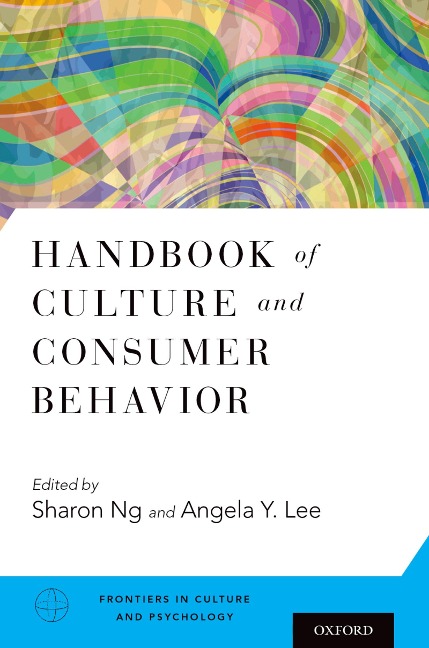
Research on the influence of culture on consumer decision-making and consumption behavior has witnessed tremendous growth in the last decade. With increasing globalization, managers are becoming increasingly aware that operating in multiple markets is crucial for firms' survival and growth. As the world's growth engine shifts from Europe and North America to Asia and Latin America, it has become apparent that an inward-looking and domestic focus strategy will not be sustainable in the long run. And success in foreign markets requires marketers to understand not just what consumers in these markets need but also how they think, behave, consume, and purchase. Numerous studies have documented cultural differences in values and beliefs, motivational orientations, emotions, self-regulation, and information-processing styles, and the effects of these cultural variations on consumer behavior such as brand evaluation, materialism, and impulsive consumption. In this volume, experts from a variety of disciplines and perspectives trace the historical development of culture research in consumer psychology and examine the theoretical underpinnings that account for these findings and the current state of the field. Collectively, the chapters provide a forum for researchers to engage in thoughtful debates and stimulating conversations and offer directions for future research.
Sharon Ng is Associate Professor of Marketing in Nanyang Business School at Nayang Technological University (NTU) and a fellow in the Institute on Asian Consumer Insights. She received her PhD from the University of Minnesota and has published in the top marketing journals, such as the Journal of Marketing Research and Journal of Consumer Research. Her research focuses on culture, branding, and sustainability issues. She was named the 2009 MSI Young Scholar by the Marketing Science Institute and was also awarded the Nanyang Excellence in Teaching Award in 2009 and Researcher of the Division Award in 2006, 2008, and 2010 by NTU. She sits on the editorial board of the Australasian Marketing Journal and reviews regularly for the top marketing and psychology journals. Angela Y. Lee is a consumer psychologist and the Mechthild Esser Nemmers Professor of Marketing at the Kellogg School of Management at Northwestern University. Her expertise is in consumer learning, emotions, and goals, and her research focuses on the conscious and nonconscious influences of memory, consumer motivation, and cross-cultural consumer psychology. Her publications appear in leading journals in marketing as well as in psychology, and she is the coeditor of Kellogg on China (Northwestern University Press, 2004). She was the recipient of the 2006 Stanley Reiter Best Paper Award for her research on self-regulation and persuasion, and the 2002 Otto Klineberg Award for the best paper on international and intercultural relations. She was formerly the president of the Association for Consumer Research and currently serves on the board of the American Marketing Association as well as on the editorial boards of the Journal of Consumer Research and the Journal of Marketing Research.
Chapter 1: History of Culture and Consumer Behavior and Future Research Directions Sharon Ng and Angela Y. Lee Part I: Worldview, Knowledge Structure, and Emotion Chapter 2: Cultural Worldview and Cognition Virginia S. Y. Kwan, Yexin J. Li, Andrew E. White, and Ryan P. Jacobson Chapter 3: Cultural Differences in Procedural Knowledge and Their Impact on Consumer Behavior Robert S. Wyer, Jr. Chapter 4: Consumer Behavior, Culture, and Emotion Jeanne L. Tsai, Louise Chim, and Tamara Sims Chapter 5: Categories of Cultural Variations Sharon Shavitt and Minkyung Koo Part II: Attitudes, Persuasion, and Response Biases Chapter 6: Culture and Persuasion Nidhi Agrawal Chapter 7: The Effects of Self-Construal Fit on Motivation, Attitudes, and Charitable Giving Angela Y. Lee and Tonya Williams Bradford Chapter 8: Response Biases in Cross-Cultural Measurement Hans Baumgartner and Bert Weijters Part III: Branding and Brand Relationships Chapter 9: Culture, Emotions, and Nation Equity Cathy Yi Chen, Durairaj Maheswaran, Jie Wei, and Prashant Saxena Chapter 10: Globalization and Exclusionary Responses to Foreign Brands Dongmei Li, Robert Kreuzbauer, and Chi-yue Chiu Chapter 11: Culture and Branding Sharon Ng, Rohini Ahluwalia, and Michael J. Houston Chapter 12: Culture and Brand Relationships Zeynep Gürhan-Canli and Gülen Sarial-Abi Chapter 13: Culture and Brand Iconicity Carlos J. Torelli and Shirley Y. Y. Cheng Part IV: Culture and Consumption Chapter 14: Culture and Materialism Russell Belk Chapter 15: Culture, Self-Regulation, and Impulsive Consumption Akshay Rao
Dieses eBook wird im PDF-Format geliefert und ist mit einem Adobe Kopierschutz (DRM) versehen. Sie können dieses eBook mit allen Geräten lesen, die das PDF-Format und den Adobe Kopierschutz (DRM) unterstützen.
Zum Beispiel mit den folgenden Geräten:
• tolino Reader
Laden Sie das eBook direkt über den Reader-Shop auf dem tolino herunter oder übertragen Sie das eBook auf Ihren tolino mit einer kostenlosen Software wie beispielsweise Adobe Digital Editions.
• Sony Reader & andere eBook Reader
Laden Sie das eBook direkt über den Reader-Shop herunter oder übertragen Sie das eBook mit der kostenlosen Software Sony READER FOR PC/Mac oder Adobe Digital Editions auf ein Standard-Lesegeräte mit epub- und Adobe DRM-Unterstützung.
• Tablets & Smartphones
Möchten Sie dieses eBook auf Ihrem Smartphone oder Tablet lesen, finden Sie hier unsere kostenlose Lese-App für iPhone/iPad und Android Smartphone/Tablets.
• PC & Mac
Lesen Sie das eBook direkt nach dem Herunterladen mit einer kostenlosen Lesesoftware, beispielsweise Adobe Digital Editions, Sony READER FOR PC/Mac oder direkt über Ihre eBook-Bibliothek in Ihrem Konto unter „Meine eBooks“ - „online lesen“.
Schalten Sie das eBook mit Ihrer persönlichen Adobe ID auf bis zu sechs Geräten gleichzeitig frei.
Bitte beachten Sie, dass die Kindle-Geräte das Format nicht unterstützen und dieses eBook somit nicht auf Kindle-Geräten lesbar ist.