Und dann auf "Zum Home-Bildschirm [+]".

Stöbern
genialokal zum Startbildschirm hinzufügen
Installieren Sie die genialokal App auf Ihrem Startbildschirm für einen schnellen Zugriff und eine komfortable Nutzung.
Installieren Sie die genialokal App auf Ihrem Startbildschirm für einen schnellen Zugriff und eine komfortable Nutzung.
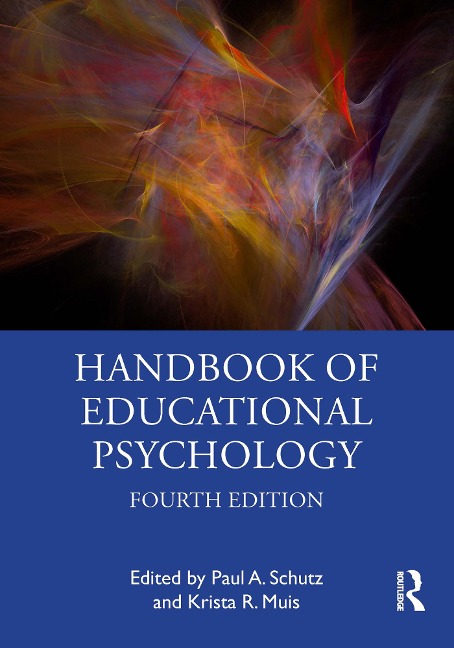
The fourth edition of the Handbook of Educational Psychology, sponsored by Division 15 of the American Psychological Association, addresses new developments in educational psychology theory and research methods while honoring the legacy of the field's past. Comprising 31 chapters written by a diverse group of recognized Educational Psychologist and/or Learning and Motivational Scientist (EDP/LMS) scholars, this volume provides integrative reviews and critical syntheses of inquiry across a variety of foundational and new areas. Key constructs like motivation, development, beliefs, literacy, and emotions are given substantive updates, while entire new chapters touch on trends that have materialized since the publication of the third edition, such as inquiry world views, Critical Race Theory, cognitive neuroscience, and emerging technologies in education. Throughout this new edition, chapter authors coalesce on issues of social justice, situated approaches to inquiry, and progressive inquiry methods. The Handbook of Educational Psychology, Fourth Edition, will be an important reference volume for current and future EDP/LMS scholars, broadly conceived, as well as for teacher educators, practicing teachers, policy makers, and the academic libraries serving these audiences. It is also appropriate for graduate-level courses in educational psychology, learning and motivational sciences, and research methods in education and psychology.
Paul A. Schutz (he/him/his) is Professor Emeritus at the University of Texas at San Antonio, USA, and an affiliated member of the Department of Educational Psychology at the University of Arizona, USA. Krista R. Muis is Professor and Canada Research Chair in the Department of Educational and Counselling Psychology at McGill University, Canada.
Section 1: The Handbook of Educational Psychology, Fourth Edition 1. An Introduction to the Handbook of Educational Psychology, Fourth Edition Section 2: Philosophical, Theoretical, and Methodological Approaches to Inquiry 2. Hast Thee any Philosophy? Unearthing the Value of Philosophy for Educational Psychology 3. Inquiry Worldviews, Approaches to Research, and Mixed Methods in Educational Psychology 4. Examining Race in Educational Psychology: The Need for Critical Race Theory 5. Cross-Cultural Research on Learning and Teaching 6. Taking a Situative Approach to Research in Educational Psychology 7. Contributions of Complex Systems Approaches, Perspectives, Models, and Methods in Educational Psychology 8. Educational Psychology and Educational Policy: Intersections and New Directions Section 3: Inquires in Foundational Areas 9. Motivation 10. Emotion and Emotion Regulation 11. The Role of Passion in Education 12. Identity and Learning: Student and Teacher Identity Development 13. Belief Change 14. Self-Regulation 15. Exceptionalities 16. The Roles of Peers in Students' Cognitive and Academic Development 17. Cognitive Neuroscience and Education Section 4: Inquiries in Teaching and Learning 18. The Relevance of Educational Psychology Research in Teacher Education 19. Asset-Based Pedagogy 20. Educating with Collective Intersectional Care: Attending to, Embodying, and Enacting Women of Color Feminisms in Learning Spaces 21. Mathematics Teaching and Learning 22. Social Studies Education 23. Science Learning and Teaching 24. Literacy Section 5: Inquiries in Emerging Technologies 25. New Literacies: Expanding the Conversation to Include Data Literacies 26. Intelligent Tutoring Systems: How computers achieve learning gains that rival human tutors 27. Technology Rich Learning Environments: Theories and Methodologies for Understanding Solo and Group Learning 28. Cyberbullying 29. Gaming in Educational Contexts 30. Virtual Reality and Educational Psychology Section 6: Conclusions: Bringing it Together for Better Education (Where are we and Where Might we be Going?) 31. The Prejudiced Past and Progressive Future of Educational Psychology
Dieses eBook wird im PDF-Format geliefert und ist mit einem Adobe Kopierschutz (DRM) versehen. Sie können dieses eBook mit allen Geräten lesen, die das PDF-Format und den Adobe Kopierschutz (DRM) unterstützen.
Zum Beispiel mit den folgenden Geräten:
• tolino Reader
Laden Sie das eBook direkt über den Reader-Shop auf dem tolino herunter oder übertragen Sie das eBook auf Ihren tolino mit einer kostenlosen Software wie beispielsweise Adobe Digital Editions.
• Sony Reader & andere eBook Reader
Laden Sie das eBook direkt über den Reader-Shop herunter oder übertragen Sie das eBook mit der kostenlosen Software Sony READER FOR PC/Mac oder Adobe Digital Editions auf ein Standard-Lesegeräte mit epub- und Adobe DRM-Unterstützung.
• Tablets & Smartphones
Möchten Sie dieses eBook auf Ihrem Smartphone oder Tablet lesen, finden Sie hier unsere kostenlose Lese-App für iPhone/iPad und Android Smartphone/Tablets.
• PC & Mac
Lesen Sie das eBook direkt nach dem Herunterladen mit einer kostenlosen Lesesoftware, beispielsweise Adobe Digital Editions, Sony READER FOR PC/Mac oder direkt über Ihre eBook-Bibliothek in Ihrem Konto unter „Meine eBooks“ - „online lesen“.
Schalten Sie das eBook mit Ihrer persönlichen Adobe ID auf bis zu sechs Geräten gleichzeitig frei.
Bitte beachten Sie, dass die Kindle-Geräte das Format nicht unterstützen und dieses eBook somit nicht auf Kindle-Geräten lesbar ist.