Und dann auf "Zum Home-Bildschirm [+]".

Stöbern
genialokal zum Startbildschirm hinzufügen
Installieren Sie die genialokal App auf Ihrem Startbildschirm für einen schnellen Zugriff und eine komfortable Nutzung.
Installieren Sie die genialokal App auf Ihrem Startbildschirm für einen schnellen Zugriff und eine komfortable Nutzung.
Ihr gewünschter Artikel ist in 0 Buchhandlungen vorrätig - wählen Sie hier eine Buchhandlung in Ihrer Nähe aus:

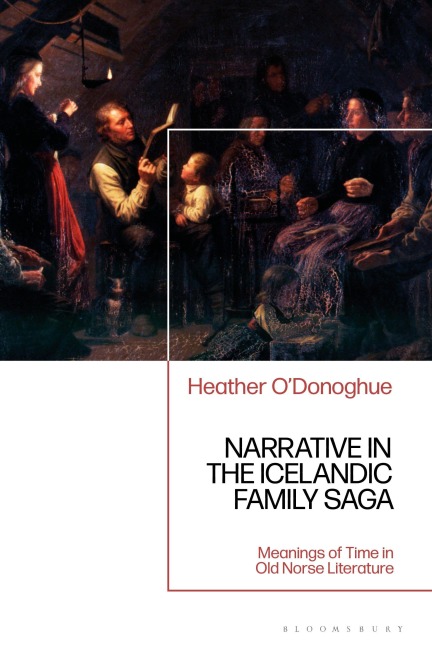
Representative of a unique literary genre and composed in the 13th and 14th centuries, the Icelandic Family Sagas rank among some of the world's greatest literature. Here, Heather O'Donoghue skilfully examines the notions of time and the singular textual voice of the Sagas, offering a fresh perspective on the foundational texts of Old Norse and medieval Icelandic heritage.
With a conspicuous absence of giants, dragons, and fairy tale magic, these sagas reflect a real-world society in transition, grappling with major new challenges of identity and development. As this book reveals, the stance of the narrator and the role of time - from the representation of external time passing to the audience's experience of moving through a narrative - are crucial to these stories. As such, Narrative in the Icelandic Family Saga draws on modern narratological theory to explore the ways in which saga authors maintain the urgency and complexity of their material, handle the narrative and chronological line, and offer perceptive insights into saga society. In doing so, O'Donoghue presents a new poetics of family sagas and redefines the literary rhetoric of saga narratives.
Heather O'Donoghue is Professor of Old Norse at University of Oxford, UK and a Fellow of Linacre College, Oxford, UK. She is the author of The Genesis of a Saga Narrative (1991), Old Norse Icelandic Literature: A Short Introduction (2004), Skaldic Verse and the Poetics of Saga Narrative (2005), From Asgard to Valhalla: The Remarkable History of the Norse Myths (2007) and English Poetry and Old Norse Myth: A History (2014). She has also broadcast with the BBC on the topic of the Norse Gods.
Acknowledgements Introduction 1. The Representation of External Time 2. The Management of Narrative Time: Duration 3. The Management of Narrative Time: Order 4. The Voice of the Silent Narrator 5. Withheld Knowledge Conclusion Bibliography Index