Und dann auf "Zum Home-Bildschirm [+]".

Stöbern
genialokal zum Startbildschirm hinzufügen
Installieren Sie die genialokal App auf Ihrem Startbildschirm für einen schnellen Zugriff und eine komfortable Nutzung.
Installieren Sie die genialokal App auf Ihrem Startbildschirm für einen schnellen Zugriff und eine komfortable Nutzung.
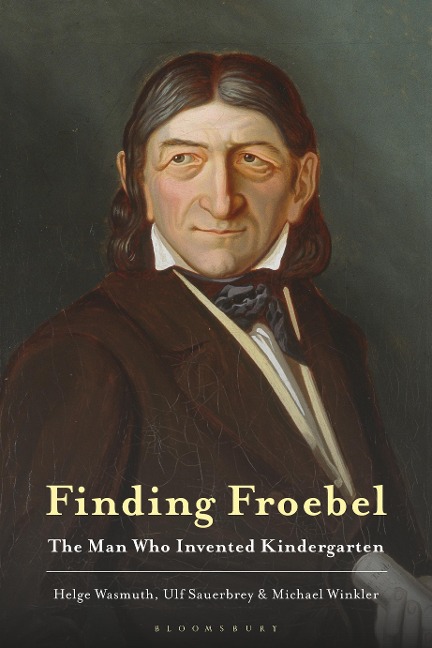
Friedrich Froebel, the 'father of kindergarten', is one of the most influential pedagogues of the 19th century. However, relatively little is known about his life, his successes and failures, and his personal relationships. Based on many untranslated and unknown letters, this new biography presents Froebel as a brilliant but also flawed man.
Beginning with his childhood and the early death of his mother, as well as his difficult relationship with his father and stepmother, we see the early seeds of Froebel's interest in children and the training of early childhood practitioners. While Froebel lacked basic academic knowledge due to his poor early education, he was able to overcome these deficits and found an educational institute, and develop ground-breaking educational theories about play and pedagogy. He authored multiple books, including his most famous work The Education of Man. The focus of this book, though, is not on Froebel's educational theories but on his complicated relationships with his family, the Keilhau community, and the mother of one of his pupils, Caroline von Holzhausen, whom he called the "rune of his life". After many personal and professional disappointments, Froebel finally came up with the idea that made him famous until today: kindergarten. In the last decade of his life, he became a salesman of this new idea and worked tirelessly for the establishment of the kindergarten movement. However, when the Prussian government banned kindergarten shortly before his death, Froebel was broken - even if kindergarten lives until today.
Helge Wasmuth is Professor of Early Childhood and Childhood Education at Mercy College, USA. He is co-editor of The Bloomsbury Handbook to Friedrich Froebel (Bloomsbury, 2023).
Ulf Sauerbrey is Professor of Early Childhood Education at Neubrandenburg University of Applied Sciences, Germany.
Michael Winkler is Professor of General Pedagogy and Theory of Social Pedagogy at the Friedrich-Schiller University of Jena, Germany, and Visiting Lecturer at the Evangelical University of Dresden, Germany, and the Sigmund Freud University of Vienna, Austria.
Introduction
Part I: The Young Froebel
1. An Unfortunate Childhood and Finding a Purpose in Life
2. Suddenly an Educator
3. Becoming an Educator of Humankind
Part II: The Teaching Froebel
4. The General German Educational Institute in Keilhau
5. An Existential Crisis
Part III: The Playing Froebel
6. The First Kindergarten and the Establishment of a New Idea
7. The Prohibition of Kindergarten
8. Froebel's Final Years and the Spread of Kindergarten
Conclusion: Froebel in the 21st Century
References
Index
Dieses eBook wird im PDF-Format geliefert und ist mit einem Adobe Kopierschutz (DRM) versehen. Sie können dieses eBook mit allen Geräten lesen, die das PDF-Format und den Adobe Kopierschutz (DRM) unterstützen.
Zum Beispiel mit den folgenden Geräten:
• tolino Reader
Laden Sie das eBook direkt über den Reader-Shop auf dem tolino herunter oder übertragen Sie das eBook auf Ihren tolino mit einer kostenlosen Software wie beispielsweise Adobe Digital Editions.
• Sony Reader & andere eBook Reader
Laden Sie das eBook direkt über den Reader-Shop herunter oder übertragen Sie das eBook mit der kostenlosen Software Sony READER FOR PC/Mac oder Adobe Digital Editions auf ein Standard-Lesegeräte mit epub- und Adobe DRM-Unterstützung.
• Tablets & Smartphones
Möchten Sie dieses eBook auf Ihrem Smartphone oder Tablet lesen, finden Sie hier unsere kostenlose Lese-App für iPhone/iPad und Android Smartphone/Tablets.
• PC & Mac
Lesen Sie das eBook direkt nach dem Herunterladen mit einer kostenlosen Lesesoftware, beispielsweise Adobe Digital Editions, Sony READER FOR PC/Mac oder direkt über Ihre eBook-Bibliothek in Ihrem Konto unter „Meine eBooks“ - „online lesen“.
Schalten Sie das eBook mit Ihrer persönlichen Adobe ID auf bis zu sechs Geräten gleichzeitig frei.
Bitte beachten Sie, dass die Kindle-Geräte das Format nicht unterstützen und dieses eBook somit nicht auf Kindle-Geräten lesbar ist.