Und dann auf "Zum Home-Bildschirm [+]".

Stöbern
genialokal zum Startbildschirm hinzufügen
Installieren Sie die genialokal App auf Ihrem Startbildschirm für einen schnellen Zugriff und eine komfortable Nutzung.
Installieren Sie die genialokal App auf Ihrem Startbildschirm für einen schnellen Zugriff und eine komfortable Nutzung.
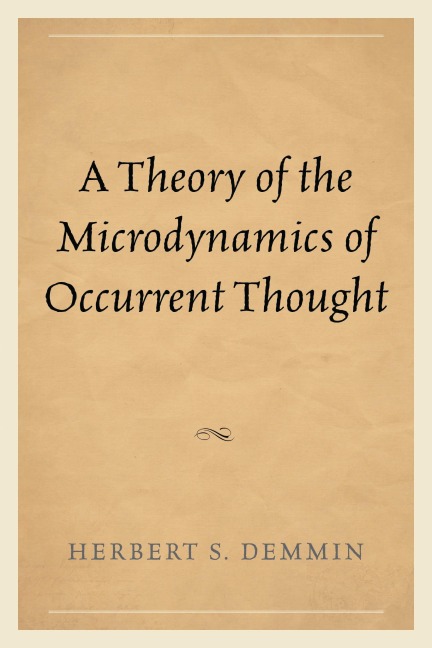
A Theory of theMicrodynamics of Occurrent Thought (T2) is based on a reflective analysis of occurrent thoughts (OTs) in the spirit of phenomenological philosophy and proposes that such thoughts consist of a specific combination of ten or fewer micro phases possessing phenomenal contents that are so brief that most of us are unaware of their existence. The theory specifies the "movements" of an operating I or central executive in, as, and among these phases in the service of "processing" their contents by fleetingly "becoming" them, followed by one of several transitions of attention that bring about different degrees of their objectification. The relatively fixed sequences of the phases of OTs, along with an operating I's immersion in and "face-up" or "face-down" surfacing from their phenomenal contents, form a structure that carries and drives "on-line" cognition, supporting the view that they play a causal role in human information processing. Two categories, two forms, and fifteen different types of OTs are defined based on the transitions of an operating I therein. This book includes detailed illustrations of the different types of OTs.
Herbert S. Demmin is a clinical psychologist with over thirty years of experience. He has a private practice in Nashua, New Hampshire.
List of FiguresPrefaceIntroductionChapter 1: Preliminary Considerations Chapter 2: Primary Occurrent Thoughts
Chapter 3: Secondary Occurrent Thoughts
Chapter 4: The Different Types of Occurrent Thoughts
Chapter 5: The Significance of Occurrent Thoughts in Cognition
Chapter 6: Visual Imagery
Chapter 7: Barsalou's Perceptual, Modal Theory of Knowledge
Chapter 8: Memory
Chapter 9: Conceptual Short-Term Memory
Chapter 10: Summary and Discussion
References
About the Author
Dieses eBook wird im PDF-Format geliefert und ist mit einem Adobe Kopierschutz (DRM) versehen. Sie können dieses eBook mit allen Geräten lesen, die das PDF-Format und den Adobe Kopierschutz (DRM) unterstützen.
Zum Beispiel mit den folgenden Geräten:
• tolino Reader
Laden Sie das eBook direkt über den Reader-Shop auf dem tolino herunter oder übertragen Sie das eBook auf Ihren tolino mit einer kostenlosen Software wie beispielsweise Adobe Digital Editions.
• Sony Reader & andere eBook Reader
Laden Sie das eBook direkt über den Reader-Shop herunter oder übertragen Sie das eBook mit der kostenlosen Software Sony READER FOR PC/Mac oder Adobe Digital Editions auf ein Standard-Lesegeräte mit epub- und Adobe DRM-Unterstützung.
• Tablets & Smartphones
Möchten Sie dieses eBook auf Ihrem Smartphone oder Tablet lesen, finden Sie hier unsere kostenlose Lese-App für iPhone/iPad und Android Smartphone/Tablets.
• PC & Mac
Lesen Sie das eBook direkt nach dem Herunterladen mit einer kostenlosen Lesesoftware, beispielsweise Adobe Digital Editions, Sony READER FOR PC/Mac oder direkt über Ihre eBook-Bibliothek in Ihrem Konto unter „Meine eBooks“ - „online lesen“.
Schalten Sie das eBook mit Ihrer persönlichen Adobe ID auf bis zu sechs Geräten gleichzeitig frei.
Bitte beachten Sie, dass die Kindle-Geräte das Format nicht unterstützen und dieses eBook somit nicht auf Kindle-Geräten lesbar ist.