Und dann auf "Zum Home-Bildschirm [+]".

Stöbern
genialokal zum Startbildschirm hinzufügen
Installieren Sie die genialokal App auf Ihrem Startbildschirm für einen schnellen Zugriff und eine komfortable Nutzung.
Installieren Sie die genialokal App auf Ihrem Startbildschirm für einen schnellen Zugriff und eine komfortable Nutzung.
Ihr gewünschter Artikel ist in 0 Buchhandlungen vorrätig - wählen Sie hier eine Buchhandlung in Ihrer Nähe aus:

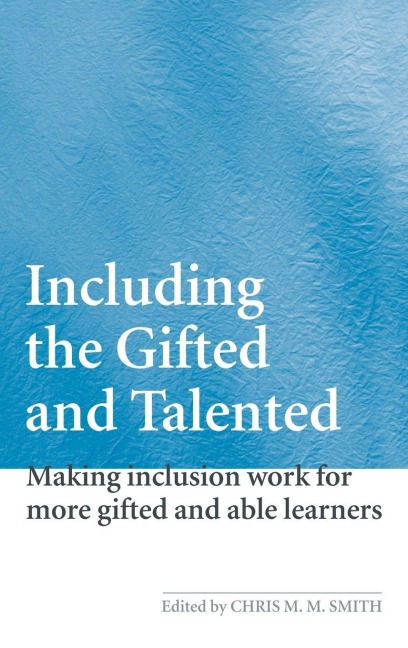
This single volume presents the views of experts from the field which challenge the assumption that educational inclusion relates only to those pupils with learning difficulties. In this book, the authors examine the extent to which a truly inclusive context can provide a challenging environment for gifted and talented pupils. Key issues explored include: the social and emotional aspects of being a gifted and talented pupil the pros and cons of being labelled gifted and talented in very young children why 'regular' classrooms are the best place to educate gifted and talented pupils modifying the basic school curriculum to meet the needs of gifted and talented pupils What is submerged talent and how can it be found?
As the Government has recently initiated the Excellence in Cities scheme, this thought-provoking volume is an invaluable read to student teachers, practitioners, academics and researchers who wish to further their study in this hot topic.
Chris M. M. Smith is Lecturer in Inclusion and Gifted Education at the University of Glasgow, Scotland. She is also Project Leader of the Scottish Network for Able Pupils (SNAP).
Part 1: What Does Inclusion Mean for the Gifted and Talented? 1. Principles of Inclusion: Implications for Able Learners 2. Inequality in Equity: Tackling the Excellence - Equality Conundrum 3. Can 'Inclusion' Work for the Gifted and Talented? 4. The Early Years Setting - An Inclusive Framework 5. Are We Nearly There Yet? Part 2: Can Selective Interventions be Inclusive? 6. Submerged Talent in Inner-Cities: Inclusion by Intervention 7. Maximising Potential...both Academic and Social Emotional 8. To Group or Not to Group: Is That the Question? Part 3: What Can Ordinary Schools Do to Promote Inclusion for Gifted and Talented Learners? 9. Accommodating Gifted Learners in Regular Classrooms: Promises and Pitfalls 10. Structured Tinkering: Improving Provision for the Gifted and Talented 11. Double Exceptionality: Gifted Children with Special Educational Needs, What Ordinary Schools Can Do to Promote Inclusion 12. A Curriculum of Opportunity: Developing Potential into Performance