Und dann auf "Zum Home-Bildschirm [+]".

Stöbern
genialokal zum Startbildschirm hinzufügen
Installieren Sie die genialokal App auf Ihrem Startbildschirm für einen schnellen Zugriff und eine komfortable Nutzung.
Installieren Sie die genialokal App auf Ihrem Startbildschirm für einen schnellen Zugriff und eine komfortable Nutzung.
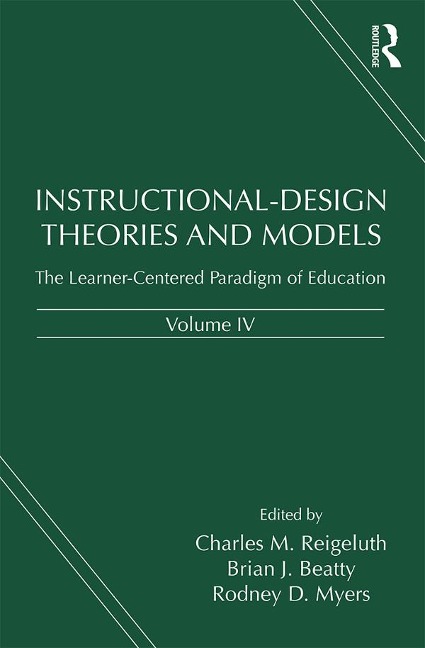
Instructional-Design Theories and Models, Volume IV provides a research-based description of the current state of instructional theory for the learner-centered paradigm of education, as well as a clear indication of how different theories and models interrelate. Significant changes have occurred in learning and instructional theory since the publication of Volume III, including advances in brain-based learning, learning sciences, information technologies, internet-based communication, a concern for customizing the student experience to maximize effectiveness, and scaling instructional environments to maximize efficiency. In order to complement the themes of Volume I (commonality and complementarity among theories of instruction), Volume II (diversity of theories) and Volume III (building a common knowledge base), the theme of Volume IV is shifting the paradigm of instruction from teacher-centered to learner-centered and integrating design theories of instruction, assessment, and curriculum. Chapters in Volume IV are collected into three primary sections: a comprehensive view of the learner-centered paradigm of education and training, elaborations on parts of that view for a variety of K-12 and higher education settings, and theories that address ways to move toward the learner-centered paradigm within the teacher-centered paradigm. Instructional-Design Theories and Models, Volume IV is an essential book for anyone interested in exploring more powerful ways of fostering human learning and development and thinking creatively about ways to best meet the needs of learners in all kinds of learning contexts.
Charles M. Reigeluth is a speaker/consultant for paradigm change in education and Professor Emeritus in the Instructional Systems Technology Department at Indiana University, USA. Brian J. Beatty is Associate Vice President for Academic Affairs Operations and former Chair and Associate Professor in the Instructional Technologies Department at San Francisco State University, USA. Rodney D. Myers is an independent scholar and consultant who teaches courses in instructional design and technology and is Adjunct Lecturer in the Instructional Systems Technology Department at Indiana University, USA.
List of Figures and Tables Preface Unit 1: Fundamental Principles of the Learner-Centered Paradigm of Education Chapter 1: The Learner-Centered Paradigm of Education Charles M. Reigeluth, Rodney D. Myers, Dabae Lee Chapter 2: Principles for Competency-Based Education Richard A. Voorhees, Alice Bedard-Voorhees Chapter 3: Principles for Task-Centered Instruction Gregory M. Francom Chapter 4: Principles for Personalized Instruction William R. Watson, Sunnie Lee Watson Chapter 5: A New Paradigm of Curriculum Marc Prensky Unit 2: More Detailed Designs for the Learner-Centered Paradigm Chapter 6: Designing Maker-Based Instruction Christian S. McKay, Krista D. Glazewski Chapter 7: Designing Collaborative Production of Digital Media T.J. Kalaitzidis, Breanne Litts, Erica Rosenfeld Halverson Chapter 8: Designing Games for Learning Rodney D. Myers, Charles M. Reigeluth Chapter 9: Designing Instruction for Self-regulated Learning Yeol Huh, Charles M. Reigeluth Chapter 10: Designing Instructional Coaching David S. Knight, Mike Hock, Jim Knight Chapter 11: Designing Technology for the Learner-Centered Paradigm of Education Charles M. Reigeluth Unit 3: Steps Toward the Learner-Centered Paradigm Chapter 12: Designing Instruction for Flipped Classrooms Jeremy F. Strayer Chapter 13: Gamification Designs for Instruction Karl M. Kapp Chapter 14: Design Considerations for Mobile Learning Thomas Cochrane, Vickel Narayan Chapter 15: Designing Just-in-Time Instruction Gregor M. Novak, Brian J. Beatty Author Index Subject Index
Dieses eBook wird im PDF-Format geliefert und ist mit einem Adobe Kopierschutz (DRM) versehen. Sie können dieses eBook mit allen Geräten lesen, die das PDF-Format und den Adobe Kopierschutz (DRM) unterstützen.
Zum Beispiel mit den folgenden Geräten:
• tolino Reader
Laden Sie das eBook direkt über den Reader-Shop auf dem tolino herunter oder übertragen Sie das eBook auf Ihren tolino mit einer kostenlosen Software wie beispielsweise Adobe Digital Editions.
• Sony Reader & andere eBook Reader
Laden Sie das eBook direkt über den Reader-Shop herunter oder übertragen Sie das eBook mit der kostenlosen Software Sony READER FOR PC/Mac oder Adobe Digital Editions auf ein Standard-Lesegeräte mit epub- und Adobe DRM-Unterstützung.
• Tablets & Smartphones
Möchten Sie dieses eBook auf Ihrem Smartphone oder Tablet lesen, finden Sie hier unsere kostenlose Lese-App für iPhone/iPad und Android Smartphone/Tablets.
• PC & Mac
Lesen Sie das eBook direkt nach dem Herunterladen mit einer kostenlosen Lesesoftware, beispielsweise Adobe Digital Editions, Sony READER FOR PC/Mac oder direkt über Ihre eBook-Bibliothek in Ihrem Konto unter „Meine eBooks“ - „online lesen“.
Schalten Sie das eBook mit Ihrer persönlichen Adobe ID auf bis zu sechs Geräten gleichzeitig frei.
Bitte beachten Sie, dass die Kindle-Geräte das Format nicht unterstützen und dieses eBook somit nicht auf Kindle-Geräten lesbar ist.