Und dann auf "Zum Home-Bildschirm [+]".

Stöbern
genialokal zum Startbildschirm hinzufügen
Installieren Sie die genialokal App auf Ihrem Startbildschirm für einen schnellen Zugriff und eine komfortable Nutzung.
Installieren Sie die genialokal App auf Ihrem Startbildschirm für einen schnellen Zugriff und eine komfortable Nutzung.
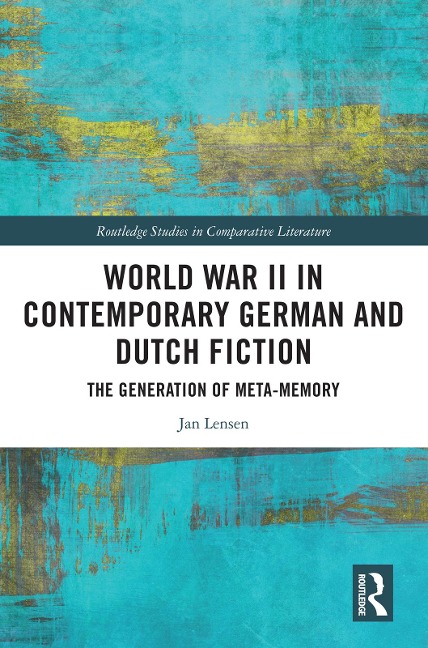
World War II in Contemporary German and Dutch Fiction: The Generation of Meta-Memory offers a comparative study of the construction of World War II memory in contemporary German, Flemish, and Dutch literature. More specifically, it investigates in what ways the large temporal distance to the historical events has impacted how literary writers from these three literatures have negotiated its meaning and form during the last decades. To that end, this book offers analyses of nine novels that demonstrate a pronounced reflexivity on the conditions of contemporary remembering. Rather than a dig for historical truth or a struggle with historical trauma, these novels reflect on the transmission, the narrative shapes, the formation processes, and the functions of World War II memory today, while asserting a self-conscious and often irreverent approach toward established mnemonic routines, practices, and rules. As the analyses show, this approach is equally articulated through the novels' poetics, which are marked by a large formal diversity and a playfulness that highlights mnemonic agency, a posttraumatic positioning, and the ascendency of the literary over the historiographical. Based on these findings, this book proposes the emergence of a new paradigm within the postwar cultural assessment of World War II: the generation of meta-memory.
Jan Lensen is an affiliated researcher at the Institut für Deutsche und Niederländische Philologie of the Freie Universität Berlin. He is the author of De foute oorlog: Schuld en nederlaag in het Vlaamse proza over de Tweede Wereldoorlog (2014) and has widely published about contemporary Dutch and German literature and cultural memory in international peer-reviewed journals, such as Journal of Dutch Literature, Comparative Literature and Modern Language Review.
Contents Acknowledgments The Generation of Meta-Memory: An Introduction Part I - Of Perpetrators and Victims Chapter 1 - 'Ein verwandter Ton': The (Im)possibility of German Victimhood in Marcel Beyer's Flughunde (1995) Chapter 2 - 'In Search of a More Bearable Tomb': Narrative Integration and Heteroglossia in Erwin Mortier's Marcel (1999) Chapter 3 - The Comfort Corner of Victimhood: Holocaust Victimhood in Arnon Grunberg's De joodse messias (2004) Part II - Memory on the Move? Chapter 4 - The Names of the Dead in Our Communal Cemeteries: The Case for a European Collective Memory in Koen Peeters's Grote Europese roman (2007) Chapter 5 - Claiming Memory Citizenship in Mano Bouzamour's De belofte van Pisa (2014) Chapter 6 - Moving in and out of the Feedback Loop: History and 'Globital' Memory in Peter Verhelst's Zwerm (2005) Part III - The Play with Memory Chapter 7 - 'Irgendwo zwischen Müllverbrennungsanlage und dem bleistiftförmigen Fallturm der Universität': Personal Memory and Autofiction in Per Leo's Flut und Boden (2014) Chapter 8 - 'Wir stören uns nicht daran': Stylistic Refinement and the Play with Referentiality in Kevin Vennemann's Nahe Jedenew (2005) Chapter 9 - 'With a stretched arm. Like Superman, not like Hitler': Irreverent Play with Memory in Astronaut van Oranje (2013) by Andy Fierens and Michaël Brijs Afterword: A Move out of the Grip of the Past? Index
Dieses eBook wird im PDF-Format geliefert und ist mit einem Adobe Kopierschutz (DRM) versehen. Sie können dieses eBook mit allen Geräten lesen, die das PDF-Format und den Adobe Kopierschutz (DRM) unterstützen.
Zum Beispiel mit den folgenden Geräten:
• tolino Reader
Laden Sie das eBook direkt über den Reader-Shop auf dem tolino herunter oder übertragen Sie das eBook auf Ihren tolino mit einer kostenlosen Software wie beispielsweise Adobe Digital Editions.
• Sony Reader & andere eBook Reader
Laden Sie das eBook direkt über den Reader-Shop herunter oder übertragen Sie das eBook mit der kostenlosen Software Sony READER FOR PC/Mac oder Adobe Digital Editions auf ein Standard-Lesegeräte mit epub- und Adobe DRM-Unterstützung.
• Tablets & Smartphones
Möchten Sie dieses eBook auf Ihrem Smartphone oder Tablet lesen, finden Sie hier unsere kostenlose Lese-App für iPhone/iPad und Android Smartphone/Tablets.
• PC & Mac
Lesen Sie das eBook direkt nach dem Herunterladen mit einer kostenlosen Lesesoftware, beispielsweise Adobe Digital Editions, Sony READER FOR PC/Mac oder direkt über Ihre eBook-Bibliothek in Ihrem Konto unter „Meine eBooks“ - „online lesen“.
Schalten Sie das eBook mit Ihrer persönlichen Adobe ID auf bis zu sechs Geräten gleichzeitig frei.
Bitte beachten Sie, dass die Kindle-Geräte das Format nicht unterstützen und dieses eBook somit nicht auf Kindle-Geräten lesbar ist.