Und dann auf "Zum Home-Bildschirm [+]".

Stöbern
genialokal zum Startbildschirm hinzufügen
Installieren Sie die genialokal App auf Ihrem Startbildschirm für einen schnellen Zugriff und eine komfortable Nutzung.
Installieren Sie die genialokal App auf Ihrem Startbildschirm für einen schnellen Zugriff und eine komfortable Nutzung.
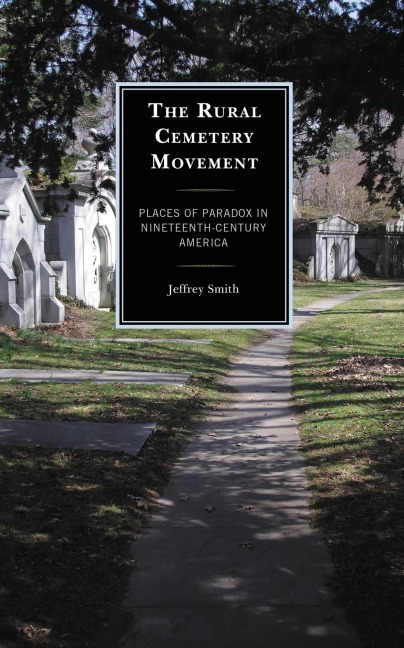
When Mount Auburn opened as the first "rural" cemetery in the United States in 1831, it represented a new way for Americans to think about burial sites. It broke with conventional notions about graveyards as places to bury and commemorate the dead. Rather, the founders of Mount Auburn and the spate of similar cemeteries that followed over the next three decades before the Civil War created institutions that they envisioned being used by the living in new ways. Cemeteries became places for leisure, communing with nature, and creating a version of collective memory. In fact, these cemeteries reflected changing values and attitudes of Americans spanning much of the nineteenth century. In the process, they became paradoxical: they were "rural" yet urban, natural yet designed, artistic yet industrial, commemorating the dead yet used by the living.
The Rural Cemetery Movement: Places of Paradox in Nineteenth-Century America breaks new ground in the history of cemeteries in the nineteenth century. This book examines these "rural" cemeteries modeled after Mount Auburn that were founded between the 1830s and 1850s. As such, it provides a new way of thinking about these spaces and new paradigm for seeing and visiting them. While they fulfilled the sacred function of burial, they were first and foremost businesses. The landscape and design, regulation of gravestones, appearance, and rhetoric furthered their role as a business that provided necessary services in cities that went well beyond merely burying bodies. They provided urban green spaces and respites from urban life, established institutions where people could craft their roles in collective memory, and served as prototypes for both urban planning and city parks.
These cemeteries grew and thrived in the second half of the nineteenth century; for most, the majority of their burials came before 1910. This expansion of cemeteries coincided with profound urban growth in the United States. Unlike their predecessors, founders of these burial grounds intended them to be used in many ways that reflected their views and values about nature, life and death, and relationships. Emphasis on worldly accomplishments increased with industrialization and growth in the United States, which was reflected in changing ways people commemorated their dead during the period under this study. Thus, these cemeteries are a prism through which to understand the values, attitudes, and culture of urban America from mid-century through the Progressive Era.
Jeffrey Smith is professor of history at Lindenwood University.
Chapter 1: Cemeteries as Sacred Yet Secular
Chapter 2: Nature v. "Nature"
Chapter 3: Cemeteries as Urban Amenities
Chapter 4: The Cemetery Business
Chapter 5: Cemetery Design and Social Class
Chapter 6: Monuments, Commemoration, and Collective Memory
Dieses eBook wird im PDF-Format geliefert und ist mit einem Adobe Kopierschutz (DRM) versehen. Sie können dieses eBook mit allen Geräten lesen, die das PDF-Format und den Adobe Kopierschutz (DRM) unterstützen.
Zum Beispiel mit den folgenden Geräten:
• tolino Reader
Laden Sie das eBook direkt über den Reader-Shop auf dem tolino herunter oder übertragen Sie das eBook auf Ihren tolino mit einer kostenlosen Software wie beispielsweise Adobe Digital Editions.
• Sony Reader & andere eBook Reader
Laden Sie das eBook direkt über den Reader-Shop herunter oder übertragen Sie das eBook mit der kostenlosen Software Sony READER FOR PC/Mac oder Adobe Digital Editions auf ein Standard-Lesegeräte mit epub- und Adobe DRM-Unterstützung.
• Tablets & Smartphones
Möchten Sie dieses eBook auf Ihrem Smartphone oder Tablet lesen, finden Sie hier unsere kostenlose Lese-App für iPhone/iPad und Android Smartphone/Tablets.
• PC & Mac
Lesen Sie das eBook direkt nach dem Herunterladen mit einer kostenlosen Lesesoftware, beispielsweise Adobe Digital Editions, Sony READER FOR PC/Mac oder direkt über Ihre eBook-Bibliothek in Ihrem Konto unter „Meine eBooks“ - „online lesen“.
Schalten Sie das eBook mit Ihrer persönlichen Adobe ID auf bis zu sechs Geräten gleichzeitig frei.
Bitte beachten Sie, dass die Kindle-Geräte das Format nicht unterstützen und dieses eBook somit nicht auf Kindle-Geräten lesbar ist.