Und dann auf "Zum Home-Bildschirm [+]".

Stöbern
genialokal zum Startbildschirm hinzufügen
Installieren Sie die genialokal App auf Ihrem Startbildschirm für einen schnellen Zugriff und eine komfortable Nutzung.
Installieren Sie die genialokal App auf Ihrem Startbildschirm für einen schnellen Zugriff und eine komfortable Nutzung.
Ihr gewünschter Artikel ist in 0 Buchhandlungen vorrätig - wählen Sie hier eine Buchhandlung in Ihrer Nähe aus:

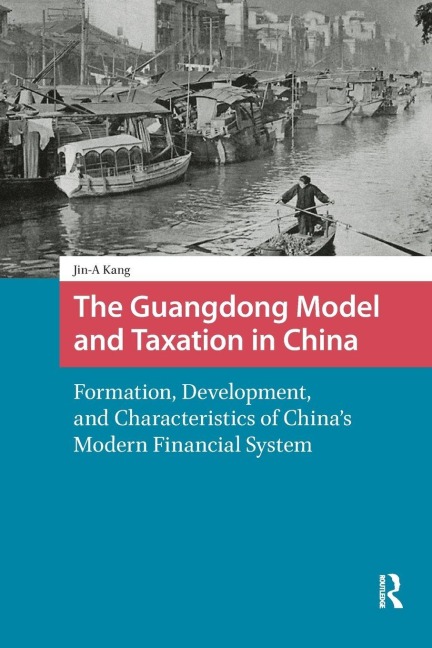
This book explores the formation, development, and characteristics of modern China's finance, focusing especially on Guangdong province as a case study to illustrate both the macro-level trends and the micro-level reality, with a chronological range from the late Qing period to the early Republican Era ending in 1937.
Jin-A Kang is a Professor in the Department of History at Hanyang University in Seoul, Republic of Korea. She graduated from the Department of Oriental History, Seoul National University in 1996, obtained a Ph.D. from Tokyo University in 2001 and held positions in Central China Normal University in Wuhan, China, and Kyungpook National University in Daegu, Korea.
Abbreviations, Acknowledgments, Introduction: The Modern Transformation of the Imperial Fiscal System: The Case of,Provincial Finance in Guangdong, Part 1. New Tax Revenues in Guangdong during the Republican Era, Chapter 1. Fiscal Reform in the Late Qing and the Republican Period, Chapter 2. Tobacco and Wine Taxes, Chapter 3. Abolition of the Likin and the Paradox of Tax Reform: The Special Tax, Chapter 4. Special Taxes on Imported Rice, Part 2. State-led Industrialization and the State Monopoly, Chapter 5. Industrial Building: Provincial Entrepreneurs, Chapter 6. The Sugar Monopoly: From Local to National, Part 3. Reform of Tax Collection, Chapter 7. The Building of Public Administration and Taxation, Chapter 8. Regularization of the Tax-farming System, Part 4. The Transition of the Modern Chinese Tax Structure in a Global Context, Chapter 9. Transition of the Modern Chinese Tax Structure, Chapter 10. Afterword: Between Chinese Exceptionalism and Modern Fiscal State-building, Glossary, Index, Bibliography.