Und dann auf "Zum Home-Bildschirm [+]".

Stöbern
genialokal zum Startbildschirm hinzufügen
Installieren Sie die genialokal App auf Ihrem Startbildschirm für einen schnellen Zugriff und eine komfortable Nutzung.
Installieren Sie die genialokal App auf Ihrem Startbildschirm für einen schnellen Zugriff und eine komfortable Nutzung.
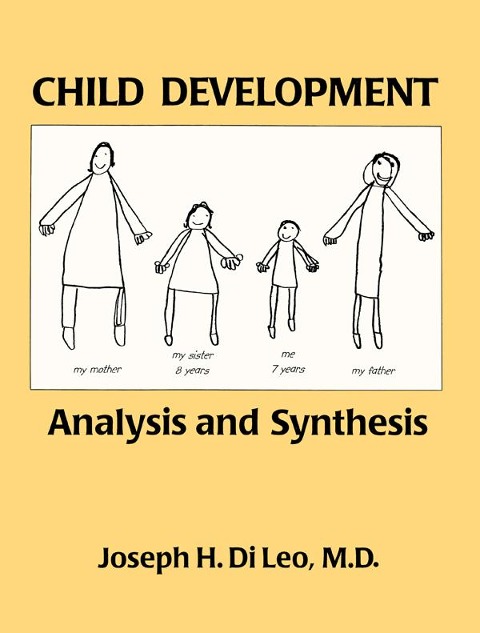
First published in 1996. This landmark work, now available in a new paperback edition, present a synthesis of perspectives on child development that encompasses some of the world's leading thinkers. Still timely in its distillation of the basic concepts of Freud, Piaget, Erikson, Gesell, and others, Child Development provides a truly integrated and coherent view of the child. The text is divided into three parts. First, the normal motor, psychosexual, psychosocial, cognitive, language, drawing, and encephalographic development of children are examined. The second part focuses on the expression of developmental processes in children's drawings-more than 40 drawings allow us to see the world as children do. In the final section, these varied perspectives are integrated into a highly useful synoptic chart showing the Stages of Child Development-by itself an illuminating and practical reference.
Joseph H. Di Leo was Director of the Developmental Clinic of the New York Foundling Hospital, Assistant Clinical Professor of-Pediatrics at New York University School of Medicine, and Lecturer in the Department of Special Education at Teachers College, Columbia University, New York City. He published extensively in the fields of child development, brain dysfunction, ,md children's drawings.
Part 1 The World of Childhood as Seen by Adults; Chapter 1 Developmental Stages; Chapter 2 Critical Periods; Chapter 3 The Neural Substrate; Chapter 4 Motor Development; Chapter 5 Psychosexual and Psychosocial Development; Chapter 6 Cognitive Development; Chapter 7 Language Development; Chapter 8 Drawing Behavior; Chapter 9 Developmental Arrest; Chapter 10 Regression; Chapter 11 Concept and Object Relations; Part 2 The World as Seen Through the Eyes of Children; Chapter 12 We Speak to Children; Chapter 13 Children Speak to Us; Chapter 14 Creativity; Chapter 15 Child Art as a Unifying Principle; Part 3 Synthesis; Chapter 16 A Developmental Perspective; Chapter 17 Integration: Correlations and Relationships; Chapter 18 A Synoptic View of Child Development;
Dieses eBook wird im PDF-Format geliefert und ist mit einem Adobe Kopierschutz (DRM) versehen. Sie können dieses eBook mit allen Geräten lesen, die das PDF-Format und den Adobe Kopierschutz (DRM) unterstützen.
Zum Beispiel mit den folgenden Geräten:
• tolino Reader
Laden Sie das eBook direkt über den Reader-Shop auf dem tolino herunter oder übertragen Sie das eBook auf Ihren tolino mit einer kostenlosen Software wie beispielsweise Adobe Digital Editions.
• Sony Reader & andere eBook Reader
Laden Sie das eBook direkt über den Reader-Shop herunter oder übertragen Sie das eBook mit der kostenlosen Software Sony READER FOR PC/Mac oder Adobe Digital Editions auf ein Standard-Lesegeräte mit epub- und Adobe DRM-Unterstützung.
• Tablets & Smartphones
Möchten Sie dieses eBook auf Ihrem Smartphone oder Tablet lesen, finden Sie hier unsere kostenlose Lese-App für iPhone/iPad und Android Smartphone/Tablets.
• PC & Mac
Lesen Sie das eBook direkt nach dem Herunterladen mit einer kostenlosen Lesesoftware, beispielsweise Adobe Digital Editions, Sony READER FOR PC/Mac oder direkt über Ihre eBook-Bibliothek in Ihrem Konto unter „Meine eBooks“ - „online lesen“.
Schalten Sie das eBook mit Ihrer persönlichen Adobe ID auf bis zu sechs Geräten gleichzeitig frei.
Bitte beachten Sie, dass die Kindle-Geräte das Format nicht unterstützen und dieses eBook somit nicht auf Kindle-Geräten lesbar ist.