Und dann auf "Zum Home-Bildschirm [+]".

Stöbern
genialokal zum Startbildschirm hinzufügen
Installieren Sie die genialokal App auf Ihrem Startbildschirm für einen schnellen Zugriff und eine komfortable Nutzung.
Installieren Sie die genialokal App auf Ihrem Startbildschirm für einen schnellen Zugriff und eine komfortable Nutzung.
Ihr gewünschter Artikel ist in 0 Buchhandlungen vorrätig - wählen Sie hier eine Buchhandlung in Ihrer Nähe aus:

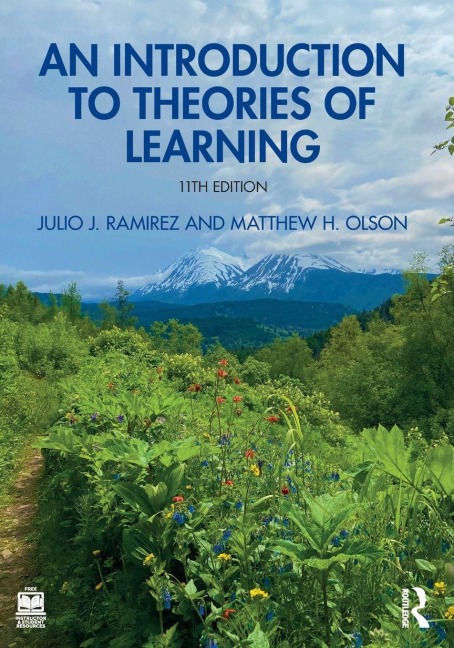
Now celebrating its 50th anniversary, An Introduction to Theories of Learning has provided a uniquely sweeping review of the major learning theories from the 20th century that profoundly influenced the field of psychology. The four main goals of this text are to define learning, to show how the learning process is studied, to place learning theory in a historical perspective, and to present essential features of the major theories of learning with implications for educational practices. In this new edition, the authors have retained the best features of earlier additions while expanding and enhancing its application to modern scholarship. Key features of the eleventh edition include: - Enhanced neuroscience integration, including discussions on cortical waves, mirror neurons, memory consolidation, and brain-based evidence supporting classic learning theories. - The incorporation of new findings on species-specific behaviors and habituation, including insightful problem-solving in birds and the neurobiological basis of insight in humans. - New sections on artificial intelligence applications in education, improved study techniques based on large-scale research, and the implementation of learning principles in public health. - Enhanced pedagogy to increase engagement, including interactive online self-testing questions. Bringing together contributions from throughout history through to the modern day, this is an essential resource for applied cognitive psychology courses and all those interested in the processes that underlie learning in human beings and animals.
Julio J. Ramirez is the R. Stuart Dickson Professor of Psychology and Director of the Neuroscience Program at Davidson College. Matthew H. Olson was Professor and Chair of the Psychology Department at Hamline University.
Preface Part 1: Introduction to Learning Chapter 1: What is Learning? Chapter 2: Approaches to the Study of Learning Chapter 3: Early Notions About Learning Part 2: Predominantly Functionalistic Theories Chapter 4: Edward Lee Thorndike Chapter 5: Burrhus Frederic Skinner Chapter 6: Clark Leonard Hull Part 3: Predominantly Associationistic Theories Chapter 7: Ivan Petrovich Pavlov Chapter 8: Edwin Ray Guthrie Chapter 9: William Kaye Estes Part 4: Predominantly Cognitive Theories Chapter 10: Gestalt Theory Chapter 11: Jean Piaget Chapter 12: Edward Chace Tolman Chapter 13: Albert Bandura Part 5: Predominantly Neurophysiological Theory Chapter 14: Donald Olding Hebb Part 6: An Evolutionary Theory Chapter 15: Robert C. Bolles and Evolutionary Psychology Part 7: Reflections Chapter 16: A Final Word