Und dann auf "Zum Home-Bildschirm [+]".

Stöbern
genialokal zum Startbildschirm hinzufügen
Installieren Sie die genialokal App auf Ihrem Startbildschirm für einen schnellen Zugriff und eine komfortable Nutzung.
Installieren Sie die genialokal App auf Ihrem Startbildschirm für einen schnellen Zugriff und eine komfortable Nutzung.
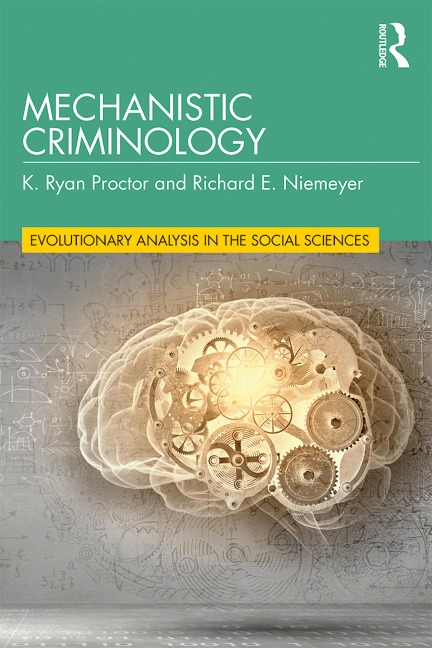
The science of criminology is at a crossroads. Despite accumulating a dizzying array of facts about crime, the field has yet to identify a body of theories that allows for the adequate prediction, explanation, and control of phenomena of central interest to criminologists. Mechanistic Criminology locates this problem within the field's failure to conform to the expectations of scientific fields and reliance on antiquated methods of theory construction. The authors contend that this failure has resulted in an inability of criminologists to engage in theory falsification and competition-two central activities of science-that produce the forms of reliable knowledge that are unique to scientific fields. Mechanistic Criminology advocates for the adoption of a mechanistic mode of theorizing to allow criminologists to engage in theory falsification and competition and ignite rapid scientific discovery in the field. The proposed method is the same one employed within the biological sciences, which is responsible for their rapid scientific progress in the late twentieth and early twenty-first centuries. Should criminologists adopt this mechanistic approach, criminology could experience the same scientific revolution that is occurring in the biological sciences, and criminologists would generate the knowledge necessary for the prediction, explanation, and control of crime.
K. Ryan Proctor is Associate Professor of Sociology and Criminology at Avila University. His current research focuses on the development and application of theoretical methods to promote scientific progress within the social sciences, as well as understanding how technological advances alter social structures in ways that facilitate or inhibit crime. Richard E. Niemeyer is a co-founder and former Deputy Director of the Institute for the Applications of Mathematics and Integrated Science at the University of California, Riverside. His research broadly focuses on increasing systemicity between mathematics, the life sciences, and the social sciences. He currently lives in Denver, Colorado.
Part I: Scientific Criminology. Chapter 1: What is Science? Chapter 2: Assessing the Properties of Scientific Criminology. Chapter 3: Progress within Scientific Fields. Chapter 4: Scientific Progress In Criminology. Part II: Mechanistic Science. Chapter 5: Mechanistic Explanations. Chapter 6: Mechanism Schemas. Chapter 7: Biosocial Criminology. Chapter 8: Analytical Criminology. Part III: Mechanistic Translations of Criminological Theories. Chapter 9: Social Learning Theory. Chapter 10: Social Control Theory. Chapter 11: General Strain Theory. Part IV: Mechanistic Criminology. Chapter 12: Nondeclarative Memory. Chapter 13: Declarative Memory. Chapter 14: Theory of Mind. Chapter 15: Conclusion.
Dieses eBook wird im PDF-Format geliefert und ist mit einem Adobe Kopierschutz (DRM) versehen. Sie können dieses eBook mit allen Geräten lesen, die das PDF-Format und den Adobe Kopierschutz (DRM) unterstützen.
Zum Beispiel mit den folgenden Geräten:
• tolino Reader
Laden Sie das eBook direkt über den Reader-Shop auf dem tolino herunter oder übertragen Sie das eBook auf Ihren tolino mit einer kostenlosen Software wie beispielsweise Adobe Digital Editions.
• Sony Reader & andere eBook Reader
Laden Sie das eBook direkt über den Reader-Shop herunter oder übertragen Sie das eBook mit der kostenlosen Software Sony READER FOR PC/Mac oder Adobe Digital Editions auf ein Standard-Lesegeräte mit epub- und Adobe DRM-Unterstützung.
• Tablets & Smartphones
Möchten Sie dieses eBook auf Ihrem Smartphone oder Tablet lesen, finden Sie hier unsere kostenlose Lese-App für iPhone/iPad und Android Smartphone/Tablets.
• PC & Mac
Lesen Sie das eBook direkt nach dem Herunterladen mit einer kostenlosen Lesesoftware, beispielsweise Adobe Digital Editions, Sony READER FOR PC/Mac oder direkt über Ihre eBook-Bibliothek in Ihrem Konto unter „Meine eBooks“ - „online lesen“.
Schalten Sie das eBook mit Ihrer persönlichen Adobe ID auf bis zu sechs Geräten gleichzeitig frei.
Bitte beachten Sie, dass die Kindle-Geräte das Format nicht unterstützen und dieses eBook somit nicht auf Kindle-Geräten lesbar ist.