Und dann auf "Zum Home-Bildschirm [+]".

Stöbern
genialokal zum Startbildschirm hinzufügen
Installieren Sie die genialokal App auf Ihrem Startbildschirm für einen schnellen Zugriff und eine komfortable Nutzung.
Installieren Sie die genialokal App auf Ihrem Startbildschirm für einen schnellen Zugriff und eine komfortable Nutzung.
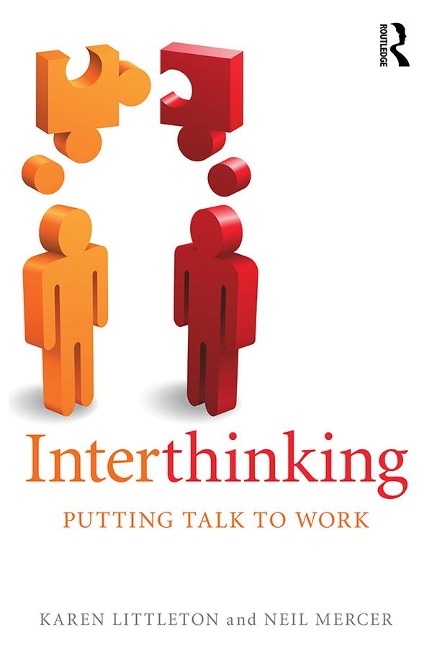
Through using spoken language, people are able to think creatively and productively together. This ability to 'interthink' is an important product of our evolutionary history that is just as important for our survival today. Many kinds of work activity depend on the success of groups or teams finding joint solutions to problems. Creative achievement is rarely the product of solitary endeavour, but of people working within a collective enterprise. Written in an accessible and jargon-free style, Interthinking: putting talk to work explores the growing body of work on how people think creatively and productively together. Challenging purely individualistic accounts of human evolution and cognition, its internationally acclaimed authors provide analyses of real-life examples of collective thinking in everyday settings including workplaces, schools, rehearsal spaces and online environments. The authors use socio-cultural psychology to explain the processes involved in interthinking, to explore its creative power, but also to understand why collective thinking isn't always productive or successful. With this knowledge we can maximise the constructive benefits of our ability to interthink, and understand the best ways in which we can help young people to develop, nurture and value that capability. This book will be of great interest to academic researchers, postgraduates and undergraduates on Education and Psychology courses and to practicing teachers. It will also appeal to anyone with an interest in language, creativity and the role of psychology in everyday life.
Karen Littleton is Professor of Psychology in Education at The Open University, where she currently directs the Centre for Research in Education and Educational Technology. In 2010 she became Editor of Routledge's Psychology in Education book series. Neil Mercer is Professor of Education and Chair of the Psychology and Education Group at the University of Cambridge, having previously been Professor of Language and Communications at the Open University. In 2011 he became Vice-President of the Cambridge college Hughes Hall.
1. Understanding interthinking; 2. Talk and interthinking at work; 3. Interthinking and the performance arts; 4. Digital technology and interthinking; 5. Language and the process of thinking collectively
Dieses eBook wird im PDF-Format geliefert und ist mit einem Adobe Kopierschutz (DRM) versehen. Sie können dieses eBook mit allen Geräten lesen, die das PDF-Format und den Adobe Kopierschutz (DRM) unterstützen.
Zum Beispiel mit den folgenden Geräten:
• tolino Reader
Laden Sie das eBook direkt über den Reader-Shop auf dem tolino herunter oder übertragen Sie das eBook auf Ihren tolino mit einer kostenlosen Software wie beispielsweise Adobe Digital Editions.
• Sony Reader & andere eBook Reader
Laden Sie das eBook direkt über den Reader-Shop herunter oder übertragen Sie das eBook mit der kostenlosen Software Sony READER FOR PC/Mac oder Adobe Digital Editions auf ein Standard-Lesegeräte mit epub- und Adobe DRM-Unterstützung.
• Tablets & Smartphones
Möchten Sie dieses eBook auf Ihrem Smartphone oder Tablet lesen, finden Sie hier unsere kostenlose Lese-App für iPhone/iPad und Android Smartphone/Tablets.
• PC & Mac
Lesen Sie das eBook direkt nach dem Herunterladen mit einer kostenlosen Lesesoftware, beispielsweise Adobe Digital Editions, Sony READER FOR PC/Mac oder direkt über Ihre eBook-Bibliothek in Ihrem Konto unter „Meine eBooks“ - „online lesen“.
Schalten Sie das eBook mit Ihrer persönlichen Adobe ID auf bis zu sechs Geräten gleichzeitig frei.
Bitte beachten Sie, dass die Kindle-Geräte das Format nicht unterstützen und dieses eBook somit nicht auf Kindle-Geräten lesbar ist.