Und dann auf "Zum Home-Bildschirm [+]".

Stöbern
genialokal zum Startbildschirm hinzufügen
Installieren Sie die genialokal App auf Ihrem Startbildschirm für einen schnellen Zugriff und eine komfortable Nutzung.
Installieren Sie die genialokal App auf Ihrem Startbildschirm für einen schnellen Zugriff und eine komfortable Nutzung.
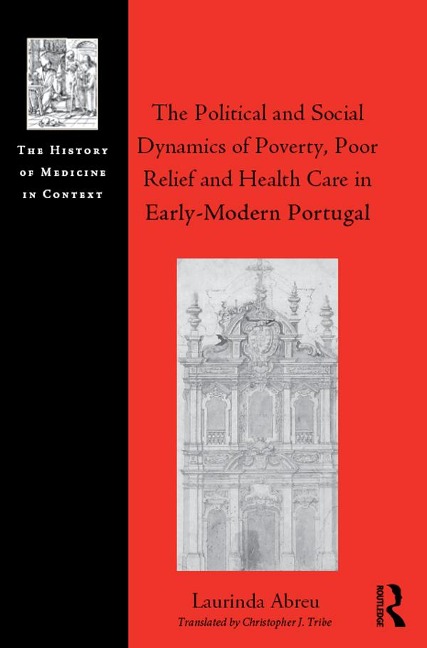
By the end of the fifteenth century most European counties had witnessed a profound reformation of their poor relief and health care policies. As this book demonstrates, Portugal was among them and actively participated in such reforms. Providing the first English language monograph on this this topic, Laurinda Abreu examines the Portuguese experience and places it within the broader European context. She shows that, in line with much that was happening throughout the rest of Europe, Portugal had not only set up a systematic reform of the hospitals but had also developed new formal arrangements for charitable and welfare provision that responded to the changing socioeconomic framework, the nature of poverty and the concerns of political powers. The defining element of the Portuguese experience was the dominant role played by a new lay confraternity, the confraternity of the Misericórdia, created under the auspices of King D. Manuel I in 1498. By the time of the king's death in 1521 there were more than 70 Misericórdias in Portugal and its empire, and by 1640, more than 300. All of them were run according to a unified set of rules and principles with identical social objectives. Based upon a wealth of primary source documentations, this book reveals how the sixteenth-century Portuguese crown succeeded in implementing a national poor relief and health care structure, with the support of the Papacy and local elites, and funded principally though pious donations. This process strengthened the authority of the royal government at a time which coincided with the emergence of the early modern state. In so doing, the book establishes poor relief and public health alongside military, diplomatic and administrative authorities, as the pillars of centralization of royal power.
Laurinda Abreu is Professor of History at the University of Ã0/00vora, Portugal. She is director of the University of Ã0/00vora's Erasmus Mundus PhD, PhoenixJDP - Dynamics of Health and Welfare. She was the coordinator (2001-09) of the Phoenix TN - European Thematic Network on Health and Social Welfare Policy, and President (2011-13) of the European Association for the History of Medicine and Health. Her recent publications include a co-edited book with S. Sheard, (eds), Hospital Life: Theory and Practice from the Medieval to the Modern; and Pina Manique: um reformador no Portugal das Luzes.
Contents: Introduction. Part I Charity and Poor Relief in Portugal at the Dawn of the Early Modern Period: The Organisation and Consolidation of Crown Authority: Social and political contexts; 'For the benefit of the body': hospital and health care reform; Epidemic control; The foundation of the misericórdias; The organisation of the welfare services; The funding of poor relief. Part II Institutions as Social Actors Mediating between Society, the Authorities and Individuals: Poor relief in an institutional context; The movement to found confinement institutions; The population of female recolhimentos: 'wives, nuns and prostitutes'; Hospitals and their users; Prisons and misericórdias; Conclusion; Manuscript sources; Printed sources; Bibliography; Index.
Dieses eBook wird im PDF-Format geliefert und ist mit einem Adobe Kopierschutz (DRM) versehen. Sie können dieses eBook mit allen Geräten lesen, die das PDF-Format und den Adobe Kopierschutz (DRM) unterstützen.
Zum Beispiel mit den folgenden Geräten:
• tolino Reader
Laden Sie das eBook direkt über den Reader-Shop auf dem tolino herunter oder übertragen Sie das eBook auf Ihren tolino mit einer kostenlosen Software wie beispielsweise Adobe Digital Editions.
• Sony Reader & andere eBook Reader
Laden Sie das eBook direkt über den Reader-Shop herunter oder übertragen Sie das eBook mit der kostenlosen Software Sony READER FOR PC/Mac oder Adobe Digital Editions auf ein Standard-Lesegeräte mit epub- und Adobe DRM-Unterstützung.
• Tablets & Smartphones
Möchten Sie dieses eBook auf Ihrem Smartphone oder Tablet lesen, finden Sie hier unsere kostenlose Lese-App für iPhone/iPad und Android Smartphone/Tablets.
• PC & Mac
Lesen Sie das eBook direkt nach dem Herunterladen mit einer kostenlosen Lesesoftware, beispielsweise Adobe Digital Editions, Sony READER FOR PC/Mac oder direkt über Ihre eBook-Bibliothek in Ihrem Konto unter „Meine eBooks“ - „online lesen“.
Schalten Sie das eBook mit Ihrer persönlichen Adobe ID auf bis zu sechs Geräten gleichzeitig frei.
Bitte beachten Sie, dass die Kindle-Geräte das Format nicht unterstützen und dieses eBook somit nicht auf Kindle-Geräten lesbar ist.