Und dann auf "Zum Home-Bildschirm [+]".

Stöbern
genialokal zum Startbildschirm hinzufügen
Installieren Sie die genialokal App auf Ihrem Startbildschirm für einen schnellen Zugriff und eine komfortable Nutzung.
Installieren Sie die genialokal App auf Ihrem Startbildschirm für einen schnellen Zugriff und eine komfortable Nutzung.
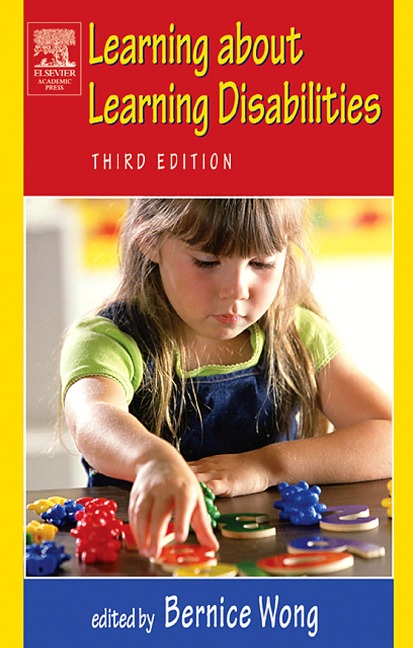
Bernice Wong's Learning about Learning Disabilities was the first text to give equal attention to the intellectual, conceptual, and practical aspects of learning disabilities. The Third Edition of this popular title presents 80% new material, keeping the chapters up to date in this fast-moving field. With new contributors, and seven new chapters, coverage is both comprehensive and thorough, with three sections encompassing the research aspects of learning disabilities, the instructional aspects of learning disabilities, and the issues germane to different age ranges of the learning disabled: children, adolescents, and adults.Chapters summarizing research on learning disabilities include coverage of ADHD, memory, language processing, social competence, self-regulation, and brain structures as they apply to learning disabilities. Chapters focusing on instructional aspects of learning disabilities include coverage of teaching literacy, reading comprehension, writing, and mathematics.Readers will find Learning About Learning Disabilities, Third edition suitable for use as a reference source for researchers or a graduate level text.Reviews from previous editions:"An undergraduate text that strikes a careful balance between the intellectual (psychological) and practical aspects of learning disabilities."-BOOK NEWS, INC."This text provides a balanced focus on both the conceptual and practical aspects of learning disabilities. Its research coverage is more comprehensive and of greater depth than any other LD textbook, and it is distinctive in its treatment of such important areas as consultation skills and service delivery."-CHILD ASSESSMENT NEWS"Learning About Learning Disabilities provides a broad overview of some important issues in relation to the education and development of pupils with learning disabilities... Wong has succeeded in providing detailed descriptions and comments within a book which covers a broad range of topics. Without exception the chapters are clearly written and accessible, and many provide the reader with challenging ideas and practical suggestions."-BRITISH JOURNAL OF SPECIAL EDUCATION* Provides a balanced focus on both the conceptual and the practical aspects of learning disabilities. * Research coverage more comprehensive and of greater depth than any other textbook about learning disabilities * The work is distinctive in its treatment of such important areas as consultation skills and service delivery
ContributorsPrefaceAcknowledgmentsTo the StudentSection I: Conceptual, Historical, and Research Aspects of Learning Disabilities Chapter 1. Learning Disabilities: An Historical and Conceptual Overview I. Current Status of the Field II. A Historical Perspective III. Current and Future Issues IV. Concluding Comments Chapter 2. Learning Disabilities and Memory I. Introduction II. A Historical Perspective III. Contemporary Research IV. Parallels to Normal Memory Development V. Components and Stages of Information Processing VI. Memory Research in Perspective VII. Trends in Memory Research VIII. Implications from Contemporary Memory Research for Instruction IX. Summary and Conclusion Chapter 3. Language Processes and Reading Disabilities I. Introduction II. Theoretical Approaches to Language Acquisition III. Language and Reading IV. Language, Word Recognition, and Reading Disabilities V. Sources of Individual Differences VI. Language, Reading Comprehension and Reading Disabilities VII. Future Challenges Chapter 4. Peer Relationships and Learning Disabilities I. Introduction II. What Are the Characteristics of Peer Relationships of Students with Learning Disabilities? III. What Factors Might Be Linked to the Peer Relationships of Students with Learning Disabilities? IV. Future Research Directions Chapter 5. Self-Regulation among Students with LD and ADHD I. Defining and Understanding Self-Regulation II. Theoretical Bases for Research on Self-Regulation III. Common Self-Regulation Processes: Application with Students with LD and ADHD IV. Self-Regulation and Major Dependent Variables V. Factors Influencing and Influenced by Self-Regulation VI. Self-Regulation of Strategic Performance VII. Conclusion Chapter 6. The Reading Brain in Children and Youth: A Systems Approach I. Brain as a Functional System II. Important Processes in the Reading Brain III. Imaging Studies of Children and Youth With and Without Reading Disabilities IV. Implications for Assessment and Instructional InterventionSection II: Instructional Aspects of Learning Disabilities Chapter 7. Difficulties in Reading Comprehension for Students with Learning Disabilities I. Introduction II. Students' Difficulties in Reading Comprehension III. Effective Reading Comprehension Instruction IV. Future Directions Chapter 8. Writing Instruction Introduction I. Writing is Critical to Children's Success in School and Beyond II. What Are the Ingredients Involved in Learning to Write III. The Writing of Students with LD IV. Principles of Writing Instruction V. Concluding Comments Chapter 9. Instructional Interventions in Mathematics for Students with Learning Disabilities I. Introduction II. Learning Disabilities and Mathematics Achievement III. Instruction Referenced to NCTM Standards IV. Interventions on Computation Skills V. Cognitive Strategy Instruction VI. Use of Manipulatives VII. Studies Involving Peer Mediation VIII. Discussion Chapter 10. Social Competence/Social Skills of Students with Learning Disabilities: Interventions and Issues I. Scope and Objectives II. Overview of Social Competence/Social Skills III. Instructional Method IV. Issues V. Future Directions for Social Skills Intervention Research VI. Summary Chapter 11. Strategic Academic Interventions for Adolescents with Learning Disabilities I. Introduction II. Empowerment Strategies for Academic Success and Independence III.