Und dann auf "Zum Home-Bildschirm [+]".

Stöbern
genialokal zum Startbildschirm hinzufügen
Installieren Sie die genialokal App auf Ihrem Startbildschirm für einen schnellen Zugriff und eine komfortable Nutzung.
Installieren Sie die genialokal App auf Ihrem Startbildschirm für einen schnellen Zugriff und eine komfortable Nutzung.
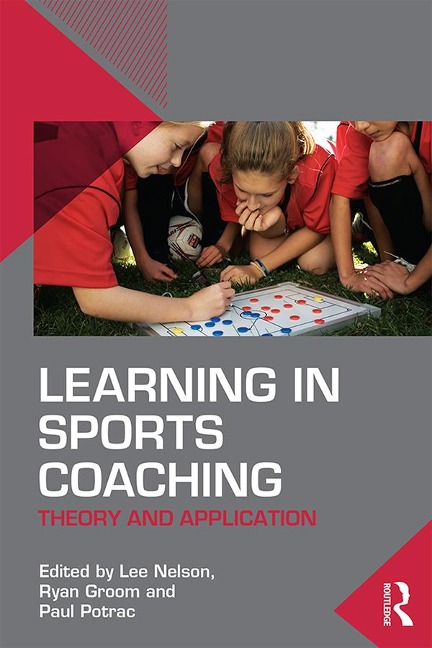
The facilitation of learning is a central feature of coaches' and coach educators' work. Coaching students and practitioners are, as a result, being expected to give increasing levels of thought towards how they might help to develop the knowledge and practical skills of others. Learning in Sports Coaching provides a comprehensive introduction to a diverse range of classic, critical, and contemporary theories of learning, education, and social interaction and their potential application to sports coaching. Each chapter is broadly divided into two sections. The first section introduces a key thinker and the fundamental tenets of his or her scholarly endeavours and theorising. The second considers how the theorist's work might influence how we understand and attempt to promote learning in coaching and coach education settings. By design this book seeks to promote theoretical connoisseurship and to encourage its readers to reflect critically on their beliefs about learning and its facilitation. This is an essential text for any pedagogical course taken as part of a degree programme in sports coaching or coach education.
Lee Nelson is a Senior Lecturer in Sports Coaching at Edge Hill University and an Honorary Senior Research Fellow at the University of Hull, UK. His research and teaching interests include micro-politics, emotions, and pedagogy in coaching and coach education contexts. Lee was the lead editor for the recent title Research Methods in Sports Coaching (Routledge). Ryan Groom is a Senior Lecturer in Sports Coaching and Program Director for the MA/MSc Exercise and Sports degrees at Manchester Metropolitan University, UK. A lead tutor on the MA Coaching Studies degree, his main teaching and research interests focus on the use of qualitative research methodologies and social theory to explore power, identity, education and interaction. Ryan was a co-editor for the title Research Methods in Sports Coaching (Routledge). Paul Potrac is a Professor of Sports Coaching at Edge Hill University and an Honorary Professor at the University of Hull, UK. His research and teaching interests focus on exploring the social complexity of sports coaching and coach education, with a particular emphasis on the political and emotional nature of practice. Paul has led and contributed to the completion of a number of book projects including Research Methods in Sports Coaching, The Sociology of Sports Coaching, Understanding Sports Coaching, the Routledge Handbook of Sports Coaching, and Sports Coaching Cultures (all published by Routledge).
1. Introduction: Towards a Theoretical Connoisseurship of Learning in Sports Coaching Part 1: Behaviourist and Social Cognitivist Theorists 2. Burrhus Frederic Skinner: Environmental Reinforcement in Coaching 3. Albert Bandura: Observational Learning in Coaching Part 2: Experiential Theorists 4. John Dewey: Experience, Inquiry, Democracy, and Community in Coaching 5. Donald Schön: Learning, Reflection, and Coaching Practice Part 3: Humanist Theorists 6. Abraham Maslow: Hierarchy of Coach and Athlete Needs 7. Carl Rogers: Person-Centred Learning in Coaching Part 4: Constructivist Theorists 8. Jean Piaget: Learning and the Stages of Athlete Development 9. Lev Vygotsky: Learning Through Social Interaction in Coaching 10. Yrjö Engeström: Coaching, Learning, and Activity Theory 11. Ivor Goodson: Narrative Coach Learning and Pedagogy Part 5: Critical and Post-Structural Theorists 12. Paulo Freire: Problem-Posing Coach Education 13. Jack Mezirow: Transformative Coach and Athlete Learning 14. Robin Usher: A Post-Structuralist Reading of Learning in Coaching Part 6: Social and Ethical Theorists 15. Herbert Blumer: Coaching and Learning as Symbolic Interaction 16. Jean Lave: Learning in Coaching as Social Praxis 17. Peter Jarvis: Lifelong Coach Learning 18. Nel Noddings: Caring, Moral Learning, and Coaching 19. Conclusion: Recognizing the Dimensions and Tensions of Learning in Coaching
Dieses eBook wird im PDF-Format geliefert und ist mit einem Adobe Kopierschutz (DRM) versehen. Sie können dieses eBook mit allen Geräten lesen, die das PDF-Format und den Adobe Kopierschutz (DRM) unterstützen.
Zum Beispiel mit den folgenden Geräten:
• tolino Reader
Laden Sie das eBook direkt über den Reader-Shop auf dem tolino herunter oder übertragen Sie das eBook auf Ihren tolino mit einer kostenlosen Software wie beispielsweise Adobe Digital Editions.
• Sony Reader & andere eBook Reader
Laden Sie das eBook direkt über den Reader-Shop herunter oder übertragen Sie das eBook mit der kostenlosen Software Sony READER FOR PC/Mac oder Adobe Digital Editions auf ein Standard-Lesegeräte mit epub- und Adobe DRM-Unterstützung.
• Tablets & Smartphones
Möchten Sie dieses eBook auf Ihrem Smartphone oder Tablet lesen, finden Sie hier unsere kostenlose Lese-App für iPhone/iPad und Android Smartphone/Tablets.
• PC & Mac
Lesen Sie das eBook direkt nach dem Herunterladen mit einer kostenlosen Lesesoftware, beispielsweise Adobe Digital Editions, Sony READER FOR PC/Mac oder direkt über Ihre eBook-Bibliothek in Ihrem Konto unter „Meine eBooks“ - „online lesen“.
Schalten Sie das eBook mit Ihrer persönlichen Adobe ID auf bis zu sechs Geräten gleichzeitig frei.
Bitte beachten Sie, dass die Kindle-Geräte das Format nicht unterstützen und dieses eBook somit nicht auf Kindle-Geräten lesbar ist.